Australia: deep histories and a modern federation
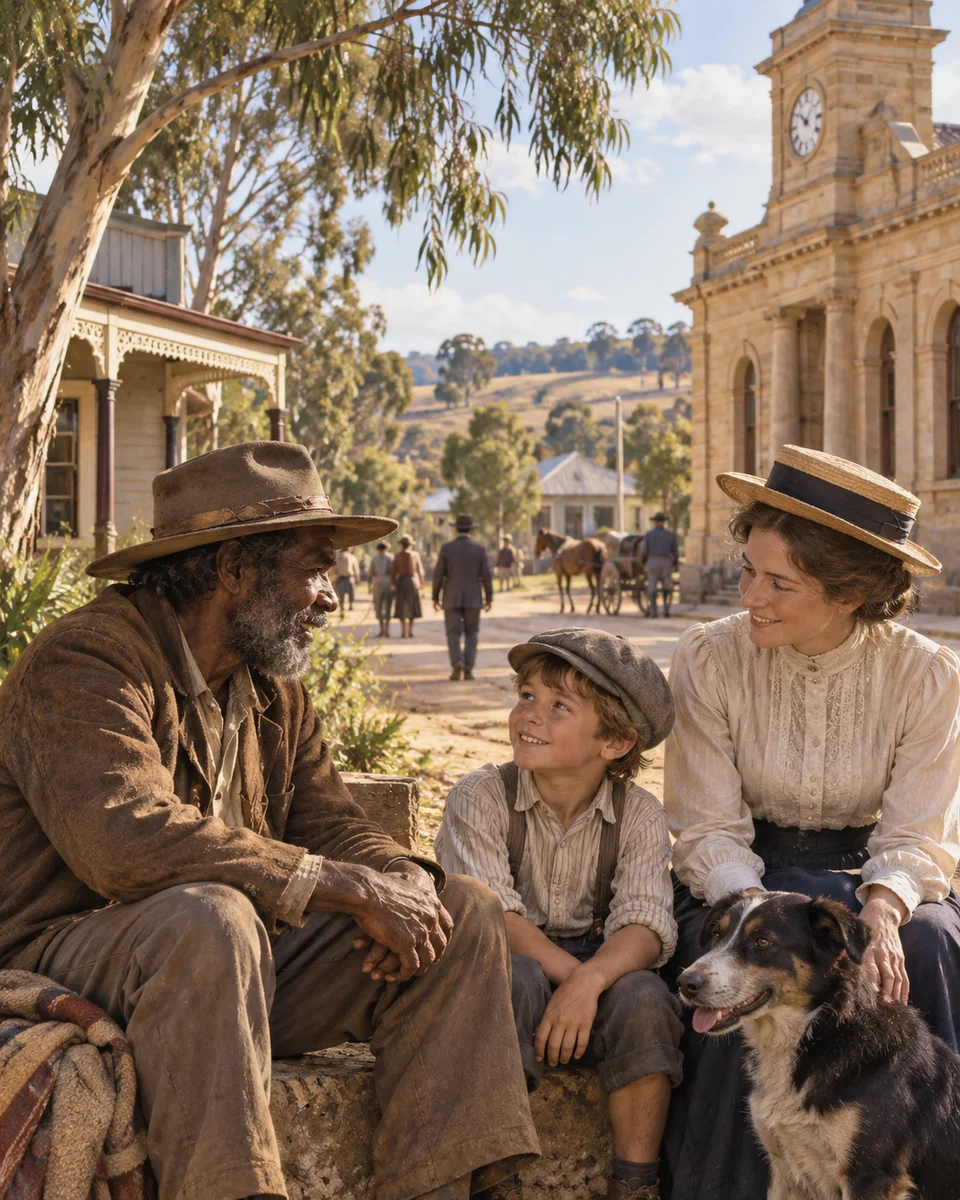
myAudience · AI-generated original illustration · Original generated artwork; not documentary evidence or a grant of landmark/cultural rights. No third-party image reproduced.
Australia's history did not begin with British settlement. Aboriginal and Torres Strait Islander peoples maintained diverse societies and relationships with land and sea over many thousands of years. Treating them as one vanished prehistoric population erases both regional differences and continuing communities, knowledge and political claims.
British colonisation from 1788 brought settlements, forced labour, disease and dispossession. Agriculture, cities and transport systems developed within that unequal process. Their material achievements must be examined together with who supplied the labour, whose land was taken and which experiences were excluded from official accounts of national progress.
Federation in 1901 joined colonies into a Commonwealth with national institutions while preserving state governments. Political inclusion was uneven, and restrictive immigration policy shaped the early federation. During the Second World War, John Curtin led a government confronting military danger and changing international relationships; his choices depended on institutions and many other participants.
A meaningful introduction places a government record alongside Indigenous testimony and a local material history. Each source has a setting and purpose. Constitutional change is not the same as agreement about land or sovereignty, and a famous wartime leader cannot summarise an entire continent. This lesson connects selected modern transitions while leaving deeper community histories open for their own treatment.
Image: speculative AI reconstruction; uncertain details.
Scene: Settler-era Australian family and civic built environment, early twentieth century; not a representation of all Australia or Indigenous histories.