Tenochtitlan: water, tribute and contested power
By Mexica/Aztec worlds · myAudience
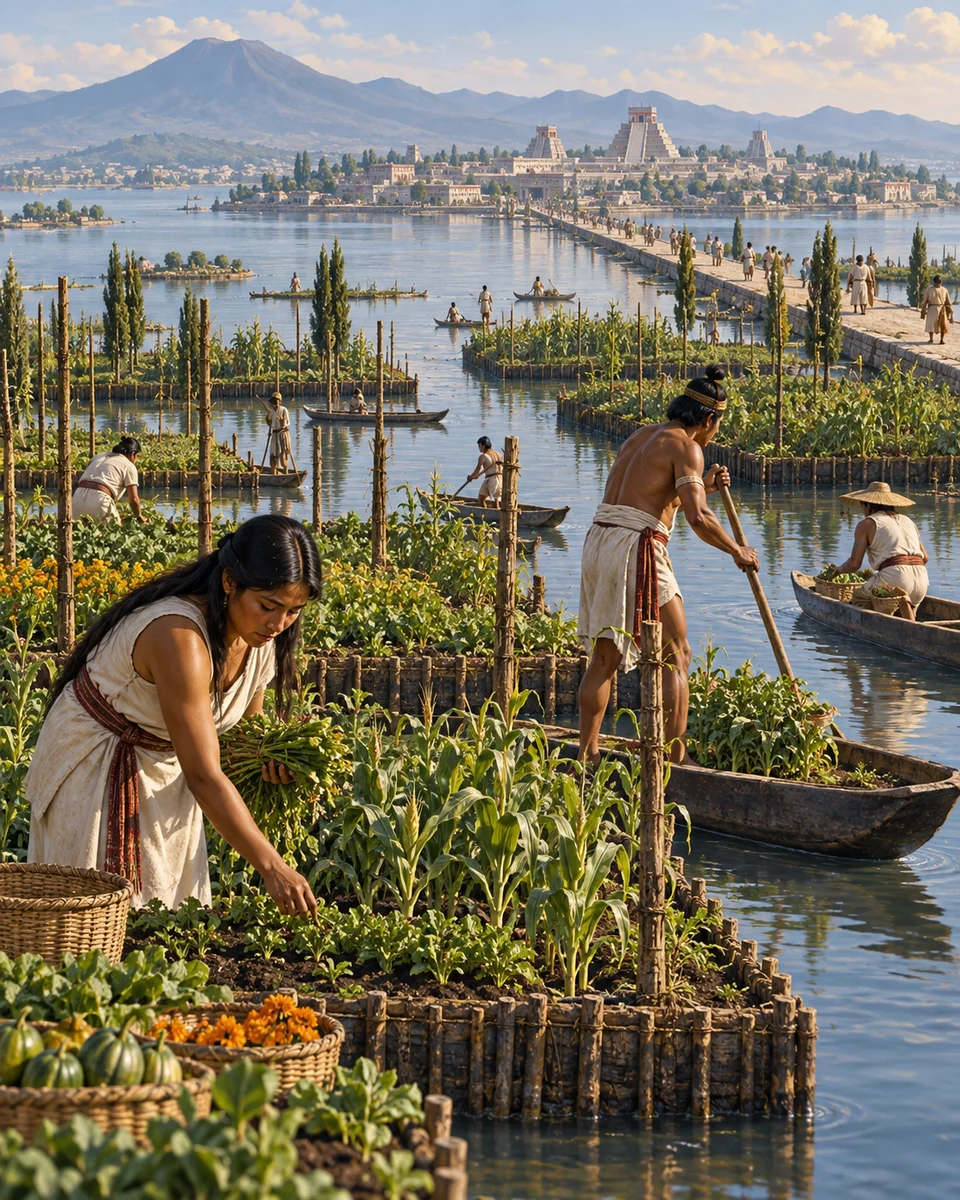
myAudience · AI-generated original illustration · Original generated artwork; not documentary evidence or a grant of landmark/cultural rights. No third-party image reproduced.
The empire often called Aztec grew from the alliance of Tenochtitlan, Texcoco and Tlacopan in the late 1420s. The Mexica of Tenochtitlan became its dominant partners. This was a tribute system across many communities, rather than a uniform nation with identical laws and loyalties. Local relationships could include cooperation, resistance and coercion.
Tenochtitlan occupied a lake environment. Causeways, canals and water-management works connected movement, defence and daily provisioning. Chinampas were cultivated plots built within shallow wetland settings, not rafts floating freely on a lake. Their productivity depended on labour, canals and maintenance, so impressive engineering should not be separated from the people sustaining it.
Tribute supplied goods to political and religious centres; markets supported further exchange. Conquest and ceremonial violence were part of imperial authority, but neither a romantic account of perfect harmony nor a portrait of nothing but brutality explains everyday life. Farmers, merchants, artisans and households experienced the system differently.
The Spanish conquest of Tenochtitlan in 1521 involved Indigenous allies and devastating disease as well as European forces. Later manuscripts combine Indigenous knowledge with colonial circumstances. Ask who commissioned an image or tribute list, and which voices it leaves out. Descendant communities remain present: conquest ended a political regime, not the existence of Indigenous peoples.
Image: speculative AI reconstruction; uncertain details.
Scene: Tenochtitlan basin agriculture and canals, before the sixteenth-century conquest; urban arrangement and figures interpretive.