Montezuma II: a life in context
By Mexica/Aztec worlds · myAudience
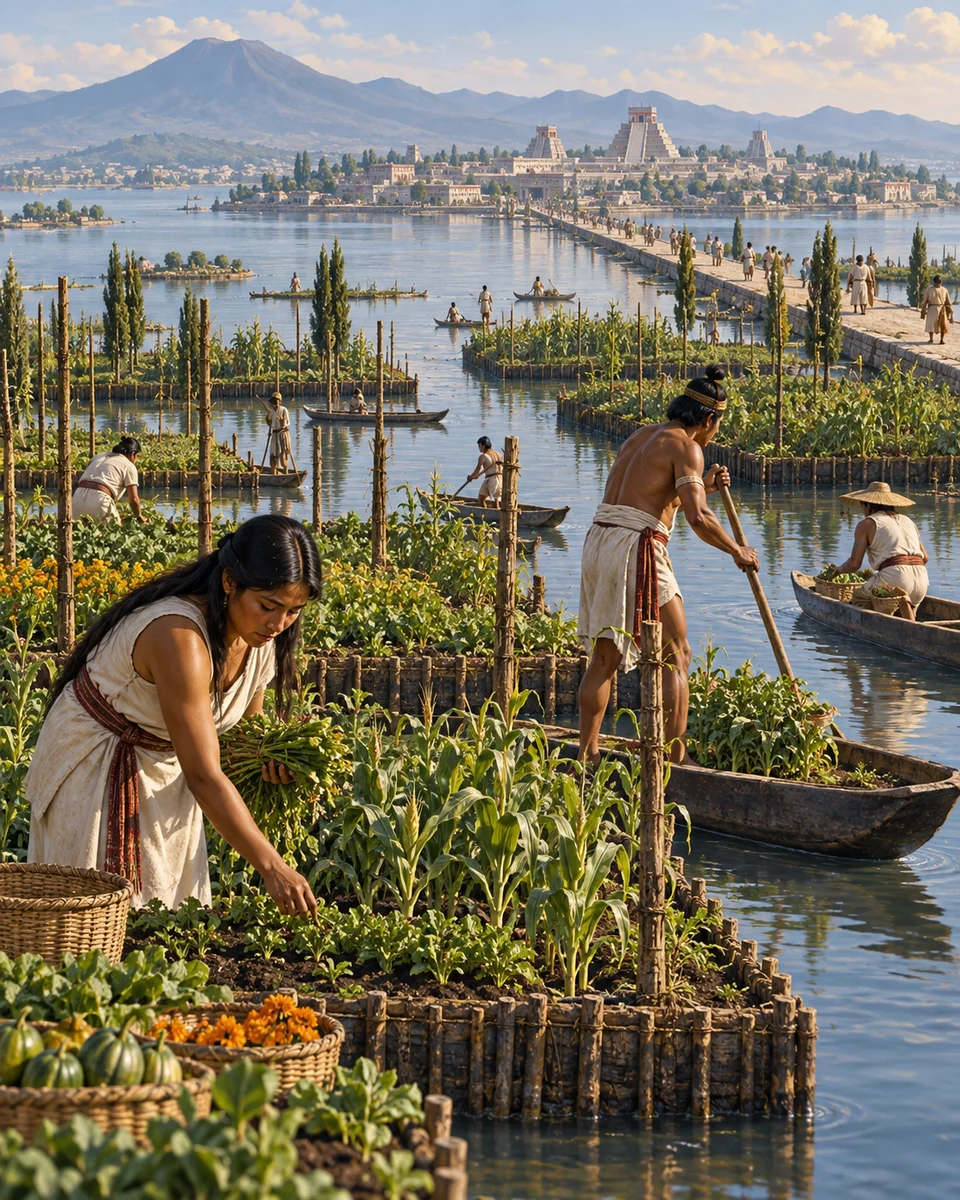
myAudience · AI-generated original illustration · Original generated artwork; not documentary evidence or a grant of landmark/cultural rights. No third-party image reproduced.
Moctezuma II, often called Montezuma, ruled Tenochtitlan from around 1502 until 1520. He led the dominant city of a wider alliance and tribute system, not every Indigenous society in central Mexico. Imperial relationships included rivalry and resistance as well as cooperation.
His reign involved court institutions, religious responsibilities and campaigns. The resources sustaining royal authority came from many communities. Describing the empire only through ceremony or warfare misses the farming, markets and craft production supporting it.
The arrival of Hernán Cortés's expedition intersected with existing Indigenous political conflicts. Spanish narratives of Moctezuma's behaviour are contested and shaped by conquest. The circumstances of his death are also disputed; one account should not be presented as unquestioned fact.
The meeting with Spanish forces should be understood within a landscape of existing political relationships. Communities subject to tribute could have reasons to oppose Tenochtitlan that were not simply loyalty to Europeans. Recognising that agency does not make the subsequent conquest harmless or consensual. It changes the question from why one ruler failed to how several actors pursued aims under shifting and dangerous conditions. Sources written after conquest may simplify those calculations, especially when their authors need to justify an outcome. A careful account separates documented alliances from assumed motives.
Compare colonial accounts with Indigenous-produced narratives and material evidence. Claims that he simply mistook Europeans for gods require scrutiny. His life should illuminate political choices under extraordinary pressure, rather than a fatalistic story of inevitable conquest.