Imperial Brazil: independence without immediate equality
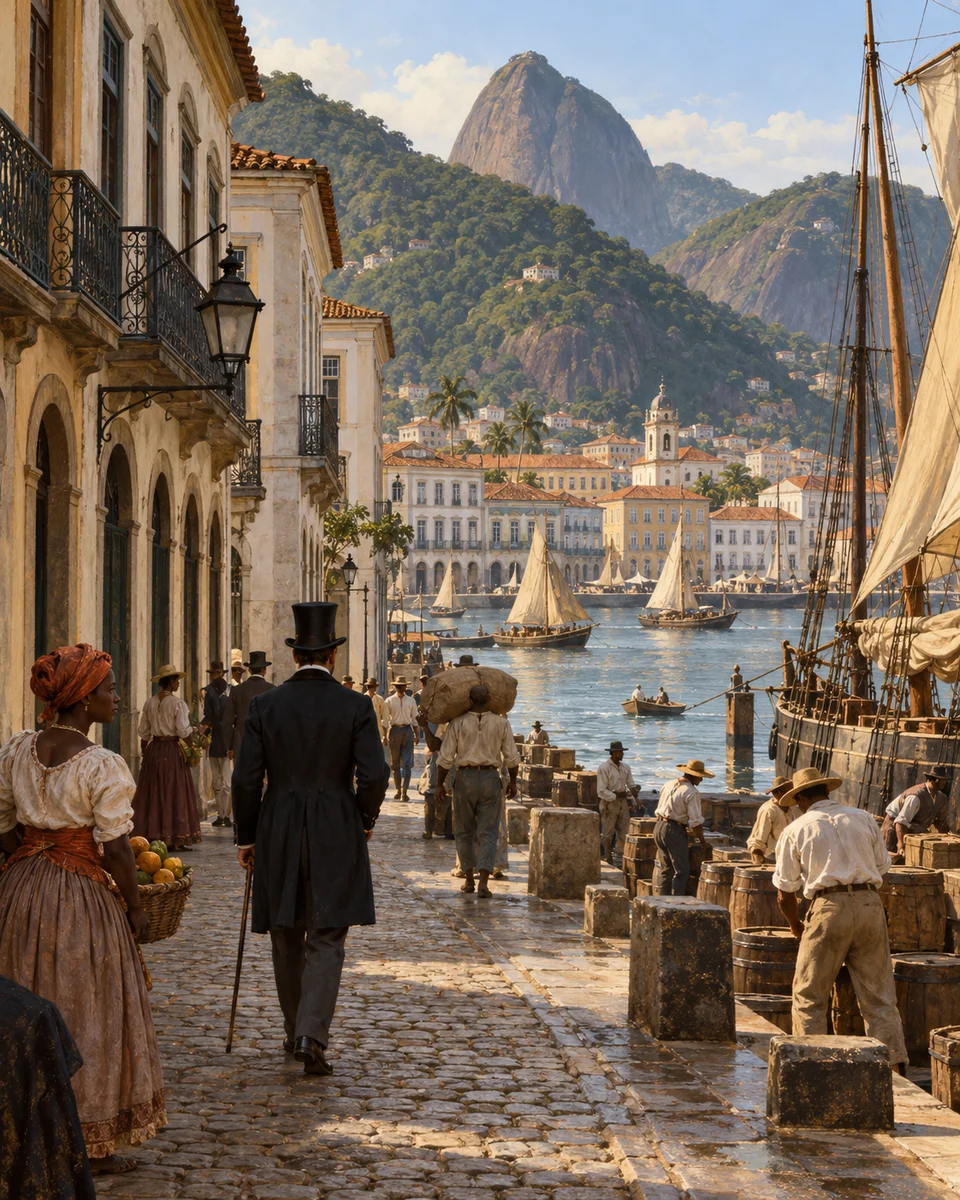
myAudience · AI-generated original illustration · Original generated artwork; not documentary evidence or a grant of landmark/cultural rights. No third-party image reproduced.
Brazil became an independent empire in 1822, retaining a monarchy linked to the Portuguese royal family. Independence changed the relationship with Portugal without immediately transforming the social hierarchy. Indigenous peoples, enslaved Africans and their descendants, free workers and regional elites experienced the new state in very different ways.
Agricultural exports and trade helped sustain imperial society. Infrastructure and urban institutions developed, but slavery remained central to economic and social life for most of the monarchy. A railway or palace should therefore be read as evidence of organised resources and unequal access, rather than as a simple measure of national wellbeing.
Pedro II's long reign is associated with constitutional government, patronage of learning and major political challenges. Ministers, legislators and regional interests also shaped decisions. The abolition of slavery in 1888 followed prolonged resistance and campaigning; attributing it to the benevolence of one imperial household would erase crucial participants.
The monarchy ended in 1889, but the creation of a republic did not dissolve inequality. Compare an imperial portrait with abolitionist writing or an account of working life. Official symbols show how the state wished to appear, not the full distribution of freedom and opportunity. This overview follows the nineteenth-century empire, rather than presenting it as the whole history of Brazil.
Image: speculative AI reconstruction; uncertain details.
Scene: Rio harbor and street, nineteenth century; interpreted architecture and everyday figures.