Byzantium: Rome continued, and changed
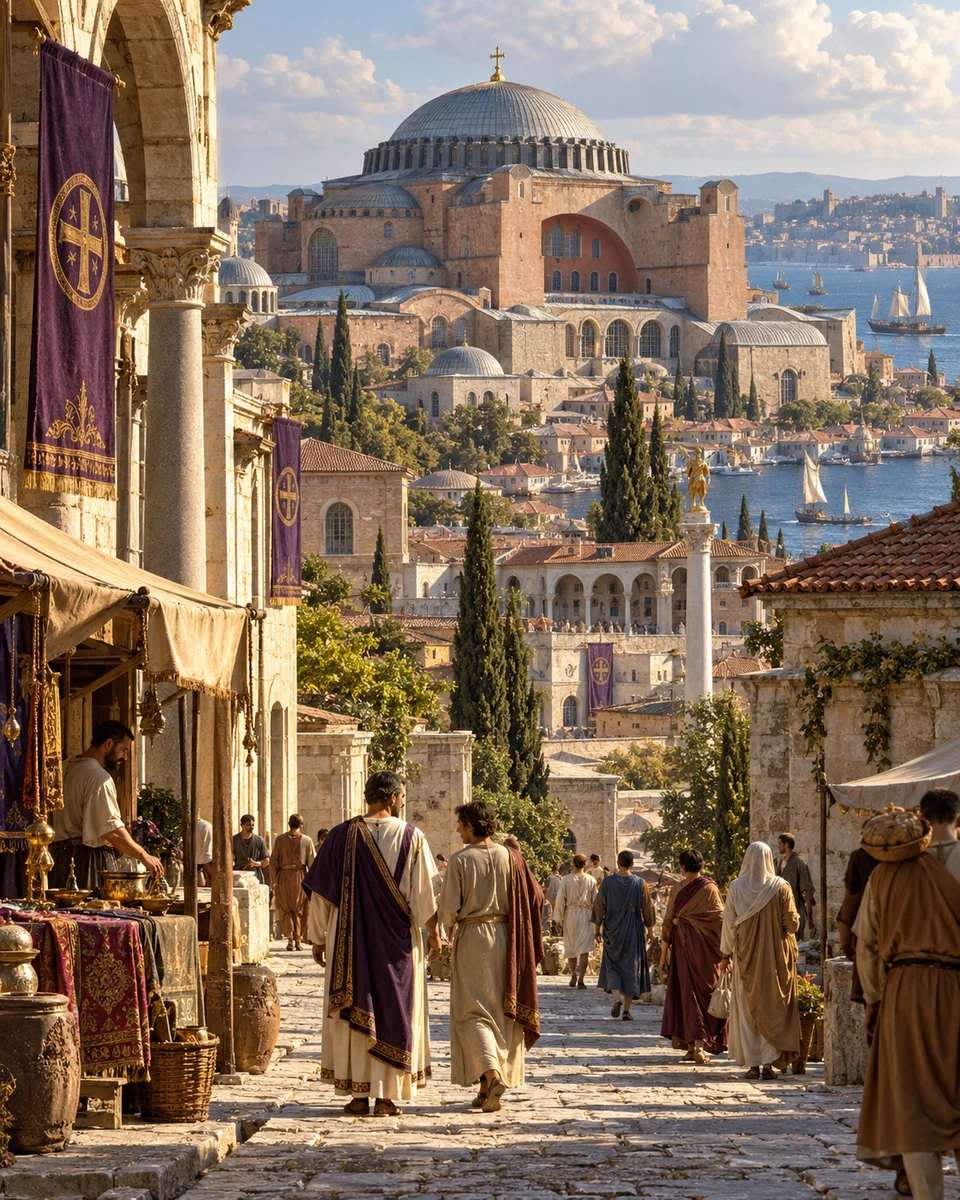
myAudience · AI-generated original illustration · Original generated artwork; not documentary evidence or a grant of landmark/cultural rights. No third-party image reproduced.
The people now commonly called Byzantines understood their state as Roman. Constantinople anchored an empire that survived the collapse of western imperial government in the fifth century. Its territory, languages and institutions changed repeatedly before the city's conquest by the Ottomans in 1453; a single map cannot represent a thousand years.
Taxation, administration, diplomacy and military organisation helped the state endure. Greek became central to government and culture, while Christianity shaped public authority and disputes. Farmers, traders, clerics and soldiers maintained the economy behind ceremonial images of emperors. Powerful institutions did not remove conflict over belief, status or resources.
Hagia Sophia, built under Justinian in the sixth century, demonstrates the coordination of material, labour and architectural knowledge. Its great dome belongs to a building repeatedly repaired and altered. The monument's later uses are part of its history, so a reconstructed pristine interior would show one interpretation of one phase, not the whole building's life.
Mosaics and chronicles often make imperial power appear stable and sacred. Compare them with coins, seals and archaeological evidence of everyday production. The sack of Constantinople in 1204 and its recovery in 1261 also interrupt an easy story of continuity. The useful question is how people adapted inherited Roman institutions under changing pressures, not whether Byzantium was simply old Rome preserved.
Image: speculative AI reconstruction; uncertain details.
Scene: Sixth-century Constantinople-inspired setting with early Hagia Sophia; interpreted urban plan, without Ottoman minarets.