Theodora: a life in context
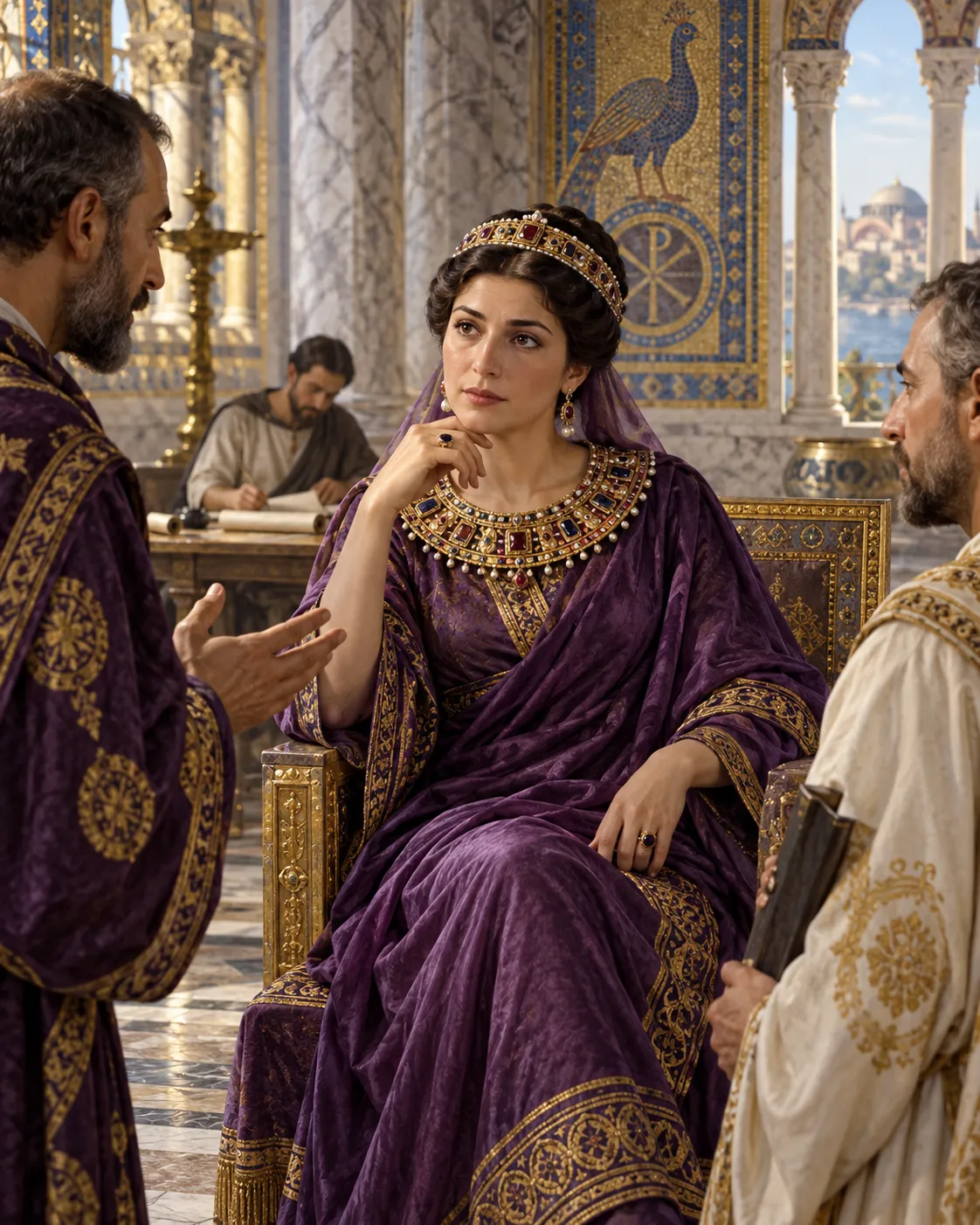
myAudience · original generated contextual illustration · Original generated illustration; not a documentary photograph or authenticated portrait; no source artwork copied.
Theodora was the wife of Emperor Justinian I and an influential figure in the sixth-century Byzantine court. Her role belongs to the eastern Roman imperial system. She should not be confused with other historical women named Theodora or presented as ruling all later Byzantine history.
Sources describe her involvement in court politics and religious questions. The Nika revolt of 532 became a prominent episode in representations of her resolve. The celebrated speech attributed to her should not be treated automatically as a verbatim recording.
Procopius offers sharply different portrayals across his works, including the hostile Secret History. Claims about her early life and character therefore require attention to genre and purpose. Repeating scandal as settled fact obscures the evidence rather than explaining it.
Contrasting accounts by the same author demand attention to the kind of writing being produced. A work praising imperial achievement and a text attacking court figures do not supply interchangeable observations, even when they discuss the same people. Ask what the author is trying to persuade an audience to believe and which detail can be corroborated independently. That does not remove Theodora's influence from history; it makes the attribution of particular interventions more precise. A careful explanation can keep her agency visible without using scandal or an idealised speech to fill every gap concerning her political actions.
The mosaic at San Vitale in Ravenna presents Theodora within an imperial ceremonial image, while Procopius’s works construct strikingly different literary portraits. A mosaic and a hostile narrative each have a purpose; neither gives unrestricted access to private motives. Putting them beside the court’s religious and political activity reveals representation as part of imperial authority.