Canada: federation and overlapping political histories
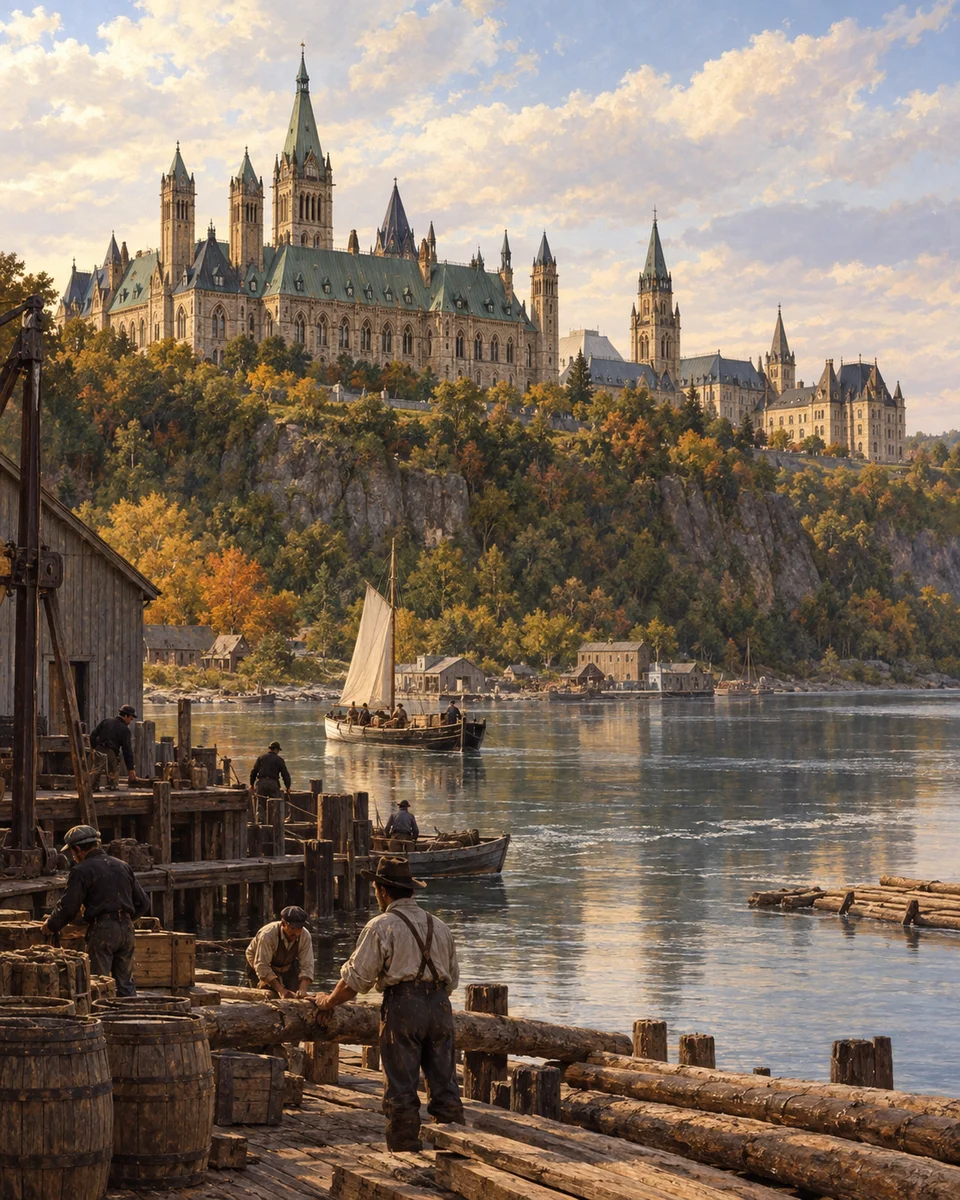
myAudience · AI-generated original illustration · Original generated artwork; not documentary evidence or a grant of landmark/cultural rights. No third-party image reproduced.
Canada's history includes Indigenous nations, French and British colonial societies, and communities formed through later migration. Confederation in 1867 joined an initial group of provinces into a federal Dominion. It did not begin human history in the region or extinguish Indigenous authority through a single universally accepted agreement.
Railways and settlement linked expanding government ambitions with resource development. These projects required financing and labour and affected existing lands and relationships. Treaties, reserves and residential schools belong to the history of colonial power; infrastructure cannot be understood only through the language of connection and opportunity.
Wilfrid Laurier's premiership from 1896 to 1911 occurred amid growth, immigration and debates about language and Canada's relationship with Britain. Different regions and communities sought different futures. Federal institutions offered ways to negotiate some conflicts while also implementing policies whose harms were distributed unequally.
Compare a confederation debate with a treaty account and community testimony. Ask who participated directly, who was spoken for and whose interpretation was ignored. Contemporary Canada is not an ancient empire with one founding leader. This lesson introduces a selected period of state formation while recognising that the histories of Indigenous nations and other communities require their own sources and voices.
Image: speculative AI reconstruction; uncertain details.
Scene: Nineteenth-century Ottawa-inspired parliamentary bluff and working waterfront; not an exact original parliamentary tower survey.