Cree nations: relationships across changing landscapes
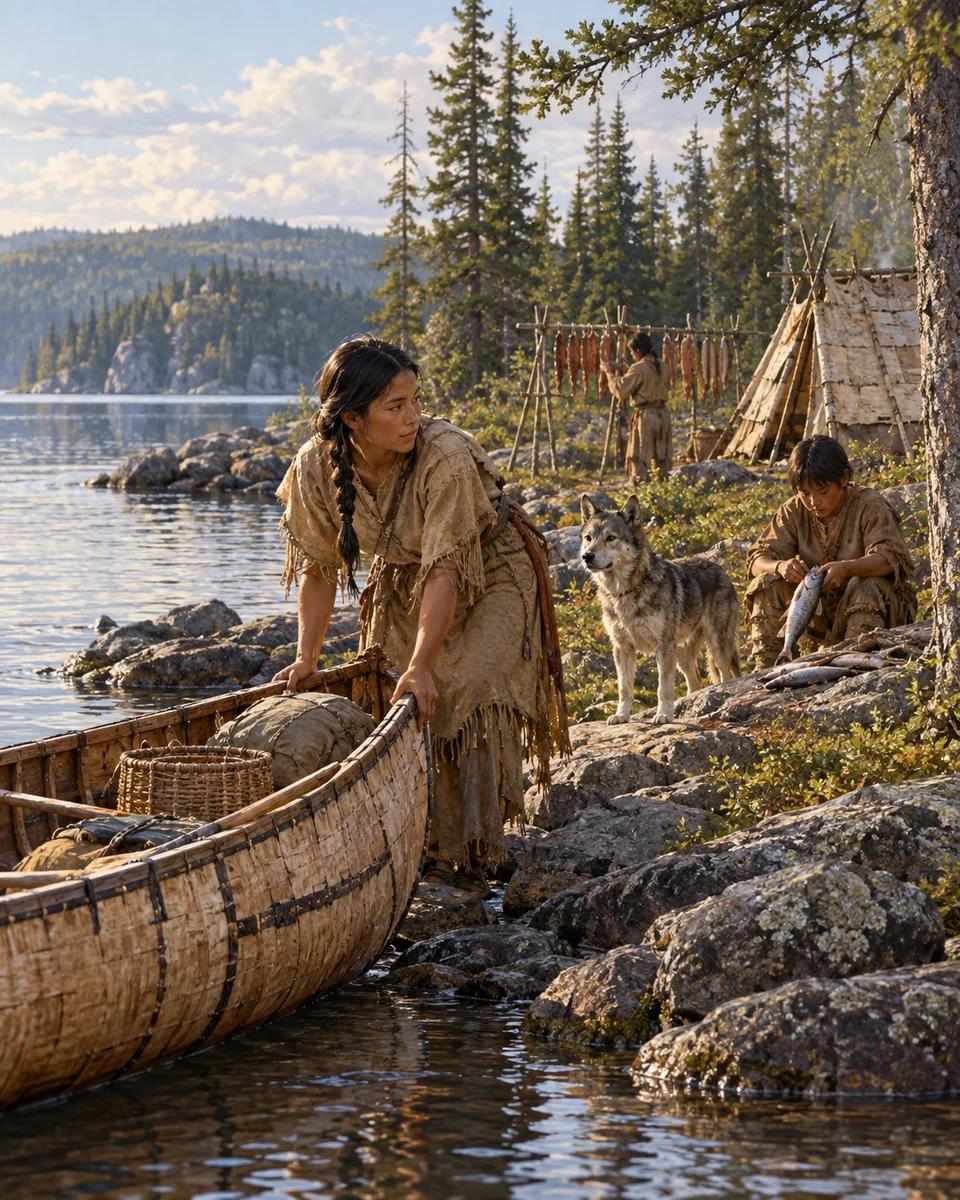
myAudience · AI-generated original illustration · Original generated artwork; not documentary evidence or a grant of landmark/cultural rights. No third-party image reproduced.
Cree peoples encompass distinct communities and language varieties across a broad part of northern North America. They should not be presented as one ancient empire ruled from a capital. Woodland and Plains environments supported different patterns of subsistence, movement and relationship; those patterns changed through exchange and historical circumstances.
Knowledge of land, waterways and seasonal resources supported family and community life. Trade relationships connected people long before a European company drew a commercial map. The fur trade introduced further goods and pressures, but Cree participants were actors negotiating relationships, not simply background figures in someone else's expansion.
Treaty 6 was negotiated in 1876, with later adhesions. Its meaning cannot be reduced to a coloured region on a map: Indigenous understandings, oral commitments and Crown interpretations must be considered together. The disappearance of bison and expanding settlement intensified threats to livelihoods and political autonomy in the Plains.
Read a treaty account alongside community history, and identify who translated or recorded the exchange. A written document does not capture every spoken commitment or cultural understanding. Cree nations, languages and political institutions continue today. A responsible overview follows particular communities and periods, avoids invented universal customs, and treats living Indigenous sources as essential rather than decorative additions.
Image: speculative AI reconstruction; uncertain details.
Scene: Interpreted boreal Cree canoe landing and seasonal shelter setting; not documentary clothing, a universal Cree community or a dated reconstruction.