England and Britain: crowns, institutions and empire
By England and Britain · myAudience
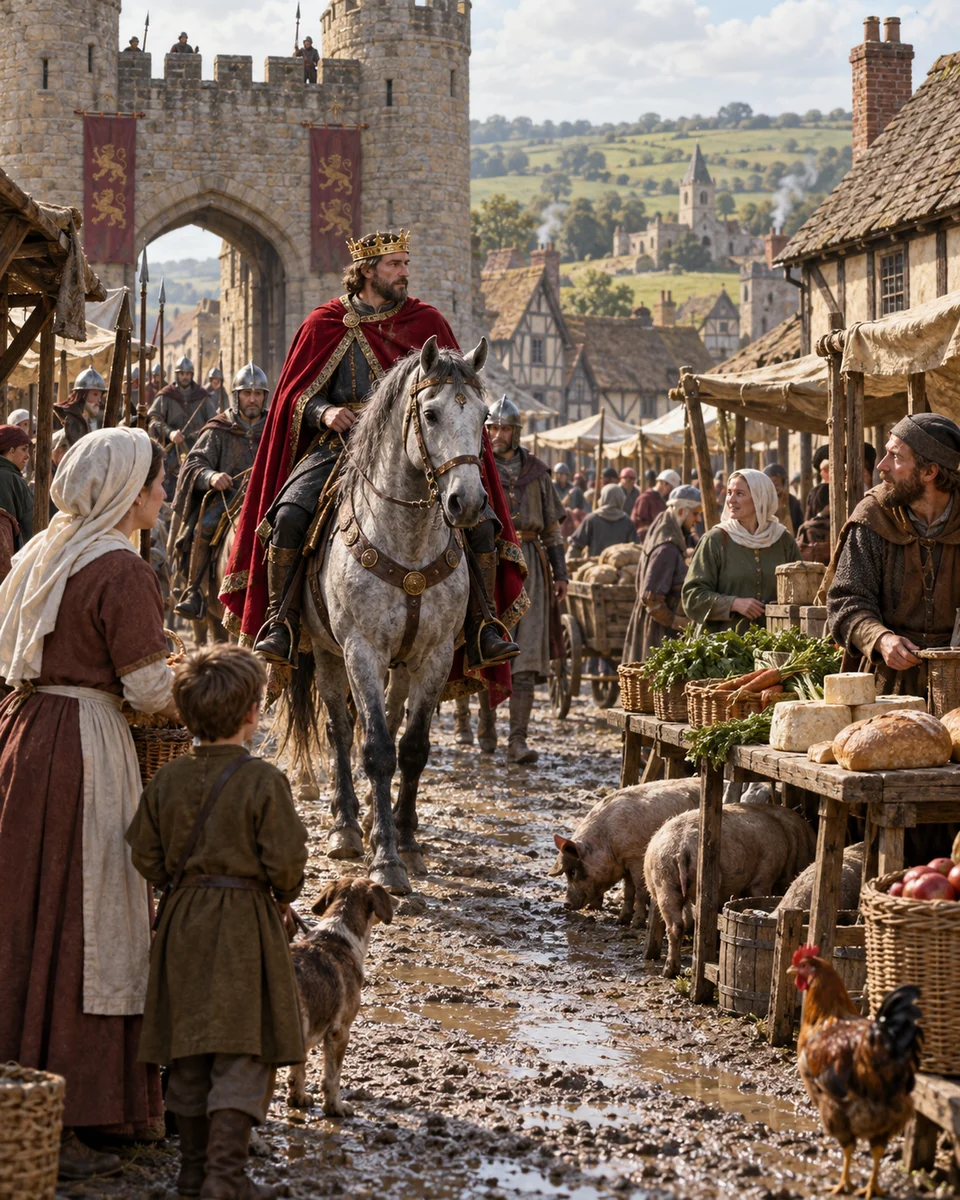
myAudience · AI-generated original illustration · Original generated artwork; not documentary evidence or a grant of landmark/cultural rights. No third-party image reproduced.
England, Britain and the United Kingdom refer to different historical formations. Eleanor of Aquitaine's twelfth-century relationships, Elizabeth I's Tudor monarchy and Victoria's nineteenth-century reign belong to distinct political worlds. A collection using these figures should show those differences rather than implying that one unchanged country governed the same territory throughout.
Medieval kingship depended on estates, aristocratic relationships and religious institutions. Later parliaments, taxation and state administration developed through conflict and negotiation. Towns and countryside supplied the resources behind royal power. The survival of a castle or palace can hide the less monumental labour that made its operation possible.
Elizabethan cultural production accompanied religious tension, overseas ventures and unequal social life. Victoria's Britain later became an industrial and imperial power, with consequences for colonised peoples as well as domestic change. Neither literature nor railway construction makes coercion disappear; achievements and their costs belong in the same account.
Compare a royal portrait with a statute, a workers' account or a colonial testimony. Different sources reveal different distributions of opportunity and authority. Dates, titles and jurisdictions matter, especially when linking a monarch to a modern national label. This overview introduces selected transitions; it is not a full history of England, Britain or the many societies affected by British empire.
Image: speculative AI reconstruction; uncertain details.
Scene: Medieval English castle and market-town interpretation; the mounted figure is not an authenticated ruler, Elizabeth I or Victoria.