Gaul beyond the conqueror’s account
By Gaul and Eburones · myAudience
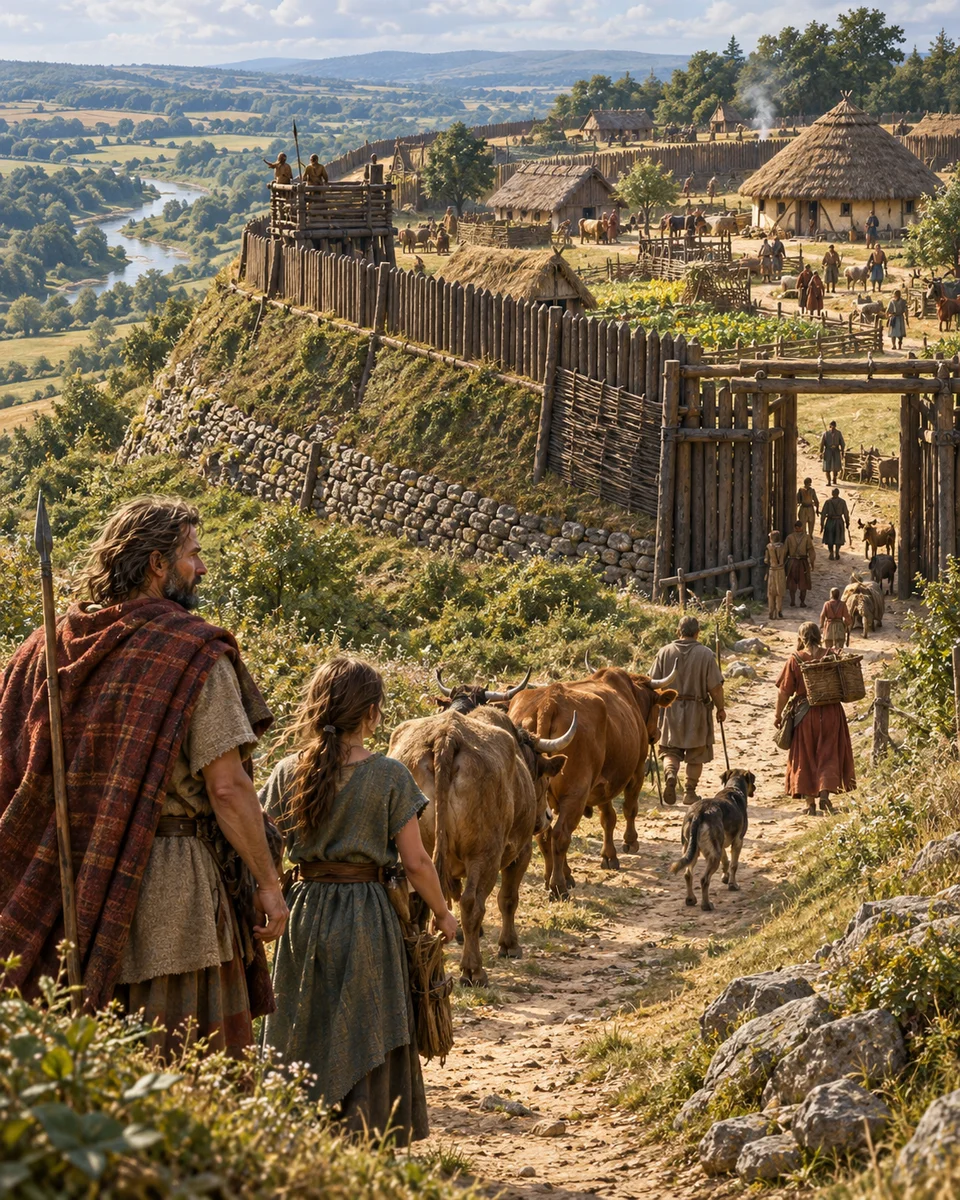
myAudience · AI-generated original illustration · Original generated artwork; not documentary evidence or a grant of landmark/cultural rights. No third-party image reproduced.
Gaul was a broad geographical label used by ancient writers, not one unified state. Communities across much of western Europe had different political arrangements and relationships. The Eburones, associated with Ambiorix, are one particular case; their story cannot stand in for every group described as Gallic.
Fortified settlements often called oppida could combine defence, craft production and exchange. Their banks, walls and entrances show choices about materials and movement. Farming communities sustained these centres, while metalwork and imported goods reveal connections beyond a supposedly isolated tribal world. Not every settlement had the same size or purpose.
Julius Caesar's campaigns in the first century BCE brought conquest, enslavement and severe disruption. His written account is indispensable but also presents his military actions to a Roman audience. A description of a people by their enemy deserves scrutiny, especially when used to justify further violence or claim an impressive victory.
Archaeology can test aspects of written narratives without supplying the names and motives of every participant. Compare a settlement's occupation layers with a campaign account, and separate what each actually shows. Roman rule later transformed institutions and material life unevenly. Neither a simple replacement story nor a timeless Celtic identity captures the variety of those changes.
Image: speculative AI reconstruction; uncertain details.
Scene: Late Iron Age Gaul-inspired fortified hill settlement; interpretive rampart and houses, not a measured excavation plan.