Frederick Barbarossa: a life in context
By German states and the Holy Roman Empire · myAudience
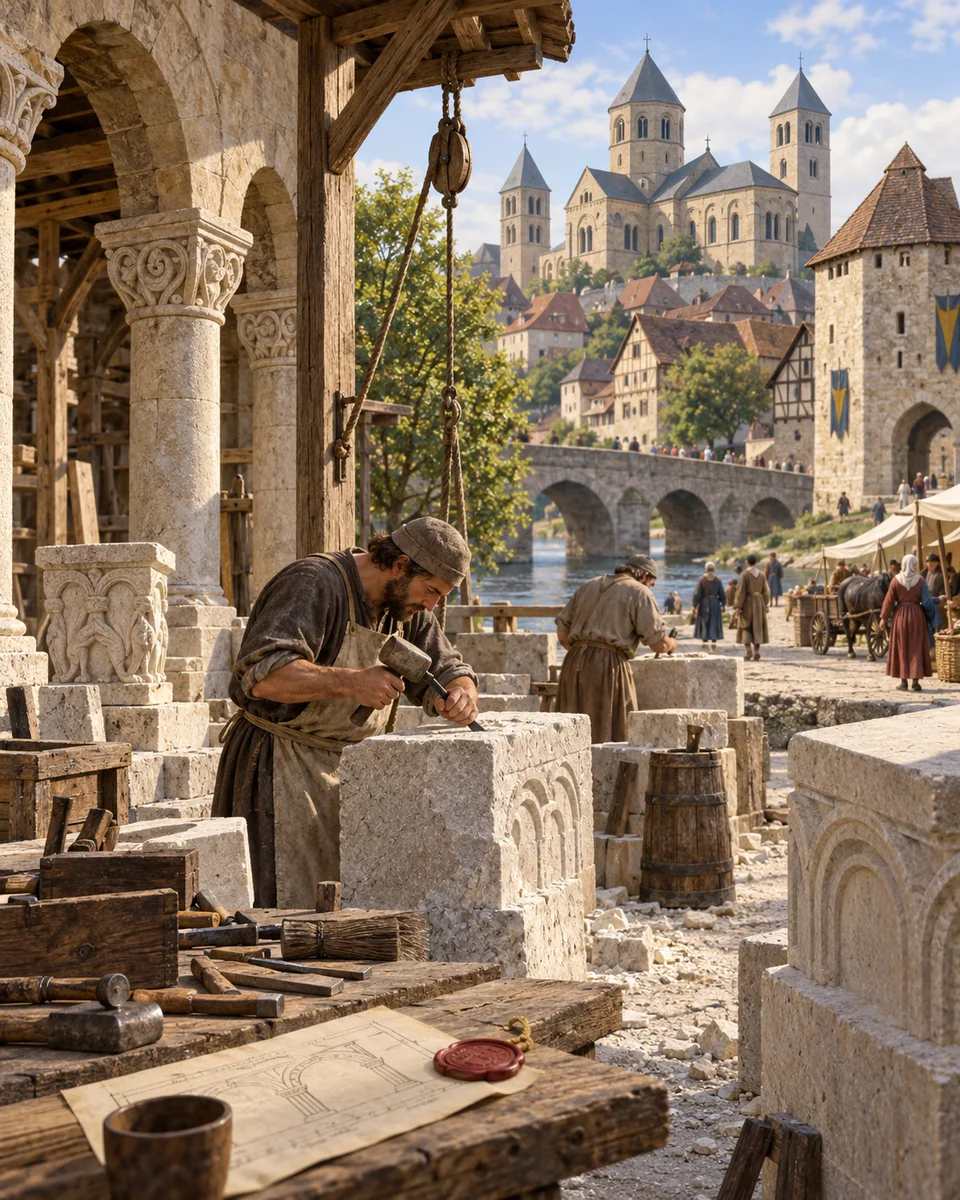
Original AI illustration generated for myAudience · AI-generated illustration; no claim of documentary evidence or authenticated likeness
Frederick I, known as Barbarossa, became king of the Germans in 1152 and Holy Roman Emperor in 1155. His rule concerned a complex political structure, not a uniformly governed modern Germany or a restored copy of ancient Rome.
He asserted imperial claims while negotiating and fighting with princes, Italian cities and the papacy. Authority depended on alliances and resources. The existence of an imperial title did not ensure obedience throughout every territory associated with it.
Conflict with the Lombard League exposed the limits of his ambitions in Italy. He later joined the Third Crusade and died in 1190 before reaching its principal campaigns. His life was therefore shaped by institutions and relationships beyond one national story.
An imperial claim could be substantial without creating a state governed from one centre in the modern sense. The practical question was often which rights a city, prince or church authority recognised, and what resources each could mobilise in a dispute. Victory might secure an agreement rather than eliminate the other institution. Reading that agreement is therefore as important as describing the battle preceding it. This makes Barbarossa's career a useful introduction to negotiated medieval power: authority was built through repeated relationships, whose terms could be challenged again when circumstances changed.
The Peace of Constance in 1183 recognised the Lombard cities’ right to elect their magistrates while preserving imperial claims. It shows authority being expressed through a settlement with other institutions, rather than through their disappearance. A military and legal career could leave negotiated relationships that neither side considered wholly unrestricted.