Medieval Hungary: kingship, law and cultural patronage
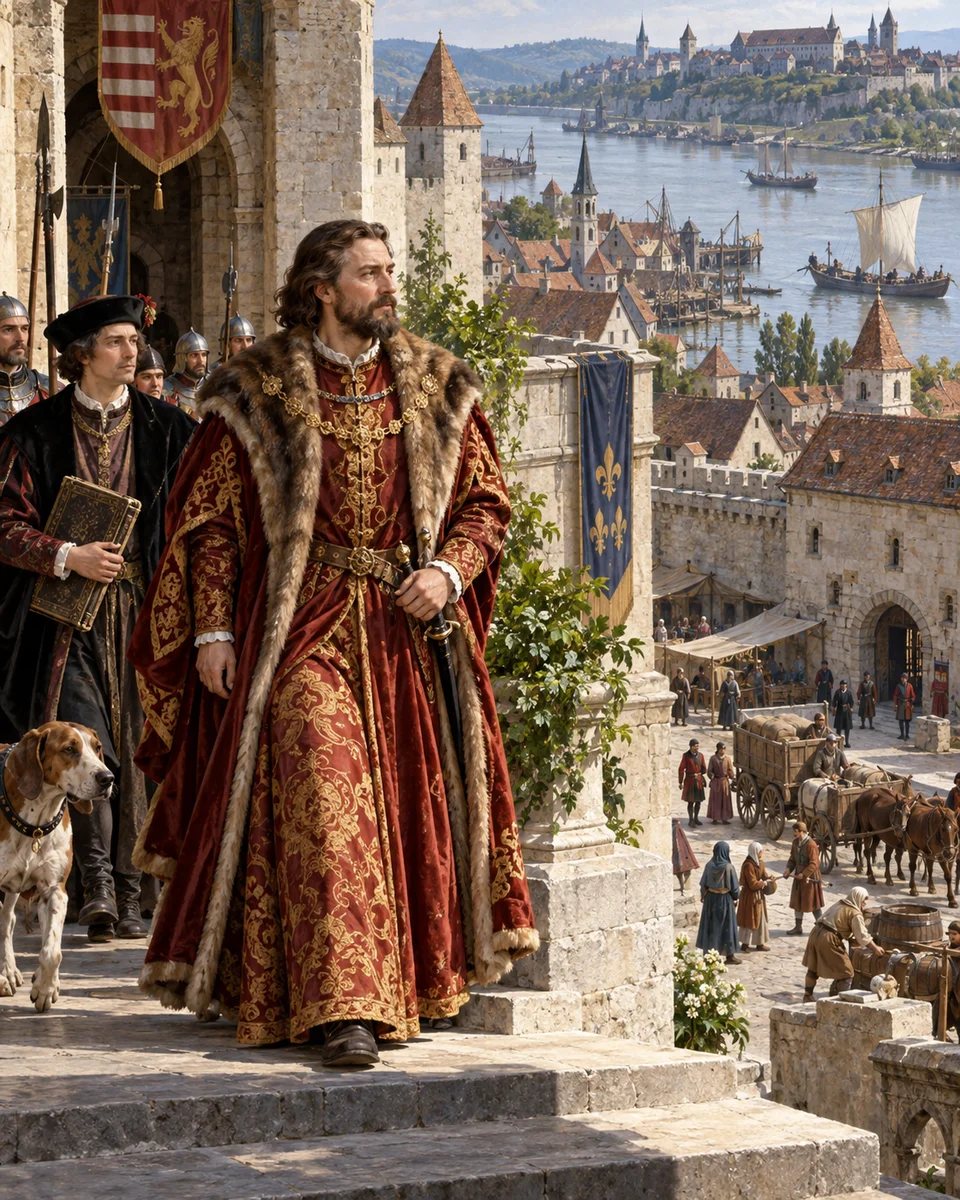
myAudience · AI-generated original illustration · Original generated artwork; not documentary evidence or a grant of landmark/cultural rights. No third-party image reproduced.
The Kingdom of Hungary was a central European state whose borders and communities changed over time. Its medieval territory cannot simply be equated with today's Hungary. Kingship involved relationships with nobles, towns and the church, alongside contact and conflict with neighbouring powers. Those relationships shaped what rulers could actually accomplish.
Agriculture, taxation and trade supported political institutions and military activity. Different communities had unequal rights and responsibilities. Fortifications and royal buildings reveal organised resources, but they should be examined alongside the people who financed and maintained them. Material splendour does not establish prosperity shared equally across society.
Matthias Corvinus, king from 1458 to 1490, pursued military and administrative policies and patronised Renaissance learning. His library is an important example of elite collecting and scholarship. Its existence does not mean books or education were accessible to every subject, nor that royal patronage alone explains wider cultural connections.
A charter, a manuscript and a military account each make a different part of the kingdom visible. Ask who commissioned the source and what it omits. Later conflicts and political fragmentation changed the setting after Matthias's reign. This overview offers a grounded entry into late medieval institutions rather than treating one celebrated king as the whole history of Hungarian society.
Image: speculative AI reconstruction; uncertain details.
Scene: Late-medieval Hungarian town and court setting; ruler, costume and heraldry imagined, not an authenticated Matthias portrait.