Pachacuti: a life in context
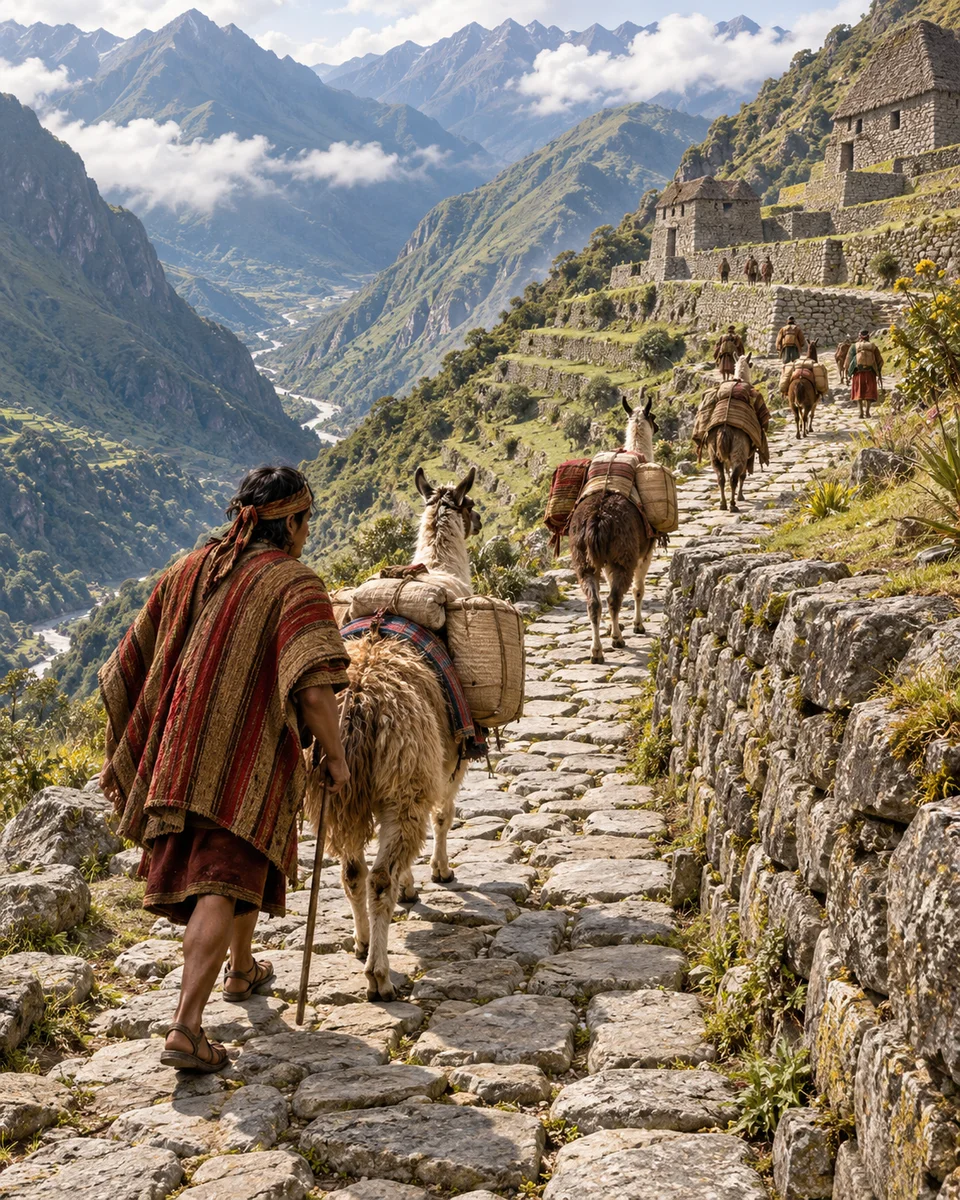
myAudience · AI-generated original illustration · Original generated artwork; not documentary evidence or a grant of landmark/cultural rights. No third-party image reproduced.
Pachacuti is associated with the transformation of the Inca polity into a rapidly expanding Andean state. His reign is usually placed in the fifteenth century. Much narrative evidence was recorded later under colonial conditions, so precise chronology and particular episodes need caution.
Expansion combined warfare, diplomacy and arrangements with local communities. Governing across difficult landscapes required labour, administration and communication. The ruler's ambition was realised through people and institutions, not through mountain engineering performed by one individual.
Building projects and changes in Cusco are connected with his reputation. Machu Picchu is commonly associated with his period, but that does not settle every question about its specific functions or occupants. Archaeology should constrain rather than decorate a heroic narrative.
Attributing an Andean site to a reign is only the beginning of interpretation. A building's layout, access and material remains may indicate possible functions without naming every occupant or event. It is therefore useful to ask what archaeology contributes independently of the ruler tradition and where the two forms of evidence remain uncertain. Imperial construction also depended on workers and local environments, so identifying a patron does not explain the method or social cost. This keeps architectural achievement substantial while preventing a royal name from filling all the gaps in a complex site history.
His association with Machu Picchu is a widely held interpretation of the site’s royal setting, rather than proof of every room’s function. Archaeology and later chronicles answer different questions about expansion, building and chronology. Keeping fifteenth-century dates approximate is more accurate than treating a reconstructed regnal calendar as an uninterrupted contemporary record.