Japanese political worlds: court and warrior governments
By Japanese states and societies · myAudience
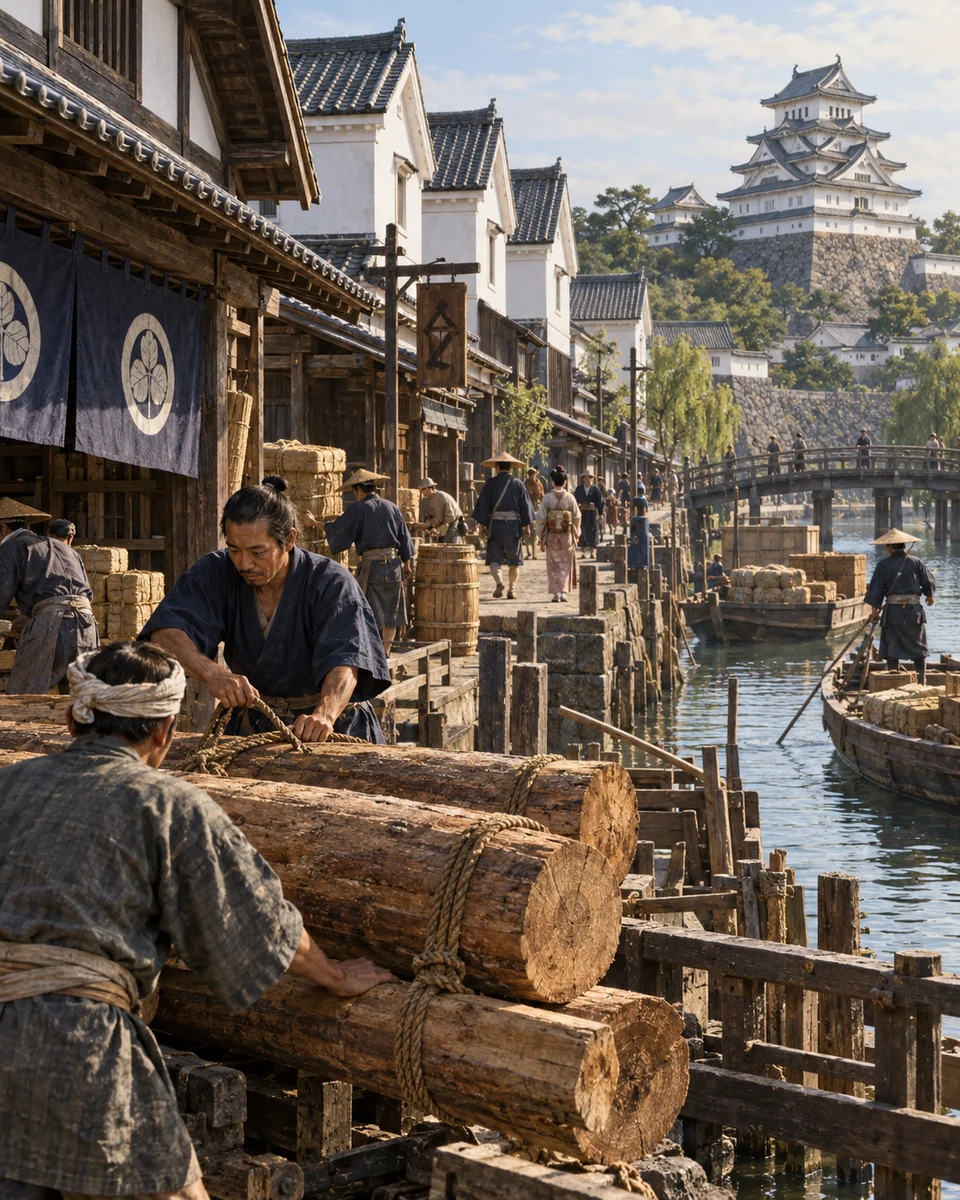
myAudience · AI-generated original illustration · Original generated artwork; not documentary evidence or a grant of landmark/cultural rights. No third-party image reproduced.
Japanese history includes changing relationships between imperial courts, warrior authorities and regional communities. Hōjō Tokimune operated within the thirteenth-century Kamakura system; Tokugawa Ieyasu helped establish a different shogunate in the seventeenth century. Their actions and institutions should not be merged into one timeless samurai government.
Kamakura authority involved warrior obligations and powerful governing families. The Mongol-led invasions of 1274 and 1281 brought military and financial pressures. Weather mattered, but attributing the outcome solely to miraculous storms obscures defensive preparation, combat and logistical problems. Later narratives also reshaped how those invasions were remembered.
Tokugawa rule from 1603 combined central shogunal authority with domains governed by daimyō. Cities, roads and regulated relationships helped sustain this political order. Restrictions on overseas contact did not mean every form of foreign exchange stopped. The Dutch, Chinese and neighbouring political worlds remained relevant through particular channels.
Under the Tokugawa alternate-residence system, daimyō travelled between their domains and Edo; their families remained in the capital during their absence. The arrangement linked political supervision to expensive movement and residence. Domains still managed local laws and taxation, so central authority worked through regulated relationships rather than replacing every regional institution with one uniform administration.
Image: speculative AI reconstruction; uncertain details.
Scene: Early seventeenth-century Tokugawa merchant street and canal; urban arrangement and castle interpretation.