Tokugawa Ieyasu: a life in context
By Japanese states and societies · myAudience
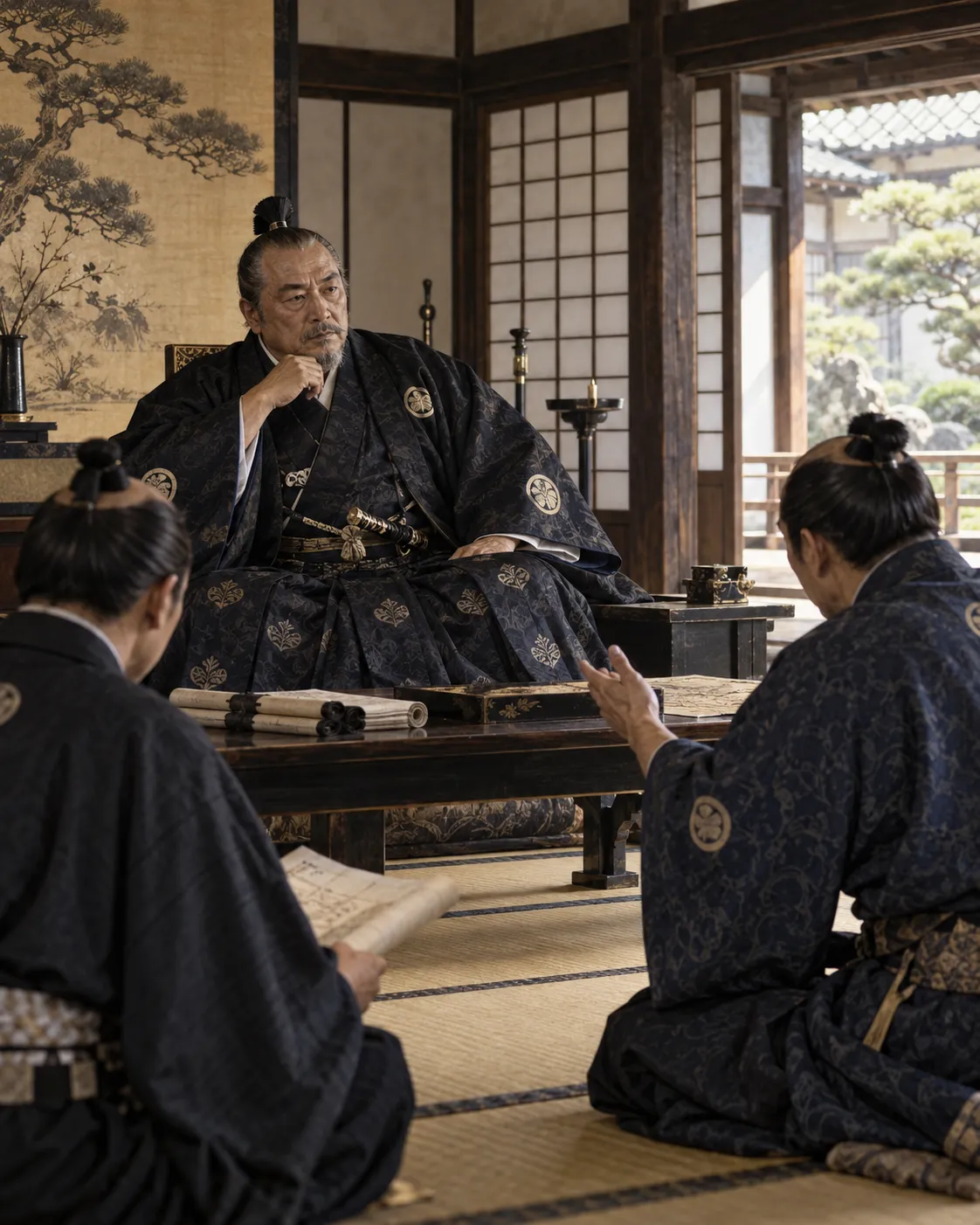
myAudience · original generated contextual illustration · Original generated illustration; not a documentary photograph or authenticated portrait; no source artwork copied.
Tokugawa Ieyasu emerged from decades of Japanese political conflict and helped establish the shogunate that bears his family's name. Victory at Sekigahara in 1600 and appointment as shogun in 1603 were major stages, not isolated achievements explaining every institution that followed.
He governed through relationships with other daimyō and existing centres of authority. Arrangements concerning land and allegiance supported the new order. The imperial court continued, so shogunal power should not be confused with simply replacing the emperor.
Later Tokugawa regulations and long-term political stability developed through successors as well as the founder. Domains retained important roles within the system. Describing the whole period as one ruler's complete blueprint hides institutional adaptation and changing circumstances.
Political settlement involves more than securing the last major victory. Rival groups must be assigned positions and obligations, and the new order must have ways to continue after its founder leaves office or dies. Asking how those relationships were sustained distinguishes institutional durability from personal success. It also keeps later developments from being attributed automatically to an original master plan. A regulation enacted by a successor belongs within Tokugawa history but still needs its own date and purpose. This method lets readers understand both continuity and adaptation without imagining that one ruler designed every detail of centuries that followed.
He transferred the formal office of shogun to his son Hidetada in 1605 but retained substantial practical authority until his death in 1616. A change of title was therefore not an immediate withdrawal from government. This overlap helps explain dynastic continuity while distinguishing the founder’s decisions from the regulations and arrangements that later generations developed.