Jayavarman VII: a life in context
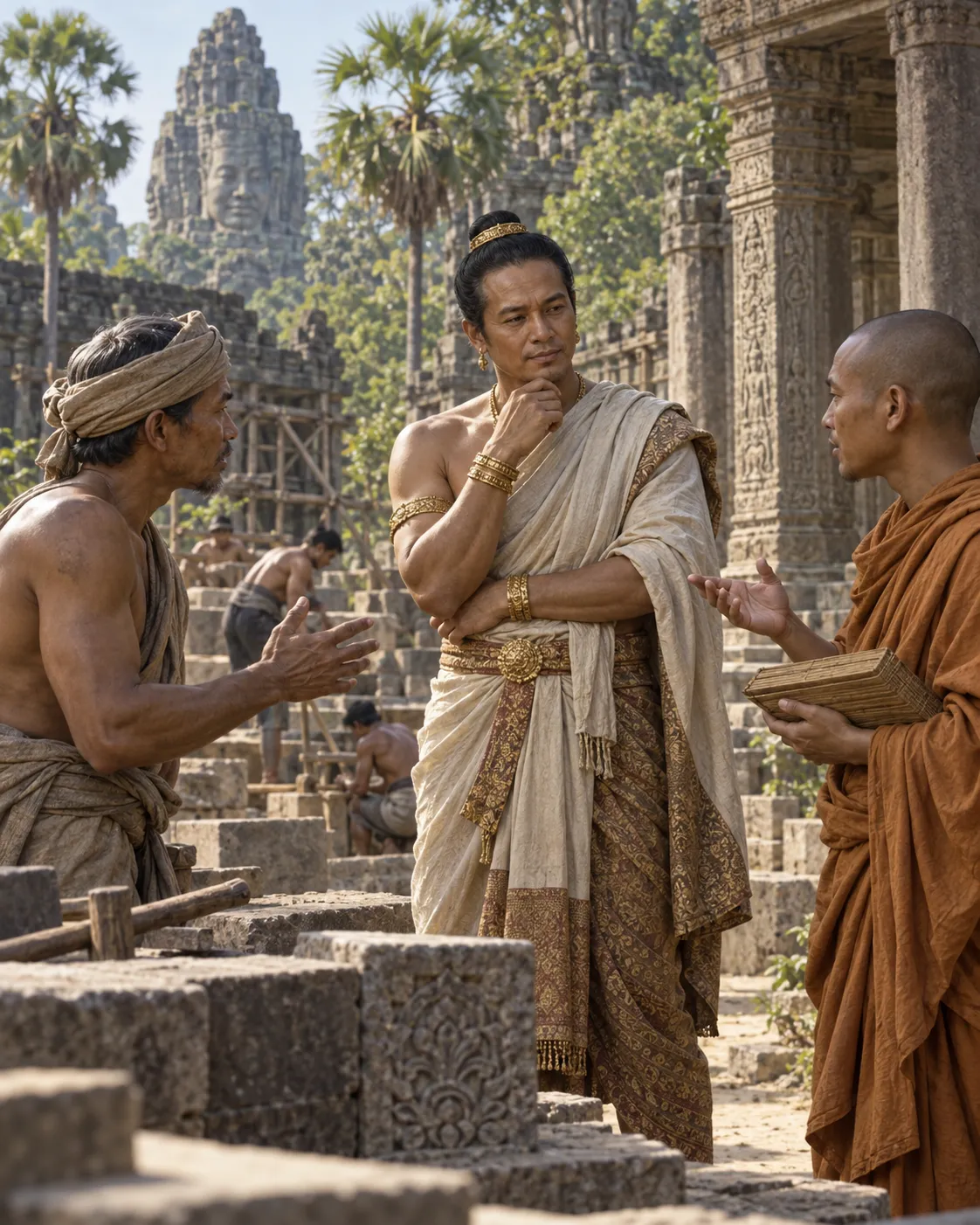
myAudience · original generated contextual illustration · Original generated illustration; not a documentary photograph or authenticated portrait; no source artwork copied.
Jayavarman VII ruled the Khmer kingdom from the late twelfth century into the early thirteenth. His reign followed major conflict and is associated with ambitious state and religious projects. He belongs to one phase of Angkor's history, not the creation of every temple there.
Angkor Thom and the Bayon are closely associated with his royal programme. Building involved quarrying, movement of materials and specialist work across a wider inhabited landscape. Monumental scale demonstrates organised investment, not an effortless achievement by a solitary ruler.
His Buddhist patronage also included institutions commonly interpreted as hospitals and facilities connected with travel. Inscriptions communicate royal ideals of care and authority. They do not, by themselves, establish equal access or the precise experience of every person using those institutions.
Institutions presented as care or provision should be studied through both their proclaimed purpose and their material organisation. A foundation inscription can describe royal generosity, while the site may reveal resources, movement and later alterations. Neither necessarily tells us how every user experienced the institution. Asking who maintained it and how it connected with the wider landscape makes the building part of social history rather than a detached royal achievement. It also preserves the difference between a documented programme, an interpretation of its operation and an unsupported claim of universal wellbeing.
Ta Prohm was dedicated in honour of his mother and Preah Khan in honour of his father. These foundations joined family commemoration with religious and royal patronage. The wider programme also included roadside provision and institutions identified as hospitals. Its inscriptions tell us what the court wished to proclaim; evidence of a programme should not become a claim that every inhabitant received equal care or that Angkor’s entire architectural history belonged to this reign.