Silla at Gyeongju: what a royal tomb reveals
By Silla and Joseon · myAudience
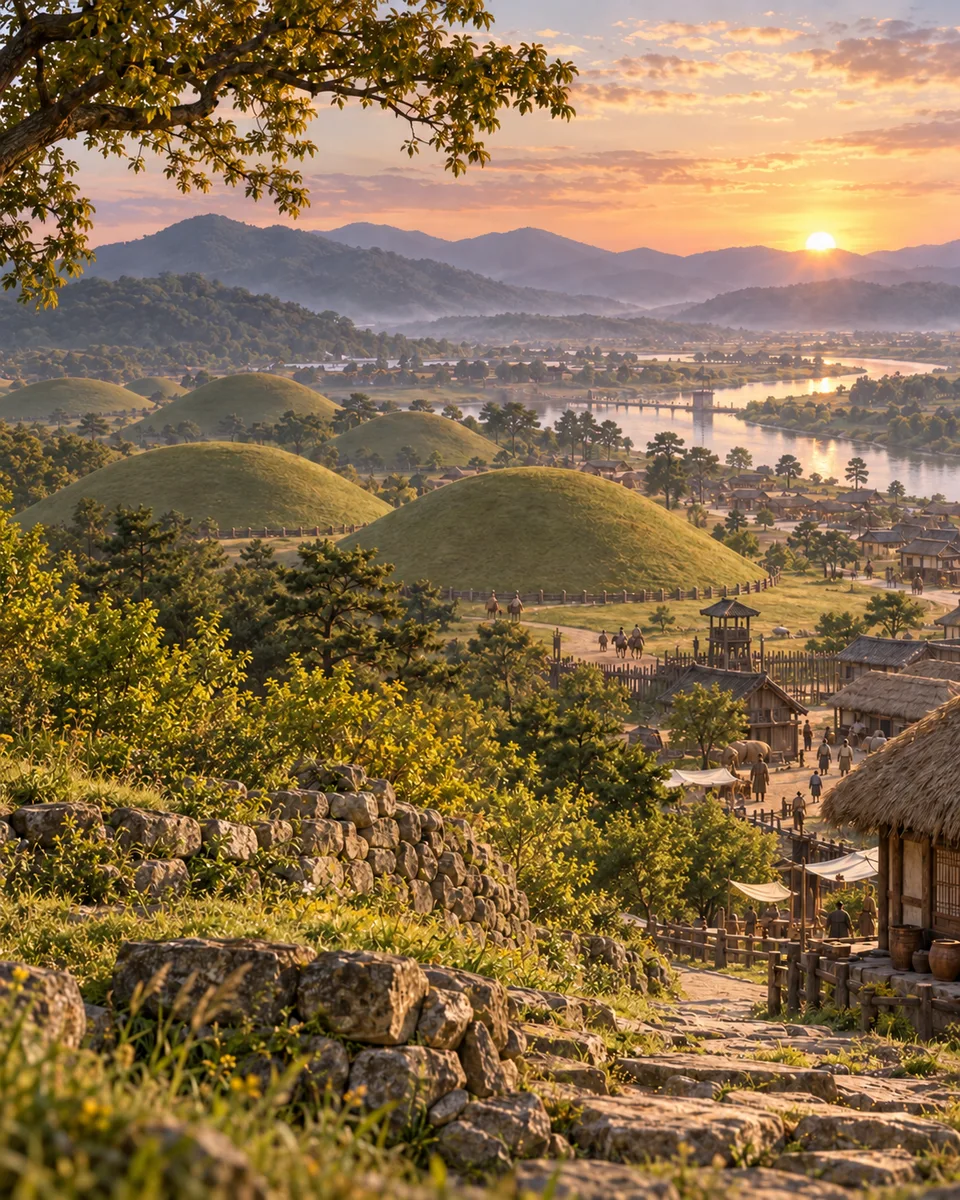
Original AI illustration generated for myAudience · AI-generated illustration; no claim of documentary evidence or authenticated likeness
Gyeongju preserves the capital landscape of Silla, with tombs, religious structures and other archaeological remains. The Met distinguishes earlier Silla from the later Unified Silla period. These phases should not be merged with Joseon, the much later dynasty associated with Sejong; a shared Korean collection is not a claim of one continuous reign.
Excavated elite tombs contain gold ornaments and objects of other materials. Some tomb structures used wood, clay, stone and earth. The Met notes that certain fragile ornaments may have been made for burial rather than practical wear. Objects from a selected royal burial therefore cannot simply be treated as an inventory of everyday household possessions.
A crown can indicate a claim to status without giving us its owner’s complete biography. Ask whether an object’s context is known and whether its interpretation depends on comparison with other finds. An elaborate burial demonstrates investment in a ceremony, but does not measure how evenly resources were distributed through society.
UNESCO’s Gyeongju account connects different areas of the surviving landscape, while the museum essay examines selected tomb objects. Both are partial views. This reading avoids the misleading claim that Silla controlled the entire peninsula for nearly a millennium, and does not include unverified detail about Hangul’s creation. Sejong and Joseon need a separate period-specific reading.