Macedon and its successor worlds
By Macedon and successor worlds · myAudience
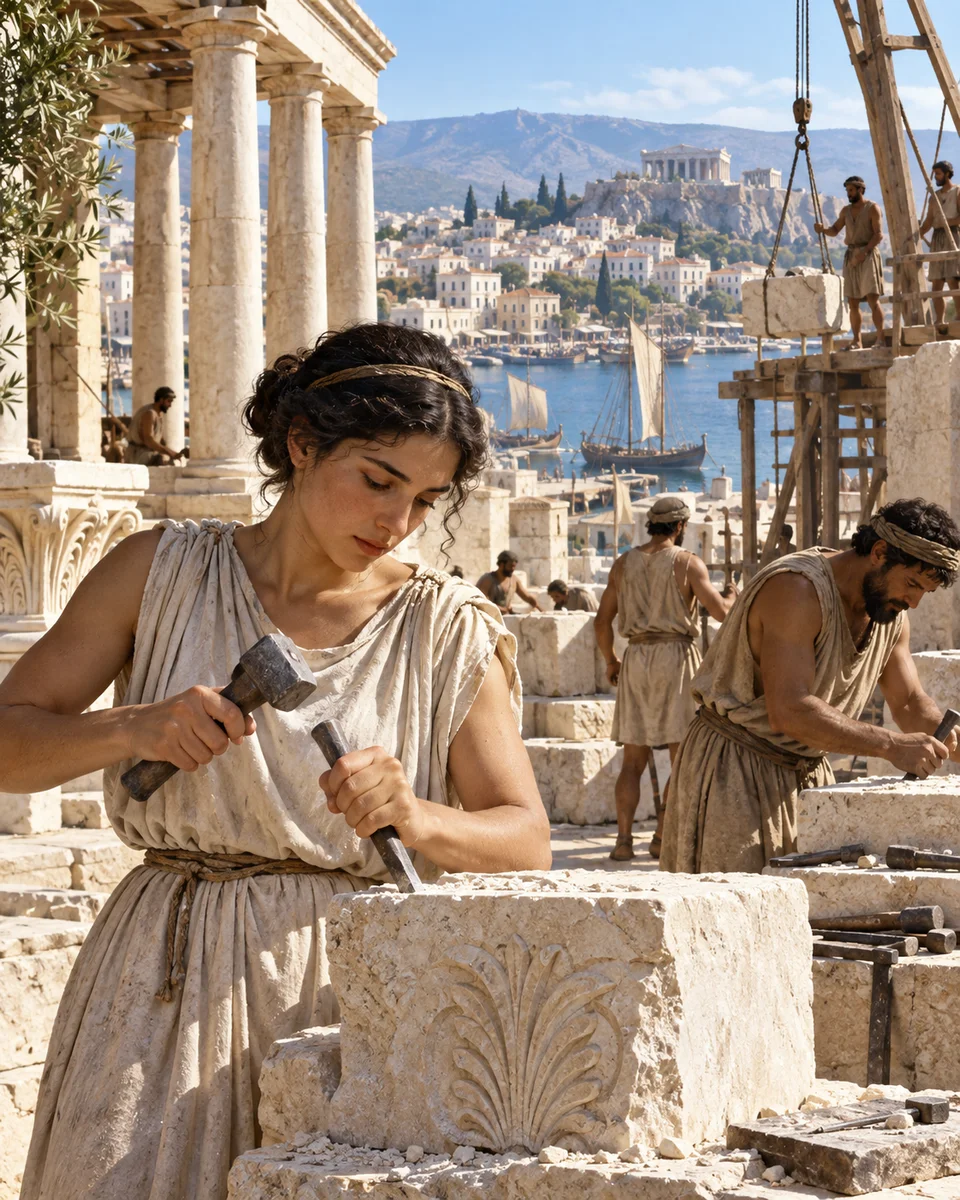
myAudience · AI-generated original illustration · Original generated artwork; not documentary evidence or a grant of landmark/cultural rights. No third-party image reproduced.
Ancient Macedon was a kingdom north of many Greek city-states. Philip II strengthened its power before Alexander III inherited the throne in 336 BCE. Alexander's campaigns then transformed political relationships across the eastern Mediterranean and western Asia. This ancient kingdom should not be identified automatically with the institutions or boundaries of any modern state.
Conquest depended on trained forces, supplies, allies and inherited resources, not only a commander's brilliance. Campaigns devastated communities as well as opening new connections. A map marking the army's furthest advance does not show uniform control, identical local institutions or enthusiastic acceptance of the conqueror.
After Alexander died in 323 BCE, competing successors divided and contested authority. Hellenistic kingdoms supported new political centres and cultural exchanges while local traditions continued. Greek language and artistic forms circulated, but describing this as a simple replacement of existing cultures misses adaptation and unequal relationships.
Later authors shaped Alexander's reputation from sources written in differing contexts, often long after his lifetime. Compare narrative claims with inscriptions and material evidence. Coins can show a ruler's chosen image but not every consequence of conquest. This lesson follows the transition from kingdom to campaign network and successor states, rather than treating an enormous coloured map as a complete society.
Image: speculative AI reconstruction; uncertain details.
Scene: Late fourth-century BCE Greek successor-world stone workshop interpretation; not a reconstruction of a particular named city or worker.