Māori histories: voyaging, adaptation and continuing authority
By Māori and Aotearoa · myAudience
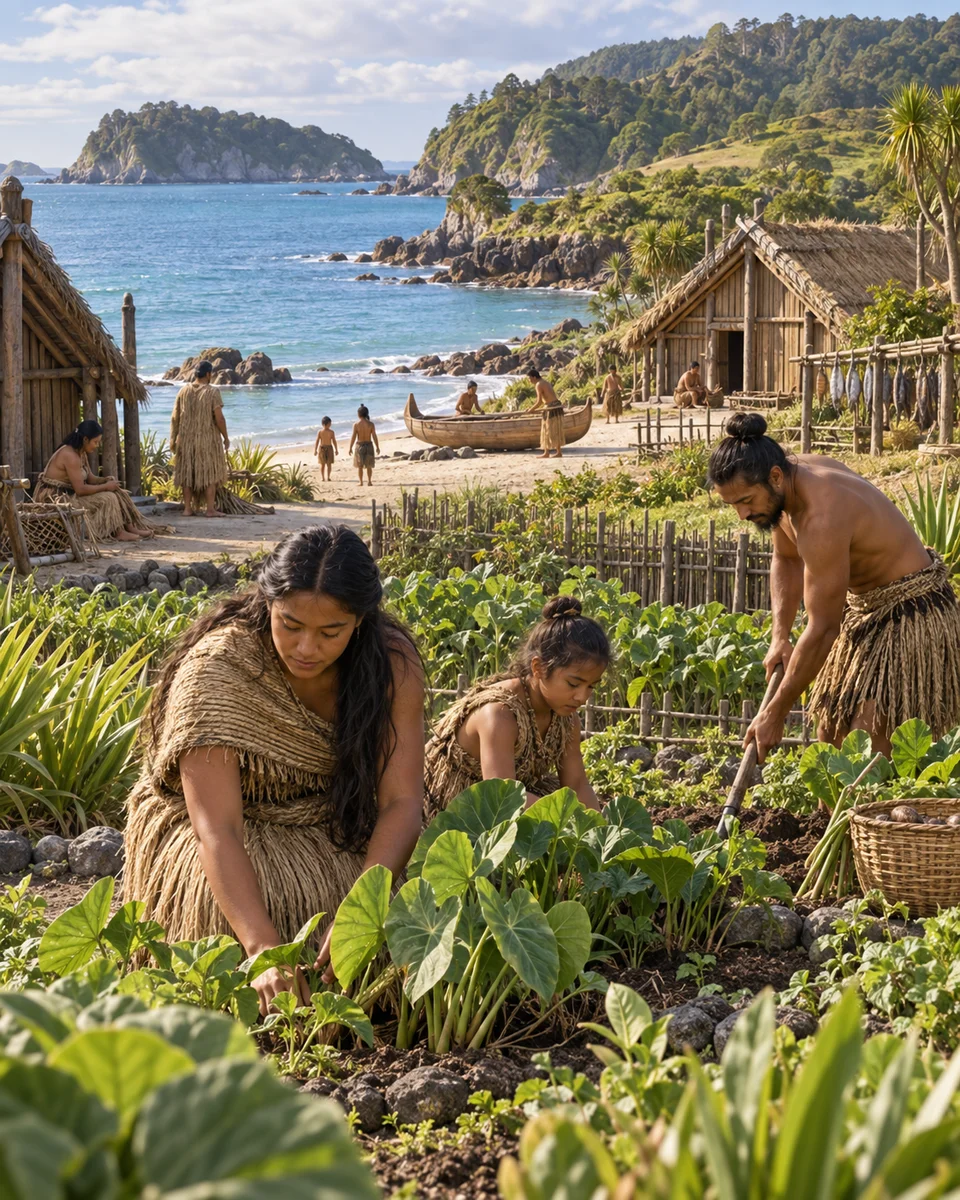
myAudience · AI-generated original illustration · Original generated artwork; not documentary evidence or a grant of landmark/cultural rights. No third-party image reproduced.
Māori ancestors reached Aotearoa through Polynesian voyaging. Evidence places initial settlement around the thirteenth to fourteenth centuries, with precise dates still debated. Developed navigation knowledge mattered. Different iwi and hapū preserve their own histories and connections; one arrival story cannot serve as a complete account for every community.
Life in a cooler environment involved adapting food production and resource use. Waka, cultivated crops, fishing and settlement practices connected technical knowledge with social relationships. Whakapapa links people, places and ancestors. It should not be reduced to a simple list of rulers supposedly governing a unified Māori empire.
Kupe traditions hold significance within particular narratives of exploration and belonging; precise chronologies and details differ among accounts. Later European contact and colonisation introduced profound change. The Treaty of Waitangi was signed in 1840, but that event cannot stand for the full history of relations between Māori communities and the Crown.
Read community accounts alongside archaeological findings and treaty records without pretending that all sources answer the same question. Living histories are not decorations around an external narrator's story. Distinguish the date of settlement evidence from the meaning of an ancestral tradition, and recognise continuing Māori institutions and rights rather than placing Māori only in an ancient past.
Image: speculative AI reconstruction; uncertain details.
Scene: Pre-European Aotearoa coastal cultivation and settlement interpretation; figures, dress and settlement form are imagined, not documentary or universal.