Lautaro: a life in context
By Mapuche communities · myAudience
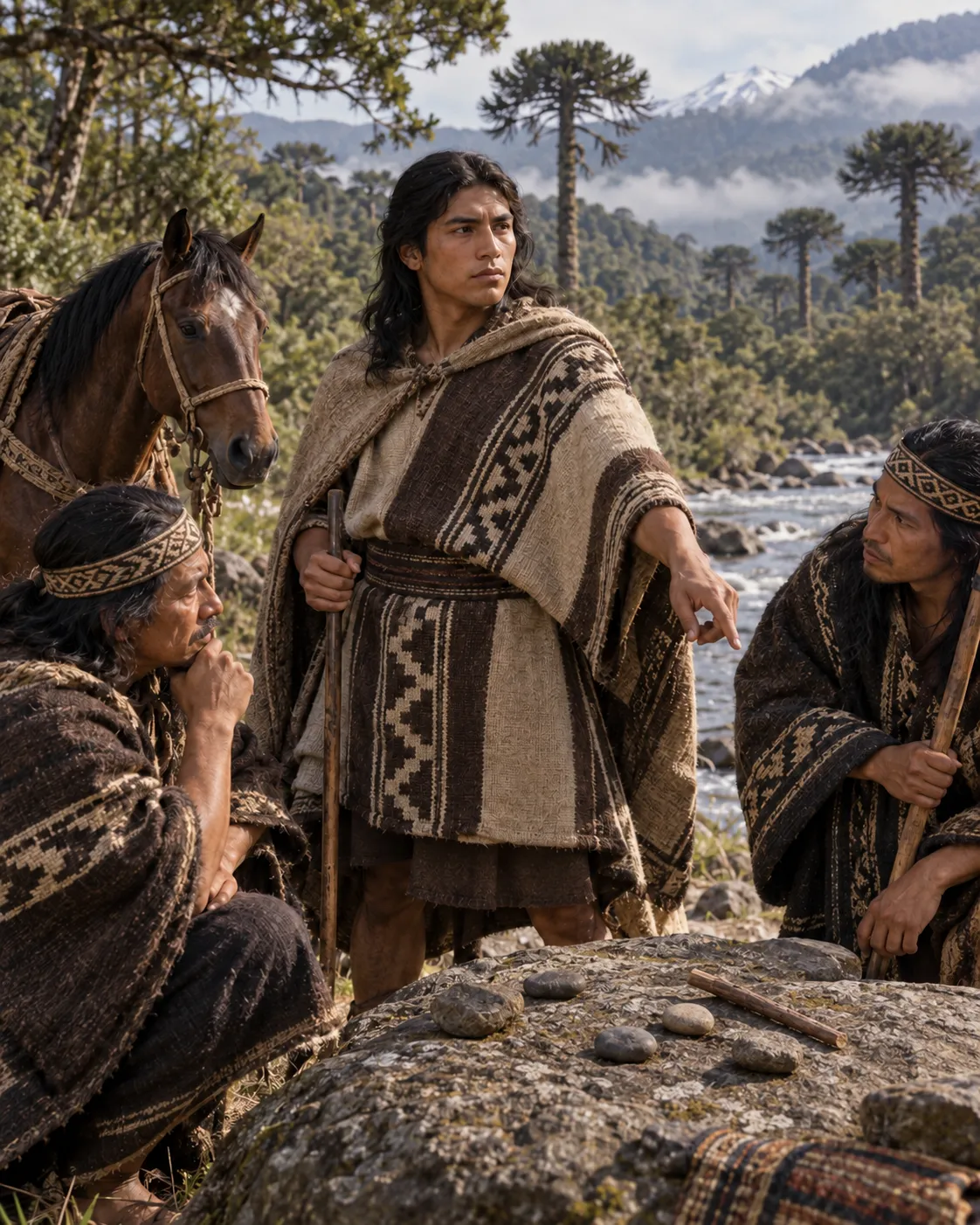
myAudience · original generated contextual illustration · Original generated illustration; not a documentary photograph or authenticated portrait; no source artwork copied.
Lautaro was a Mapuche leader associated with resistance to Spanish conquest in sixteenth-century Chile. His career belongs to communities with their own political relationships, not one centrally administered empire whose entire history can be assigned to a king.
Accounts describe experience within the Spanish colonial military setting before his leadership in resistance. Knowledge of opposing methods could be adapted in conflict. The precise details of his early life depend on sources produced under unequal colonial circumstances.
He is linked to major fighting against Spanish forces, including events surrounding Pedro de Valdivia's death. Resistance involved many participants and local decisions, not merely one ingenious commander. Diplomacy and changing alliances were also part of the broader encounter.
Learning an opponent's methods is one possible part of resistance, but it should not make resistance appear dependent entirely on skills supplied by the coloniser. Existing community knowledge, political relationships and collective decisions also mattered. To assess a specific tactical claim, establish who recorded it and how close that account was to the event. Then ask whether the narrative credits supporters and opponents with agency or merely decorates one heroic life. This approach recognises Lautaro's significance while keeping the struggle over territory and authority larger than the biography of a single commander.
The Battle of Tucapel in 1553 connects his leadership with the defeat and death of Valdivia. Later poetic accounts, notably the tradition associated with La Araucana, helped turn a wartime leader into a powerful literary figure. That afterlife matters, but imagined speeches cannot be treated as a transcript of the events that the poetry commemorates.