Norwegian worlds: seaways and changing kingship
By Norwegian worlds · myAudience
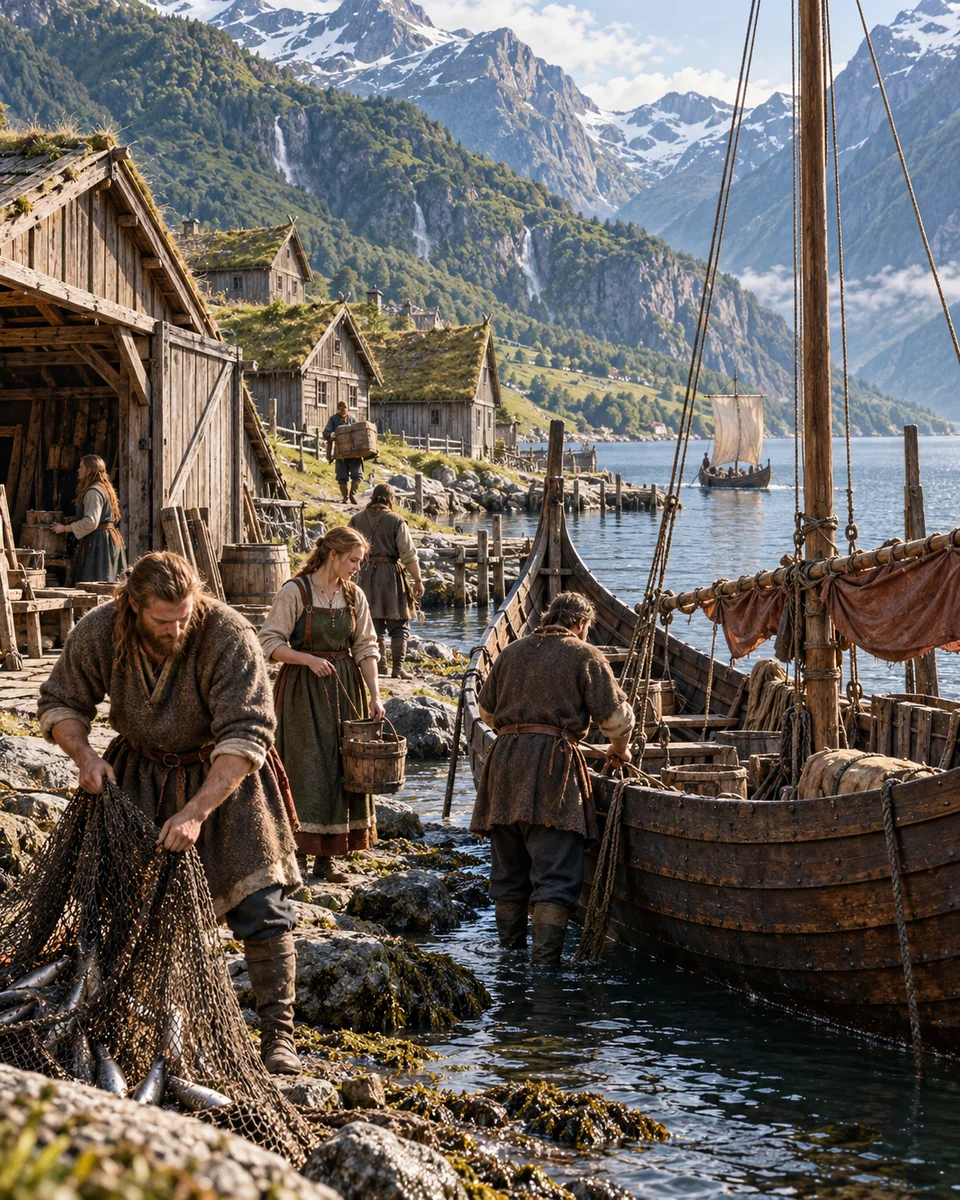
myAudience · AI-generated original illustration · Original generated artwork; not documentary evidence or a grant of landmark/cultural rights. No third-party image reproduced.
Medieval Norway developed through changing relationships among regional powers, kings and religious institutions. Seaways linked settlements across a demanding coastal landscape. The people later described as Vikings participated in farming, exchange and settlement as well as raiding; the term should not turn every household into a permanent warrior band.
Ships required timber, skilled construction and practical knowledge of weather and navigation. Maritime movement supported trade and political ambitions but also warfare and coercion. Technical success depended on labour and provisioning on land. A dramatic ship image cannot, by itself, reveal how resources or opportunities were distributed.
Harald Hardrada's eleventh-century career connected Norway with other political worlds, including service in the Byzantine sphere. His attempt to claim England ended at Stamford Bridge in 1066. That campaign is one episode in a wider history of kingship, not the single event that explains all Norwegian society.
Before ruling Norway, Harald served in the Byzantine world as a military commander associated with the Varangian Guard. His career shows how an individual’s movement could connect the northern seas with Constantinople and the Mediterranean. The familiar 1066 invasion was therefore a late chapter in a life shaped by service abroad, wealth and competition for royal authority.
Image: speculative AI reconstruction; uncertain details.
Scene: Medieval Norwegian fjord waterfront and clinker-boat setting; interpreted local structures and people.