Meroë: an African royal and productive landscape
By Nubia and Kush · myAudience
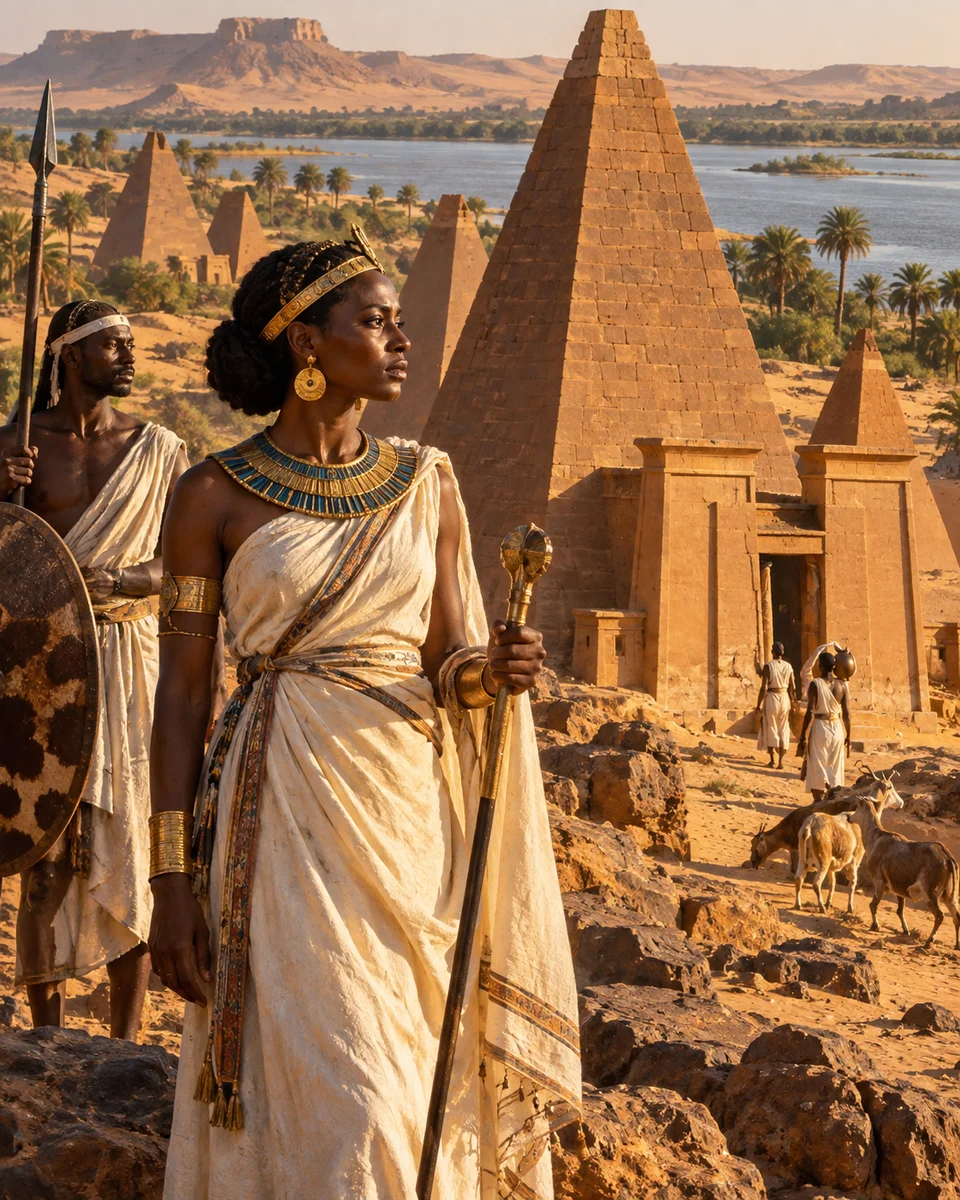
myAudience · AI-generated original illustration · Original generated artwork; not documentary evidence or a grant of landmark/cultural rights. No third-party image reproduced.
Meroë was an important centre of the Kingdom of Kush. UNESCO’s listed property brings together the royal city and burial areas with Musawwarat es-Sufra and Naqa. These places give the reader several kinds of evidence to compare, rather than a single monument standing for the whole history of the Nile region.
The remains include pyramids, temples, palaces and areas associated with production. UNESCO also identifies ceramics, ironworking and water reservoirs. Architectural and artistic forms reflect local traditions as well as connections with Egyptian, Greek and Roman worlds. Influence should not be confused with the absence of local initiative or a claim that the sites were copies of another society.
A royal burial and a production area answer different questions. One concentrates attention on status and ritual; the other can help identify resources and work. Bringing both into the account prevents monumental architecture from becoming the only achievement worth noticing. Neither alone tells us the daily experience of every inhabitant.
This overview is limited to the archaeological features supported by the checked site account. It does not invent translations for Meroitic inscriptions, uniform roles for women, or exact construction schedules. It also avoids UNESCO’s overly simple wording about Christianity erasing a civilisation. Political and religious change should not automatically be described as the disappearance of all people, practices or knowledge.
Image: speculative AI reconstruction; uncertain details.
Scene: Meroitic Kush pyramid landscape; figure and regalia imagined, not an authenticated named queen or exact burial reconstruction.