Amanitore: a life in context
By Nubia and Kush · myAudience
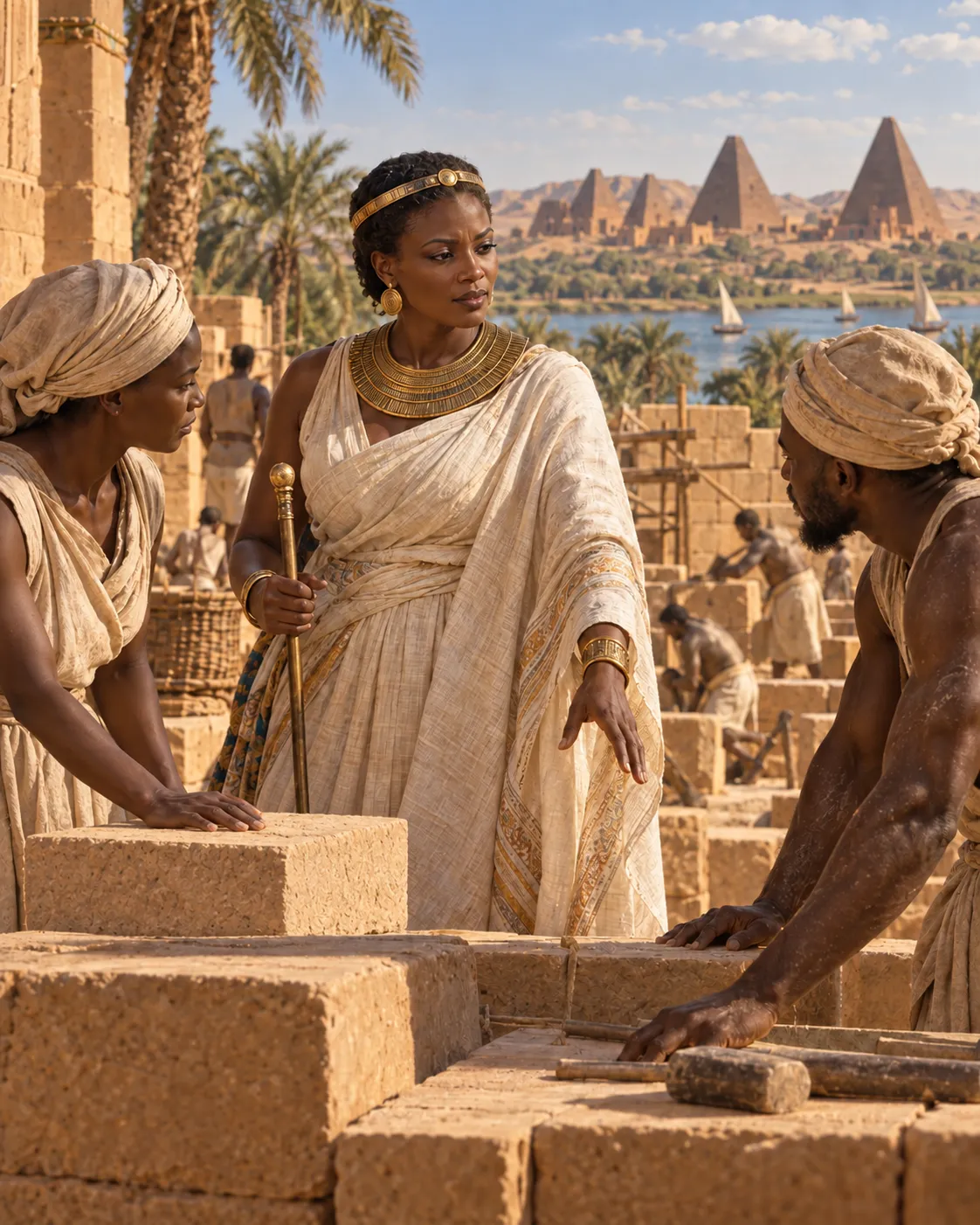
myAudience · original generated contextual illustration · Original generated illustration; not a documentary photograph or authenticated portrait; no source artwork copied.
Amanitore was a royal woman of the Meroitic kingdom of Kush, associated with the title kandake. Monumental evidence connects her with King Natakamani. Their exact family relationship and division of authority should not be asserted more confidently than the evidence allows.
Their names appear in building and restoration contexts, demonstrating significant royal patronage. Temples and reliefs connect political authority with religious representation. Such projects required resources and skilled labour, not simply the will of one person.
Images of royal women show meaningful status but cannot prove identical political rights for all women in Kush. Meroitic language interpretation remains incomplete, limiting some biographical detail. Her setting is distinct from earlier Nubian rulers who governed Egypt.
A named monumental scene can support a more exact question than a sweeping claim about a woman-led empire. Identify where her name or image appears, which other figures accompany it and what activity the monument represents. Then distinguish those observations from an inference about everyday governing arrangements. The distinction matters when interpreting royal partnership: shared representation does not by itself tell us how responsibilities were divided. Readers can still recognise substantial authority and patronage while learning why the surviving record does not supply a fully detailed constitutional or family history.
The Amun temples at Naqa and Amara are among the named sites associated with Amanitore and Natakamani’s building programme. Their joint representation connects kingship, sacred space and patronage in a specific Meroitic setting. Older scholarship described them as spouses; a graffito has contributed to the later interpretation that they were mother and son. This changing interpretation is a useful reminder that monuments provide evidence to reassess, rather than a complete court biography.