Achaemenid Persia: governing distance and showing power
By Persian states and societies · myAudience
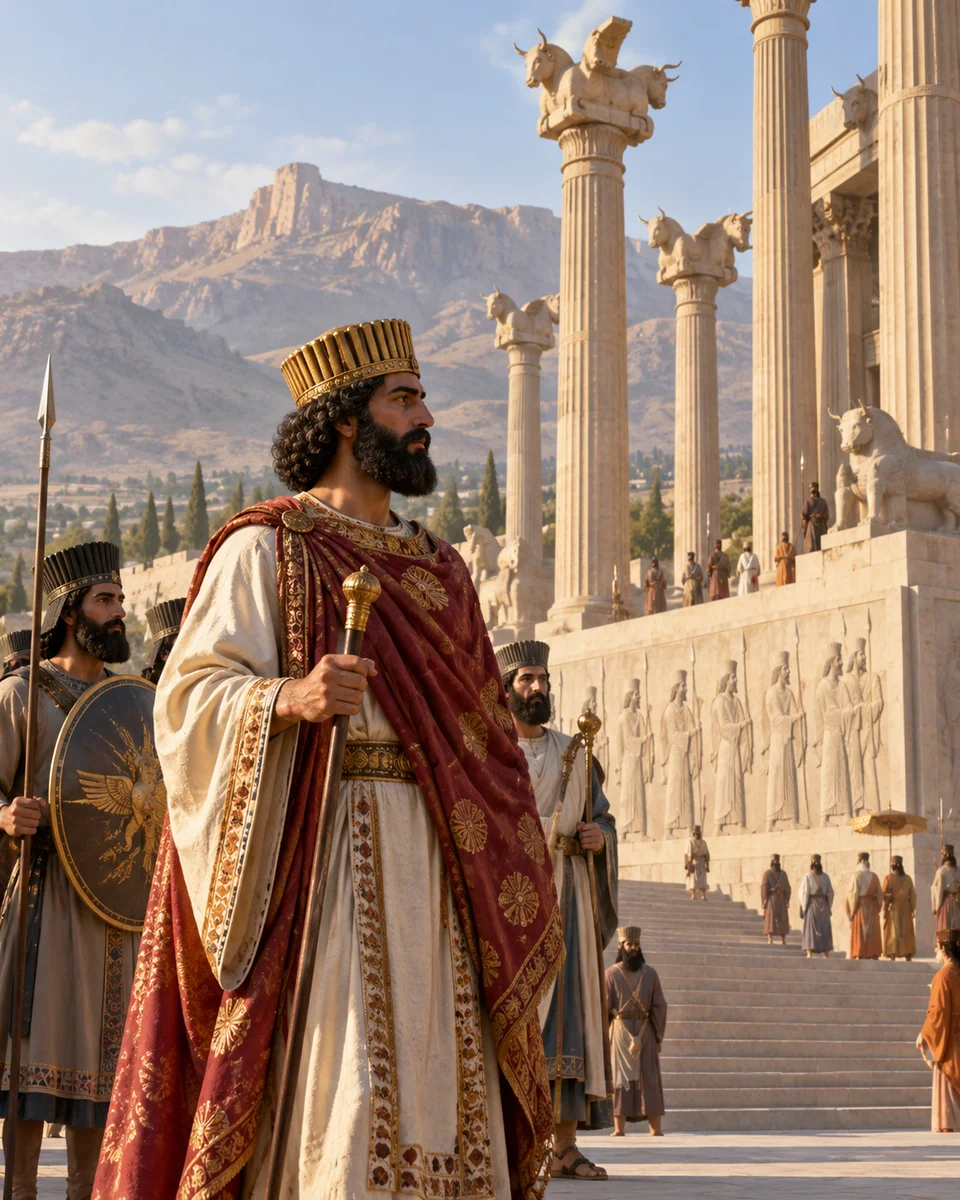
myAudience · AI-generated original illustration · Original generated artwork; not documentary evidence or a grant of landmark/cultural rights. No third-party image reproduced.
Cyrus II and his successors expanded Achaemenid power across a vast and diverse territory. Under Darius I, governors and communication roads supported administration. These arrangements describe a particular ancient state; later Persian dynasties cannot be placed in the same institutional world merely because they share a collection label.
At Persepolis, Darius and later rulers invested in terraces, palatial buildings, columns and reliefs. UNESCO describes wooden roof members supported by stone columns and capitals. Carved delegations offered an image of ordered imperial relationships. The image is evidence for royal representation, not a survey showing that every subject welcomed imperial rule.
Compare infrastructure with ceremony. Roads address the difficulty of governing across distance, while a monumental audience setting presents authority to visitors. Neither provides a complete picture of ordinary life. This contrast helps readers ask what each kind of evidence can show, instead of treating the scale of a palace as a measure of general prosperity or equality.
The Met notes the influence of Greek and later classical writers on surviving accounts of Persian history. Their perspectives require comparison with Persian inscriptions and material evidence. This overview avoids turning an imperial claim of harmony into modern universal rights. It also omits battle dates that the checked museum essay renders inconsistently with standard chronology.
Image: speculative AI reconstruction; uncertain details.
Scene: Fifth-century BCE Persepolis-inspired terrace and columns; ruler and clothing interpreted, not an authenticated Cyrus or Darius likeness.