Polish political worlds: dynasties and negotiated unions
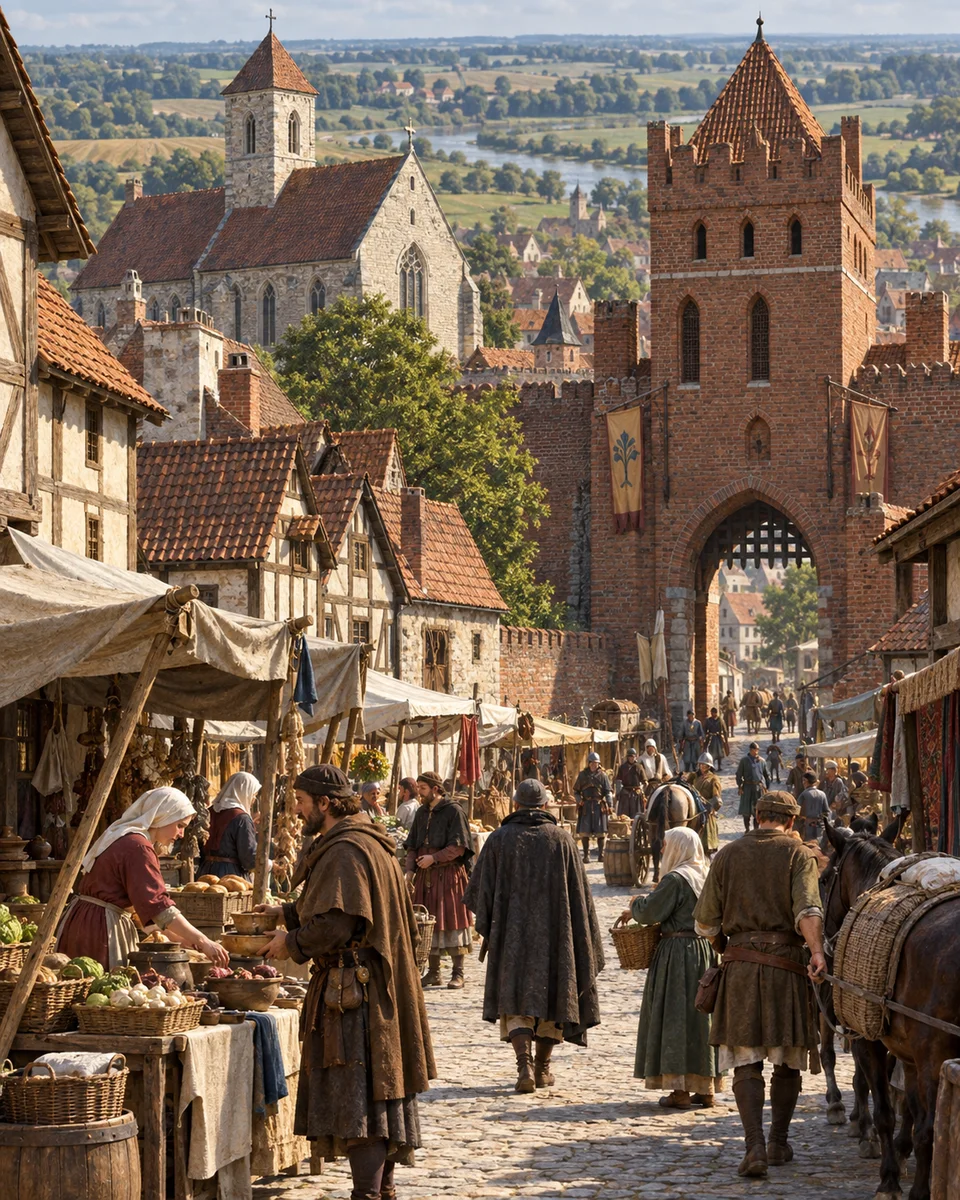
myAudience · AI-generated original illustration · Original generated artwork; not documentary evidence or a grant of landmark/cultural rights. No third-party image reproduced.
Medieval Polish states developed through changing dynastic relationships and territories. The Piast period involved both consolidation and fragmentation; it was not one permanently unified kingdom with today's borders. Towns, nobles and religious institutions helped shape authority, while relationships with neighbouring powers were important throughout.
Agriculture, exchange and settlement supported political resources. Charters and legal arrangements affected who could hold land, govern towns or claim privileges. Castles and churches make concentrated investment visible, but cannot represent every household's experience. Their maintenance required labour and revenue beyond the names of royal patrons.
Jadwiga became monarch in 1384. Her marriage to the Lithuanian ruler Jogaila linked different political worlds and helped shape a new dynastic relationship. This should not be confused with the later Polish-Lithuanian Commonwealth established in 1569: connected crowns and a later constitutional union are distinct developments.
Jadwiga’s 1384 coronation used the title king to emphasise her sovereign position. Jogaila married her in 1386 and became her co-ruler after accepting baptism. The dates show a sequence of negotiation, marriage and shared monarchy rather than an instantaneous creation of the later Commonwealth. Dynastic connection and constitutional union were different ways of joining political communities.
Image: speculative AI reconstruction; uncertain details.
Scene: Fourteenth-century Polish town and market interpretation; invented architectural composition and people.