Portuguese expansion: ships, forts and unequal exchange
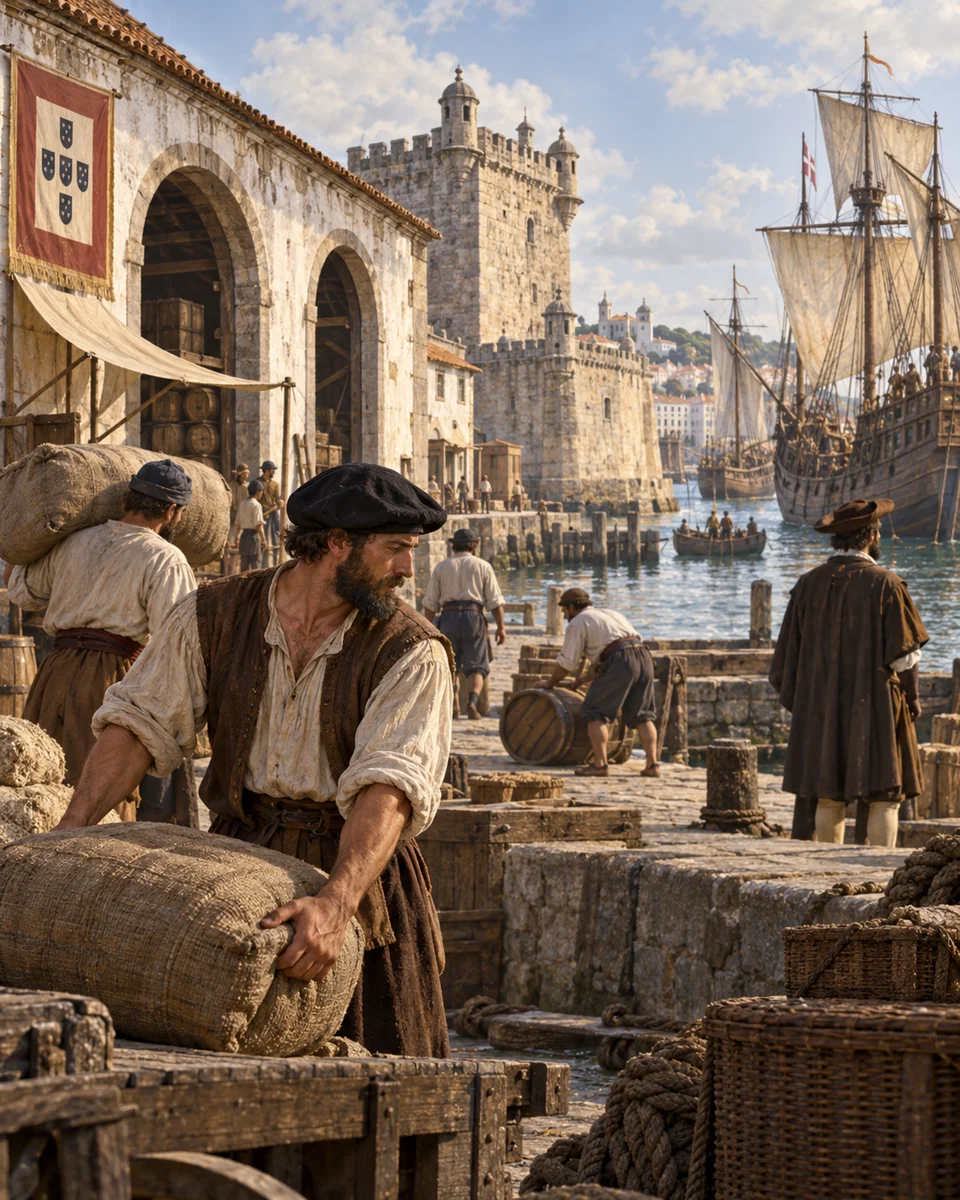
myAudience · AI-generated original illustration · Original generated artwork; not documentary evidence or a grant of landmark/cultural rights. No third-party image reproduced.
Portuguese overseas expansion linked Atlantic routes, African coasts, Asian ports and Brazil across different stages. It developed through maritime knowledge, investment, diplomacy and armed force. A trading presence, a fortified port and a governed territory are not identical forms of power, even when a modern imperial map colours them alike.
Ships depended on skilled construction, navigation, provisioning and labour. Long voyages imposed major risks, while ports relied on existing local knowledge and networks. European arrival did not create trade in places where sophisticated exchange already flourished. New routes altered relationships rather than replacing an empty commercial landscape.
Under João III in the sixteenth century, imperial institutions faced financial and political pressures while colonisation in Brazil developed. Expansion was bound up with slavery and coercion, not only exploration. Religious activity and diplomatic relationships also shaped encounters, whose consequences varied among the communities involved.
Portuguese commercial strongholds on India’s coast included Cochin and Cannanore. Their presence depended on relationships within an existing trading world, while a governor or viceroy had to manage interests far from Lisbon. Distance was a practical constraint: a royal claim on a map did not itself keep a fleet supplied or make a coastal foothold secure.
Image: speculative AI reconstruction; uncertain details.
Scene: Sixteenth-century Portuguese Atlantic waterfront and supply scene; architecture and people interpreted, not a celebration of conquest.