Russian imperial change: resources, reform and coercion
By Russian worlds · myAudience
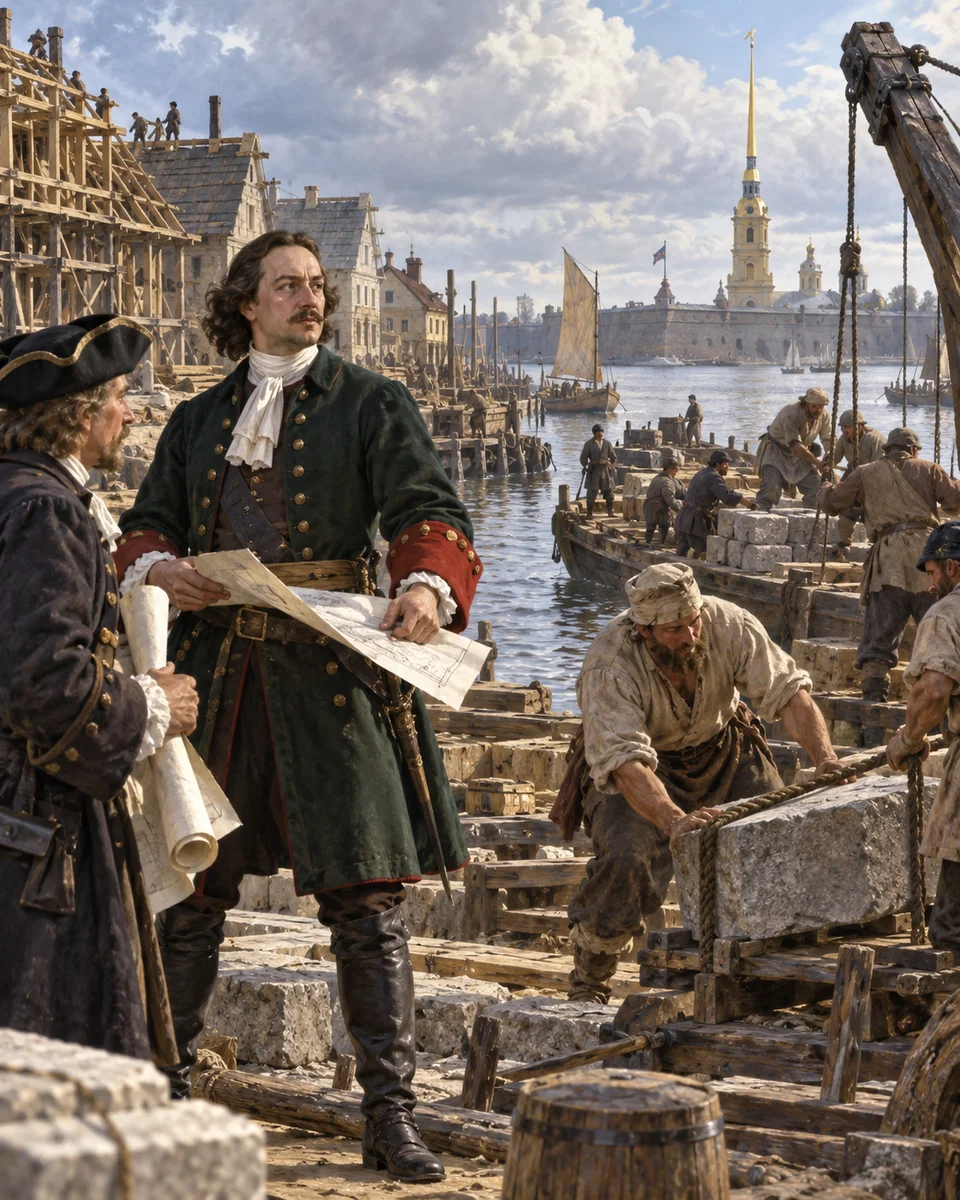
myAudience · AI-generated original illustration · Original generated artwork; not documentary evidence or a grant of landmark/cultural rights. No third-party image reproduced.
The Russian Empire was formally proclaimed in 1721 after a long process of state expansion and institutional change. Peter I's reign accelerated selected reforms, but did not create political society from nothing. Earlier traditions, neighbouring powers and diverse subject communities shaped what the government could attempt and accomplish.
Military and naval projects required taxation, production, labour and technical knowledge. New administrative arrangements supported state ambitions while imposing burdens on society. The construction of St Petersburg connected strategic aims with a major building programme; its image as a window to Europe should not erase the work and hardship behind it.
Peter's reforms drew on foreign expertise and adapted institutions to specific political goals. They did not make Russia identical to western European states, nor benefit every social group equally. Serfdom and hierarchy remained fundamental, so a story of modernisation needs to ask whose capabilities expanded and whose obligations intensified.
Peter introduced a Governing Senate in 1711, administrative collegia from 1717 and a Table of Ranks in 1722. These were distinct tools for organising government and service. Alongside the new capital at St Petersburg, they show how reform reached beyond importing a machine or building a ship: institutions changed the routes through which people could serve the state and seek official status.
Image: speculative AI reconstruction; uncertain details.
Scene: Early eighteenth-century Saint Petersburg-inspired construction and waterways; figure and papers imagined, not an authenticated Peter I portrait or recovered document.