Peter I: a life in context
By Russian worlds · myAudience
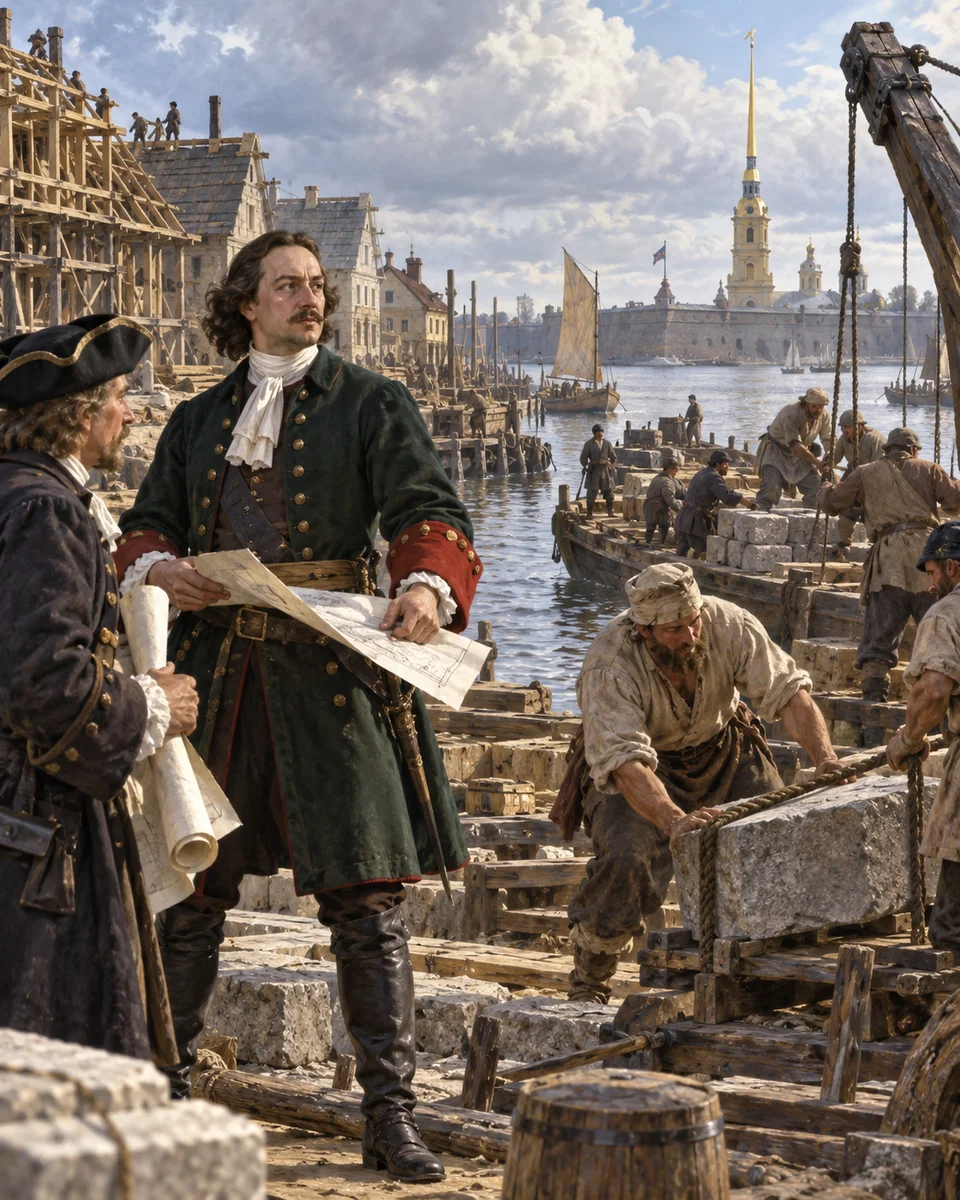
myAudience · AI-generated original illustration · Original generated artwork; not documentary evidence or a grant of landmark/cultural rights. No third-party image reproduced.
Peter I, known as Peter the Great, ruled Russia during an era of major military and institutional change. He pursued selected reforms and adopted the imperial title in 1721. His government built on earlier structures rather than inventing a state from nothing.
Military competition encouraged changes in administration, production and technical training. Drawing on foreign expertise helped particular projects, but reform imposed demands on subjects. New capability for the state did not necessarily mean new freedom for the people supplying it.
St Petersburg became a major centre through an ambitious building programme linked to Baltic strategy. Its creation required enormous labour and resources. The city's symbolic connection with Europe should not hide the coercion and hardship involved.
Military reform offers a way to connect his international ambitions with conditions inside the state. Building capability required people to be trained, materials produced and revenue collected. Those processes could increase what government was able to do while intensifying obligations for subjects. Calling the result modern therefore leaves an important question unanswered: modern in which institution, and with what consequences for whom? Examining one reform from decree through practical implementation is more precise than ranking a whole society as advanced or backward through its ruler's adoption of foreign techniques.
The Governing Senate established in 1711 and the Table of Ranks introduced in 1722 illustrate different parts of his institutional programme. One organised central government; the other ordered standing through military and civil service. Neither abolished social hierarchy. They redirected important forms of authority and advancement towards service to the ruler.