Scotland: kingship and contested independence
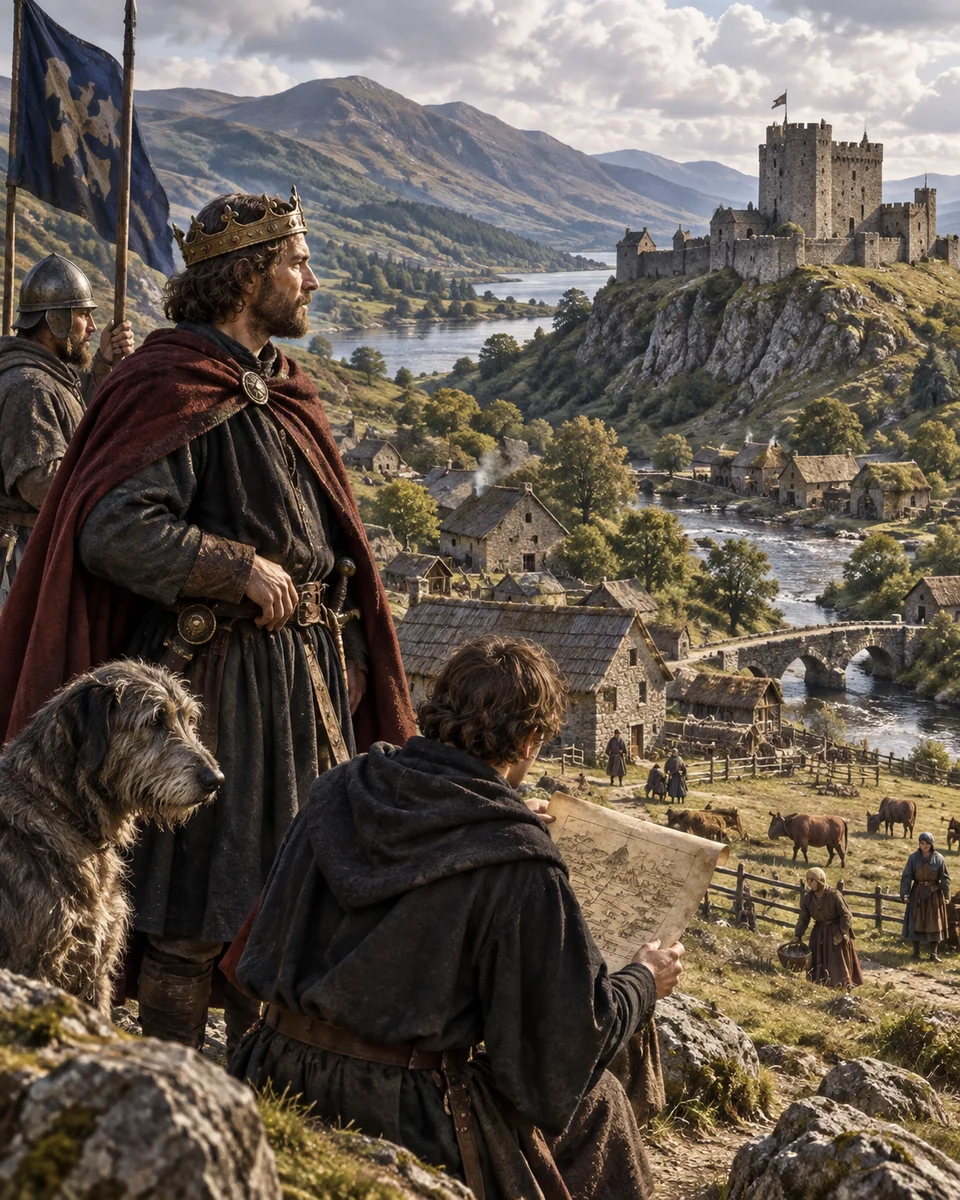
myAudience · AI-generated original illustration · Original generated artwork; not documentary evidence or a grant of landmark/cultural rights. No third-party image reproduced.
Medieval Scotland was a kingdom with changing relationships among rulers, nobles, towns and different regional communities. It should not be described through today's borders and institutions alone. The succession crisis of the late thirteenth century brought external intervention and conflict, rather than a simple contest between two already uniform modern nations.
Kingship required recognition, military support and resources. Fortifications and routes mattered, as did local allegiances and access to supplies. Campaigns affected people beyond their celebrated commanders. Political choices could divide elites and communities, so the past cannot be explained by assuming that everyone shared one clear national position.
Robert the Bruce became king in 1306 and won a major victory at Bannockburn in 1314. Recognition and security developed through further conflict and negotiation. One battlefield success did not instantly settle every political issue. The history also includes opponents, allies and the institutions through which royal authority was asserted.
The Treaty of Edinburgh–Northampton ended the first independence war in 1328, years after Bannockburn. Conflict resumed in 1332 when Edward Balliol and supporters challenged the settlement; the second war ended with the Treaty of Berwick in 1357. The sequence makes recognition, dynastic competition and diplomacy visible beside the famous battlefield victory.
Image: speculative AI reconstruction; uncertain details.
Scene: Around1300 Scottish fortified settlement; crowned figure and heraldry imagined, not an authenticated Robert I portrait.