Scythian worlds: mobility and the limits of labels
By Scythian and Massagetae traditions · myAudience
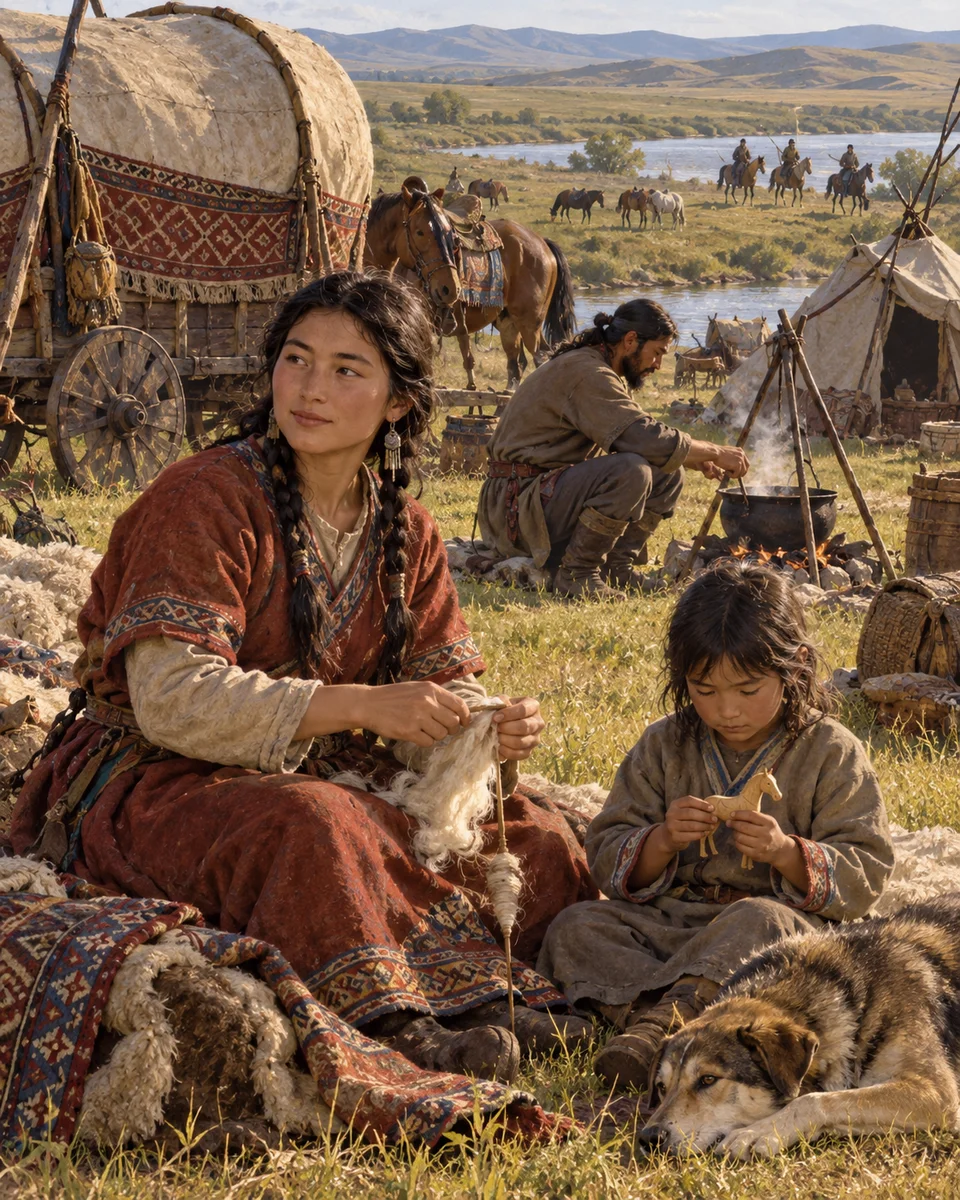
myAudience · AI-generated original illustration · Original generated artwork; not documentary evidence or a grant of landmark/cultural rights. No third-party image reproduced.
Scythian is a label applied to related but diverse communities across parts of the Eurasian steppe. Ancient authors and modern archaeologists do not always use the name in precisely the same way. A broad area of shared objects or practices should not be converted automatically into one centrally ruled empire with fixed frontiers.
Horse use, herding and movement linked people to seasonal landscapes and wider exchange. Mobility required knowledge, resources and social relationships; it did not mean an absence of complex culture. Burials can preserve elaborate objects and evidence of craft skill, but rich graves represent selected people rather than a complete picture of everyday wealth.
Greek accounts describe steppe peoples from outside, sometimes mixing observation with stereotypes. The story of Tomyris and Cyrus is connected with the Massagetae in Herodotus, not a securely documented reign over every Scythian group. Its dramatic details require attribution and caution, rather than presentation as a verified eyewitness battle report.
Compare an account's date and purpose with the location and context of archaeological finds. Similar decoration does not identify a named person, and a weapon in a grave does not settle every question about that person's role. An informed overview can explain mobility, exchange and the significance of burial evidence while admitting that labels, identities and specific traditions remain debated.
Image: speculative AI reconstruction; uncertain details.
Scene: First-millennium BCE steppe mobile pastoral camp interpretation; dress and individuals imagined, not one homogeneous Scythian ethnicity.