Tomyris: a life in context
By Scythian and Massagetae traditions · myAudience
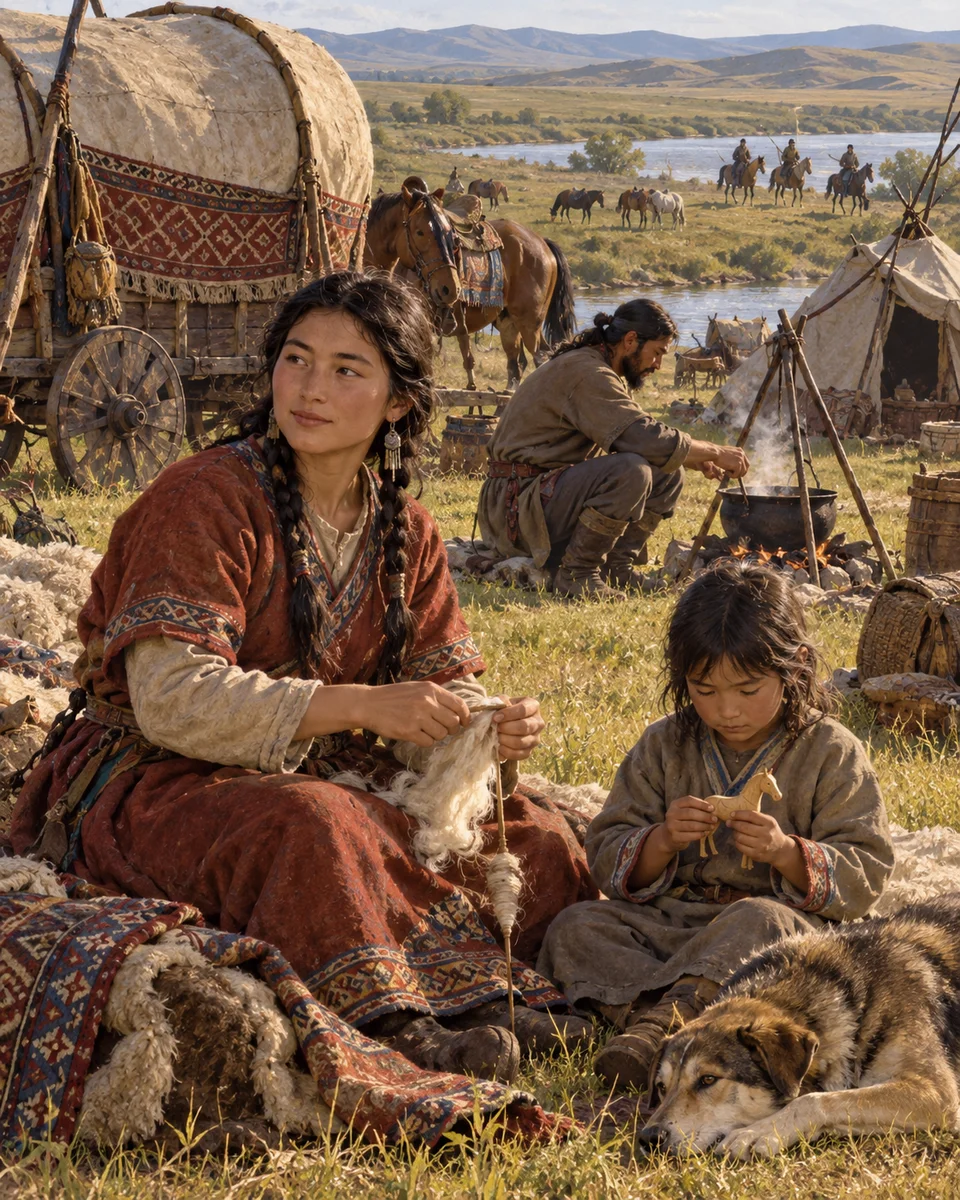
myAudience · AI-generated original illustration · Original generated artwork; not documentary evidence or a grant of landmark/cultural rights. No third-party image reproduced.
Tomyris is described by Herodotus as ruler of the Massagetae, a people of the steppe. His narrative connects her with the death of Cyrus II. This evidence does not establish a complete securely dated biography or rule over every group labelled Scythian.
The account presents conflict following Cyrus's attempt to overcome her people. It includes dramatic episodes of deception, family loss and retaliation. These details must remain attributed to the narrative rather than repeated as verified eyewitness reportage.
Ancient accounts of Cyrus's death are not uniform. That disagreement matters when an illustration or short biography might otherwise make one vivid version appear settled. A literary story can also express judgments about conquest, power and vengeance.
The narrative can be analysed without pretending to reconstruct an undocumented court. Herodotus's account contrasts imperial ambition with a ruler whose response challenges it, making the story useful for thinking about the author's judgments of power. That interpretation is different from verifying a precise sequence of battlefield events. Keep the categories separate: the attributed story, competing accounts of Cyrus's death and archaeology concerning steppe societies. An educational page can explain all three, giving readers a richer understanding than either suppressing the uncertainty or converting the most dramatic version into a documentary scene.
Read Tomyris as a figure within a particular source tradition, while distinguishing that tradition from material evidence for steppe societies. Modern portraits and game abilities reveal later imagination, not her proven appearance or political institutions.