Sweden’s Baltic power: institutions behind the royal image
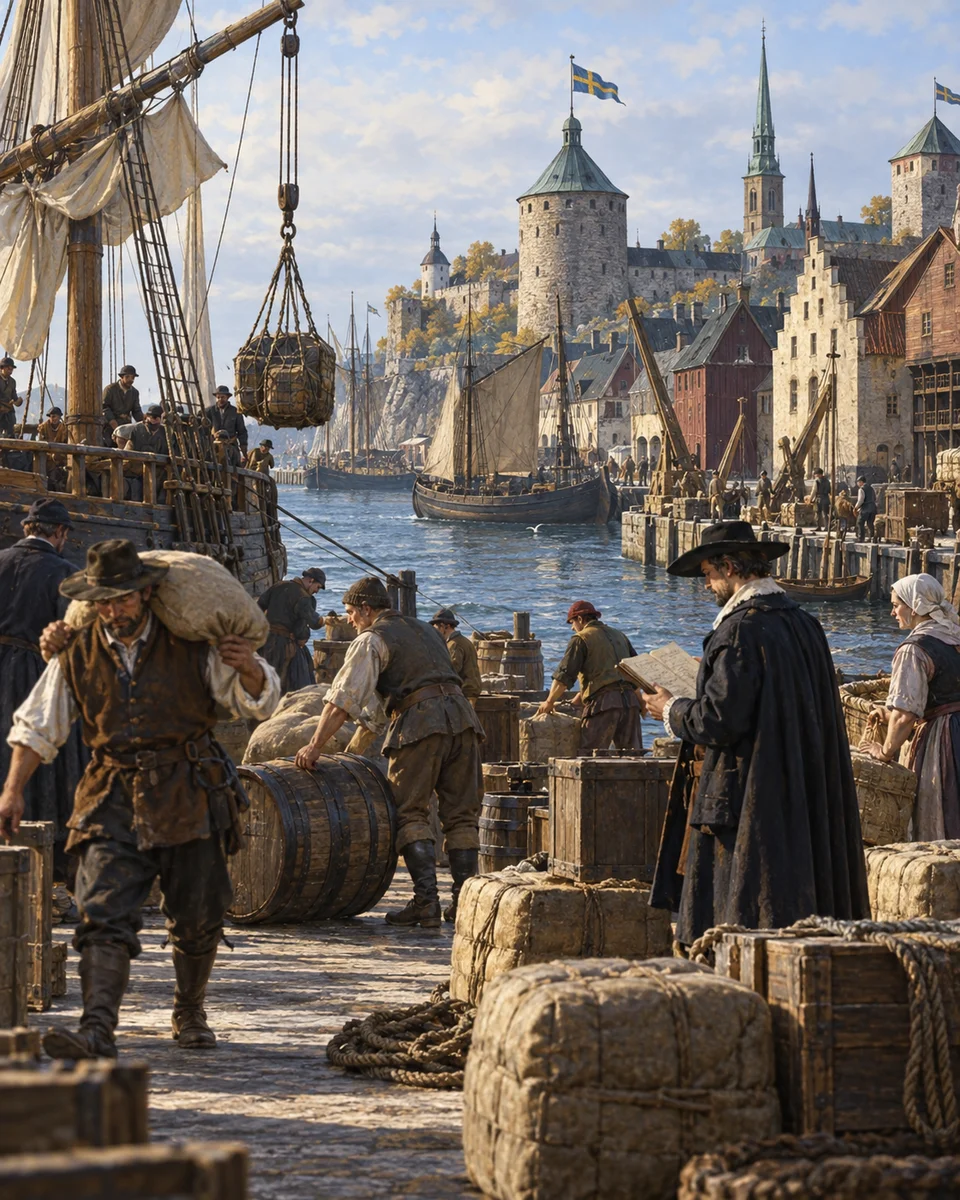
myAudience · AI-generated original illustration · Original generated artwork; not documentary evidence or a grant of landmark/cultural rights. No third-party image reproduced.
Seventeenth-century Sweden became a major Baltic power through warfare and political expansion. The state's reach changed over time, and its territories included communities beyond modern Sweden. Empire should therefore be understood through particular jurisdictions and relationships, rather than as a permanently uniform national space.
Military ambitions relied on taxation, recruitment, production and transport. Farms and households supplied resources as armies operated far from home. Courtly splendour and cultural patronage were only part of society. A portrait of a ruler or a decorated warship cannot show the distribution of burdens across the people supporting state power.
Christina ruled in this seventeenth-century setting before abdicating in 1654 and later converting to Catholicism. Her intellectual interests and patronage are important, but famous court personalities do not explain the whole kingdom. Religious institutions, aristocratic relationships and fiscal pressures also shaped the limits and possibilities of government.
Christina invited the philosopher René Descartes to Sweden, where he arrived in 1649. Her collection of books and manuscripts also drew on international scholarly networks. Such patronage put a Baltic court in conversation with intellectual life elsewhere in Europe. It belonged to a particular elite setting, alongside the wider demands of an expanding state, rather than showing what education was available to every household.
Image: speculative AI reconstruction; uncertain details.
Scene: Seventeenth-century Swedish Baltic cargo waterfront interpretation; no authenticated naval plan or named city survey.