Transition metals compared with Group 1
By UK GCSE Chemistry · independent study · myAudience
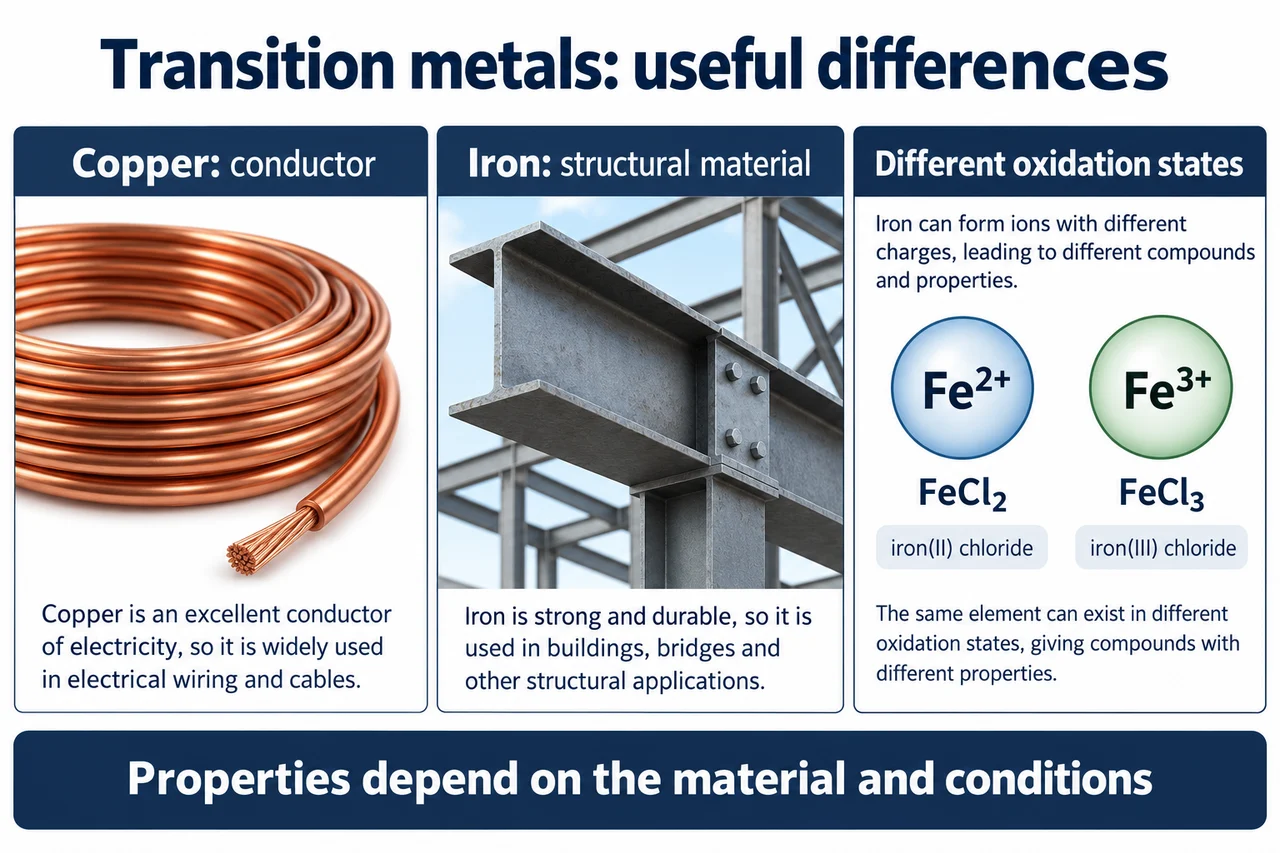
Image: illustration, not a documentary photograph. Original teaching model created for myAudience. · Original generated teaching illustration; no source textbook artwork reproduced.
Transition metals compared with Group 1
Transition metals occupy the central region of the periodic table. At GCSE, familiar examples include iron, copper, nickel and chromium. Comparing these with Group 1 shows that metallic behaviour comes in different forms rather than a single universal pattern.
Typical transition metals are harder and stronger, have higher densities and higher melting points, and react less vigorously with water than Group 1 metals. These are comparison trends for common examples, not claims that every central-block element has identical properties or that every metal resists corrosion.
Property comparisons explain choices of material. Copper conducts electricity and can be drawn into wires; iron-based materials support structures. A real design also considers alloys, corrosion, manufacturing and cost, so one impressive property alone rarely settles the choice.
Worked example: Why is sodium unsuitable as an exposed structural metal?
It is soft.
It reacts readily with moisture.
A structural material must maintain its properties under its actual conditions of use.
Answer: Its softness and reactivity make it unsuitable.
Check your understanding: Does being a transition metal guarantee corrosion resistance?
Answer: No.
Why: Iron rusts; category trends are not guarantees for every environment or material.