Small molecules: bonds within, attractions between
By UK GCSE Chemistry · independent study · myAudience
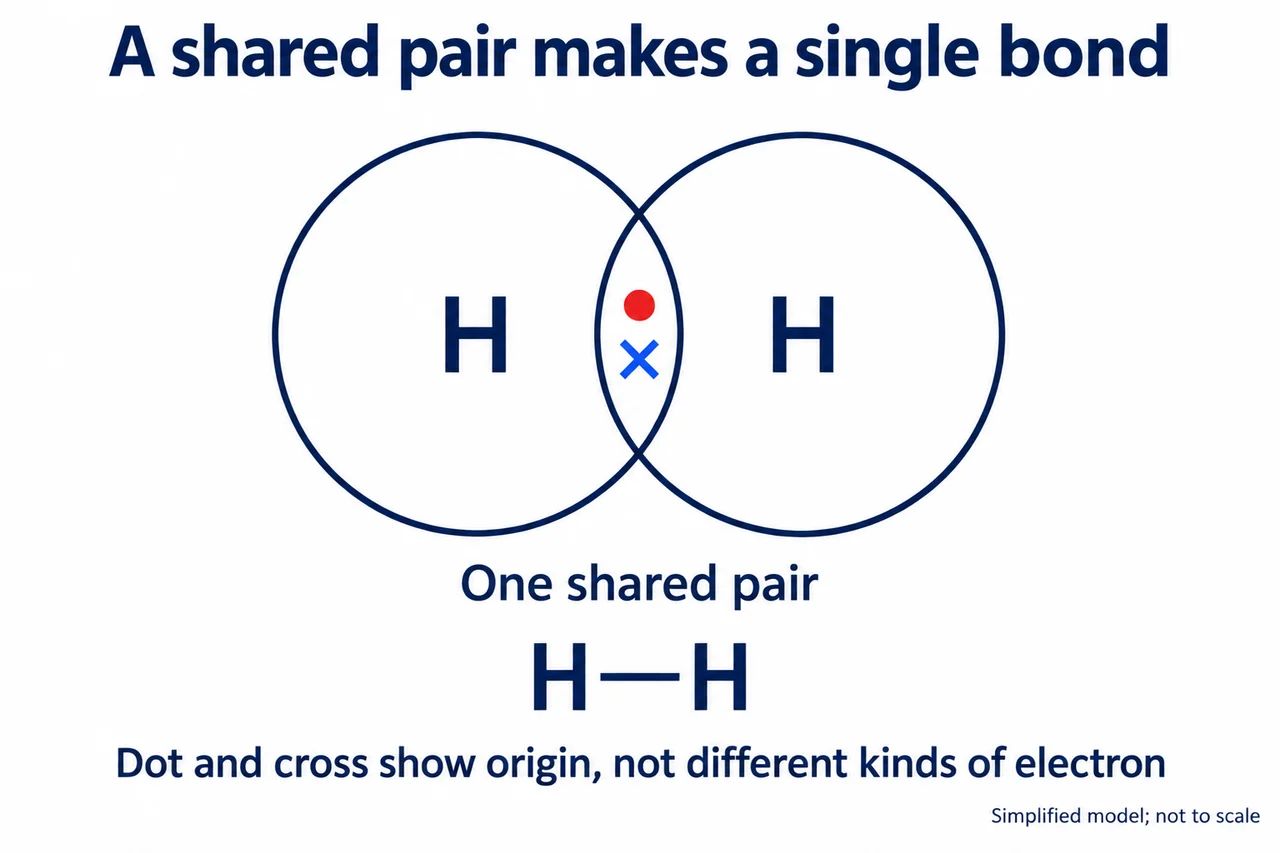
Image: illustration, not a documentary photograph. Original teaching model created for myAudience. · Original generated teaching illustration; no source textbook artwork reproduced.
Small molecules: bonds within, attractions between
In a molecular substance, strong covalent bonds hold atoms together inside each molecule. Weaker attractions often hold neighbouring molecules near one another. Melting or boiling generally overcomes those intermolecular attractions without dismantling each molecule.
That distinction explains why many small molecular substances have relatively low melting and boiling temperatures. It would be incorrect to say their covalent bonds are weak merely because the liquid boils easily. Larger related molecules often have stronger intermolecular attractions, though shape and the types of interaction also matter.
Neutral molecular substances generally lack mobile charged particles and do not conduct. A substance that reacts or ionises when dissolved needs a different explanation: hydrogen chloride produces ions in water, so its aqueous solution behaves differently from neutral molecular hydrogen chloride gas.
Worked example: Does boiling liquid oxygen split every O₂ molecule into atoms?
O₂ molecules remain bonded during an ordinary phase change.
Attractions between separate molecules are overcome.
The change is physical rather than splitting all molecular bonds.
Answer: No; intermolecular attractions are overcome.
Check your understanding: Does low boiling temperature mean weak covalent bonds?
Answer: No.
Why: Boiling a molecular liquid usually separates molecules rather than breaking the bonds inside them.