Electric and thermal conduction in metals
By UK GCSE Chemistry · independent study · myAudience
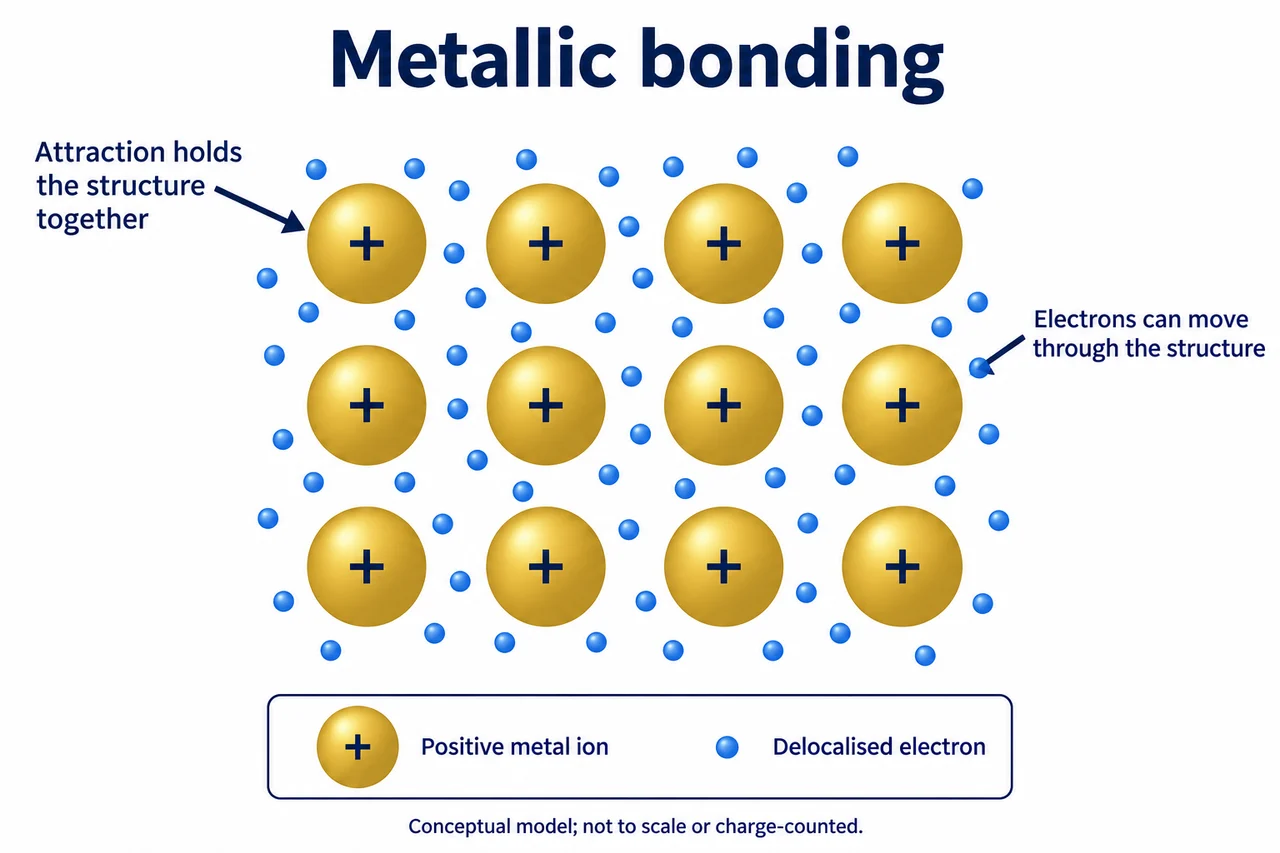
Image: illustration, not a documentary photograph. Original teaching model created for myAudience. · Original generated teaching illustration; no source textbook artwork reproduced.
Electric and thermal conduction in metals
Delocalised electrons can move through a metal and transfer electrical charge. Applying a potential difference produces a net movement of charge through the conductor. The entire metal does not need to drift physically along the wire for current to flow.
Metals also transfer thermal energy effectively. Mobile electrons contribute strongly to carrying energy through the structure, alongside energy transfer involving the vibrating lattice. At GCSE, the delocalised-electron model links both kinds of conduction to the metallic structure.
Good electrical conduction does not imply that touching a hot conductor is safe. In a materials question, explain the carrier and what it transports: electrons carry charge in electrical conduction and transfer energy in thermal conduction. Do not say heat is a separate material substance stored in the wire.
Worked example: A metal spoon warms quickly at its handle. Explain the transfer.
Energy enters the warmer end.
Mobile electrons and lattice interactions transfer energy through the material.
The handle can warm without metal particles travelling the full distance.
Answer: Thermal energy is transferred through the metal.
Check your understanding: Must positive metal ions flow along a solid wire for it to conduct?
Answer: No.
Why: The mobile delocalised electrons carry electrical charge through the solid.