Nanotechnology: uses need evidence
By UK GCSE Chemistry · independent study · myAudience
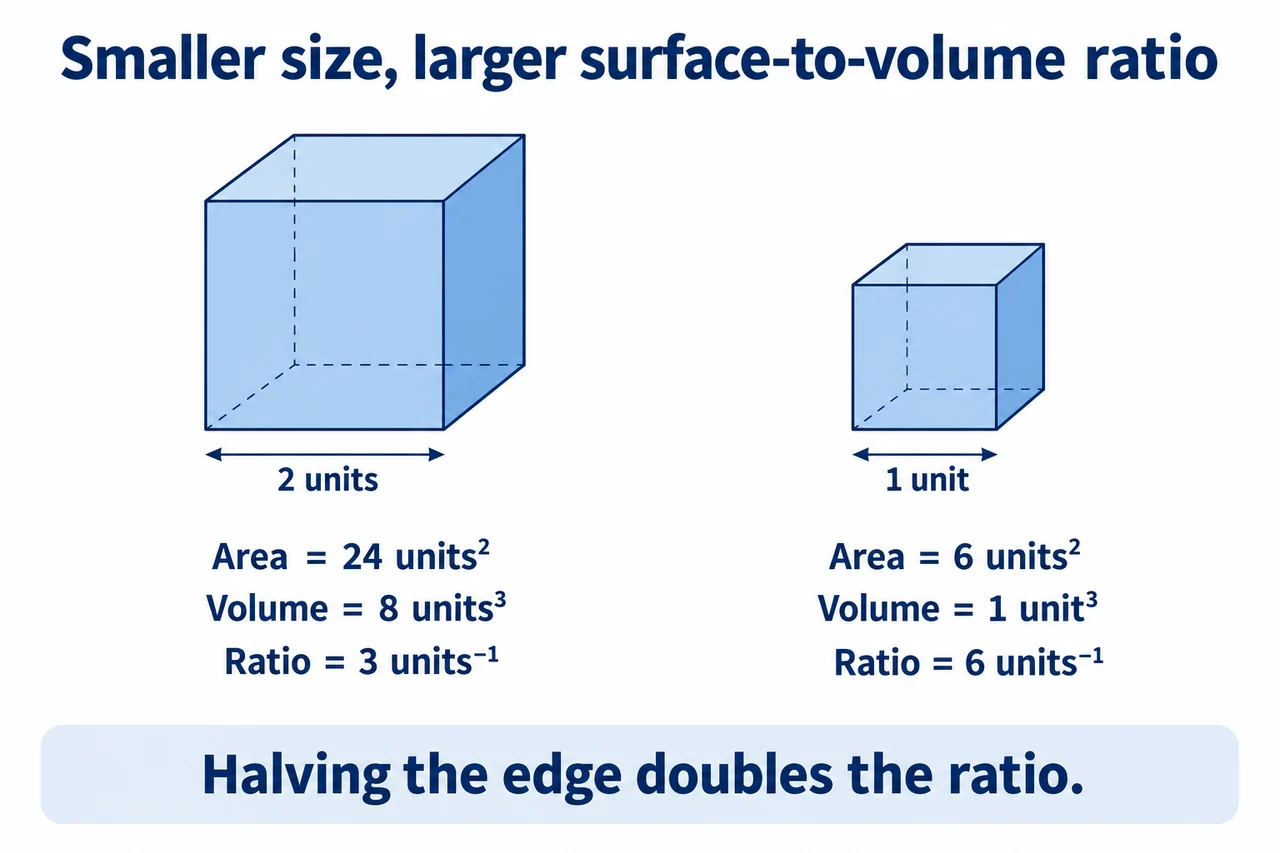
Image: illustration, not a documentary photograph. Original teaching model created for myAudience. · Original generated teaching illustration; no source textbook artwork reproduced.
Nanotechnology: uses need evidence
High surface area can make small quantities of some nanoparticle catalysts useful. Other applications investigate coatings, electronics, drug delivery or protective materials. Link the proposed use to an actual property instead of treating smallness as a universal explanation.
Possible benefits must be compared with costs, manufacturing limits and exposure risks. In sunscreen, for example, performance depends on the actual ingredient, formulation and evidence about protection and exposure. A general introductory lesson cannot certify every nanoparticle product as safe or effective.
Risk evaluation asks what material is involved, how people or ecosystems might encounter it, how much exposure occurs and what reliable studies show. Uncertainty is a reason to seek specific evidence, not proof that all nanoscale materials are harmful or harmless.
Worked example: Why could a nanoparticle catalyst need less mass than larger particles of the same material?
More surface is available relative to the volume.
Catalytic reactions can occur at accessible surfaces.
The comparison assumes the relevant material and conditions are otherwise comparable.
Answer: A larger accessible surface per amount of material can support more reaction sites.
Check your understanding: Does a successful laboratory application prove every nanoparticle is safe?
Answer: No.
Why: Benefits and risks depend on material, dose, exposure route and context.