Describe objects with agreeing adjectives
By UK GCSE French · independent study · myAudience
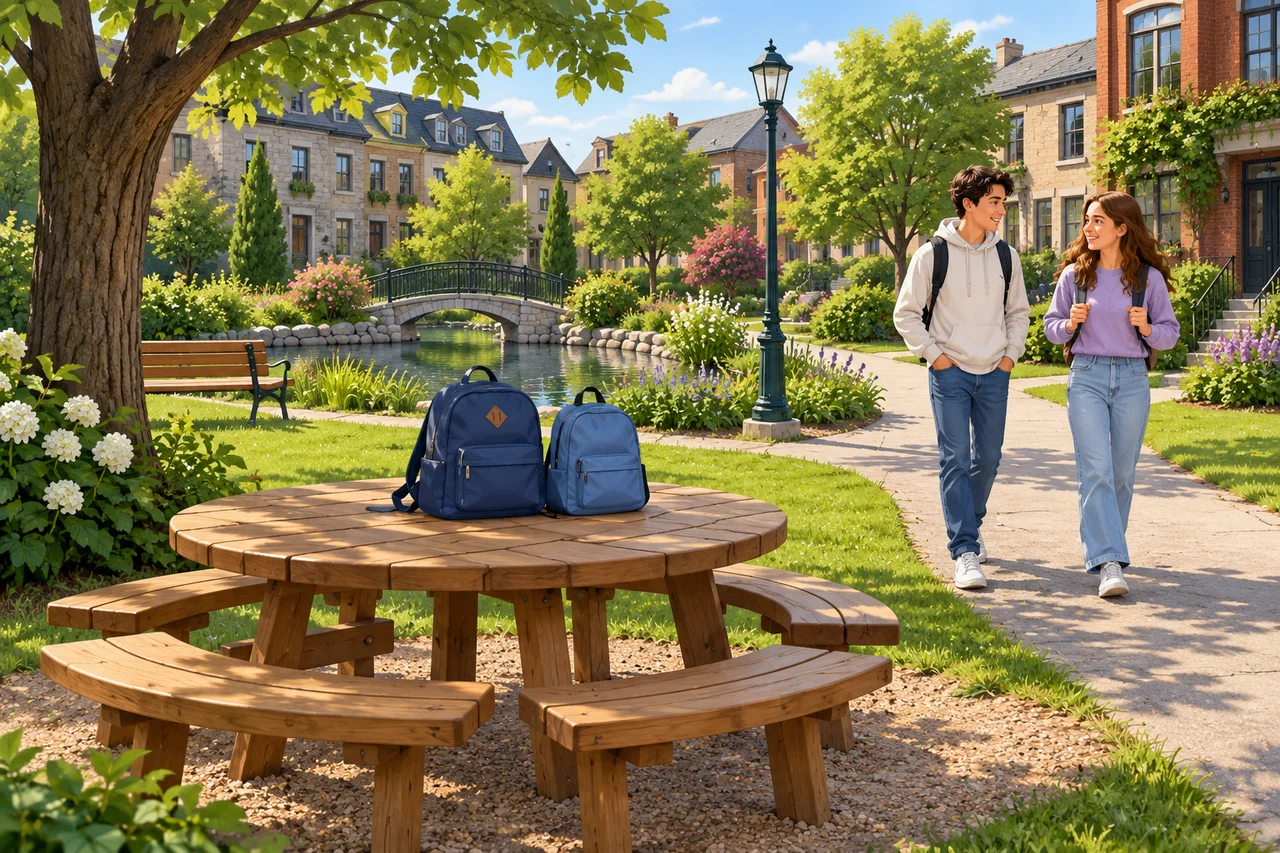
Original illustration generated with OpenAI imagegen for myAudience; fictional teaching scene. · Original generated artwork; no exam-board art or photograph reproduced.
Describe objects with agreeing adjectives
An adjective gives information about a noun. In standard French it normally agrees with that noun in gender and number. For many adjectives, add e for feminine and s for plural. Bleu becomes bleue with a feminine singular noun, bleus with a masculine plural noun and bleues with a feminine plural noun. This is a useful pattern, not a rule without exceptions.
An adjective already ending in a silent e often has the same masculine and feminine singular form: rouge remains rouge. The plural is normally rouges. Some adjectives change more substantially; learn those forms with the word. Avoid mechanically adding an e to every adjective.
Many descriptive adjectives follow the noun: « un sac bleu », « une table ronde ». Some common adjectives can go before it: « un petit sac ». Position is part of knowing an adjective. This lesson uses only these basic patterns; it does not claim that every adjective has one fixed position in every meaning.
Vocabulary: bleu means blue, rouge means red, petit means small and rond means round. A fictional scene description reads « Les sacs sont bleus. La table est ronde. » The adjective still agrees after être. Checking the noun’s gender and number is more reliable than copying the nearest visible ending.
Worked example: Describe several blue tables using « Les tables sont… ».
Table is feminine.
Tables is plural.
Apply both changes to bleu: bleues.
Answer: Les tables sont bleues.
Check your understanding: Correct « une sac bleue » using the noun sac.
Answer: Un sac bleu.
Why: Sac is masculine singular; both the article and adjective must match it.