Warming changes risk through water, heat and livelihoods
By UK GCSE Geography · independent study · myAudience
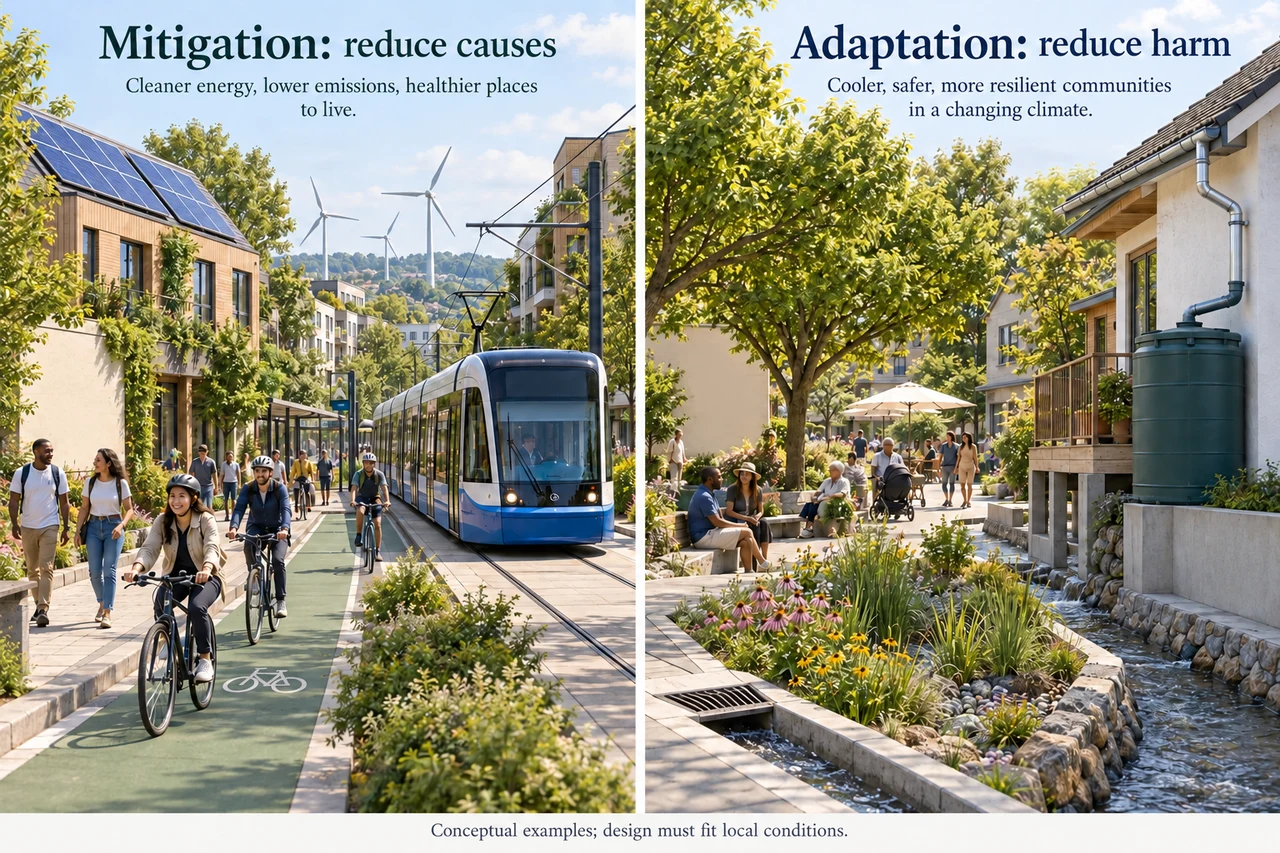
Image: illustration, not a documentary photograph. Original teaching model created for myAudience. · Original generated teaching illustration; no source textbook artwork reproduced.
Warming changes risk through water, heat and livelihoods
A warmer climate affects people through connected systems. Heat can stress health, crops and ecosystems. Changes in rainfall and evaporation can alter water availability, while intense rain can overwhelm drainage. Sea-level rise increases the starting level for some coastal floods. These are mechanisms to examine locally, not a guarantee that every impact has the same direction or severity in every place.
Exposure and vulnerability still matter. A shaded building, reliable water supply and reachable health care change the consequences of the same hot day. Crop responses depend on plant variety, soil moisture, season and management; a longer growing season does not automatically outweigh drought, pests or extreme heat. Some activities may gain opportunities, but assess who benefits, who bears costs and whether a short-term benefit remains under greater warming.
IPCC assessments connect increasing warming with escalating and interacting risks to people and ecosystems. Confidence and regional evidence differ by outcome. A coastal household can face both heat and flood disruption; a damaged transport network can affect food delivery well beyond the flooded location. Avoid counting every link as an independent loss if they overlap. Clear causal chains help identify where a response can interrupt a problem.
The illustration shows shade, rainwater storage and a planted runoff feature as conceptual adaptations. Actual performance requires local design and maintenance; stored roof water is not automatically safe to drink. A good assessment compares present conditions, a clearly stated future scenario and feasible responses. It also asks what residual risk remains and whether a measure disadvantages another group or location.
Worked example: A fictional heat plan shades a square used by 500 people each day but leaves a nearby bus stop unshaded. What can and cannot be concluded about protection?
The square may have reduced direct sun exposure.
The 500-user count does not identify who also uses the bus stop.
Measure temperatures, shade times, accessibility and affected users before estimating total benefit.
Answer: The plan changes one exposure setting; it does not establish protection for all 500 users throughout their day.
Check your understanding: Why is a warmer growing season not enough to predict that all farmers benefit?
Answer: Water availability, extreme events, crops, pests and access to adaptation also shape outcomes.
Why: A single climatic variable cannot represent the full production system or distribution of gains and losses.