Mitigation and adaptation: different jobs, shared choices
By UK GCSE Geography · independent study · myAudience
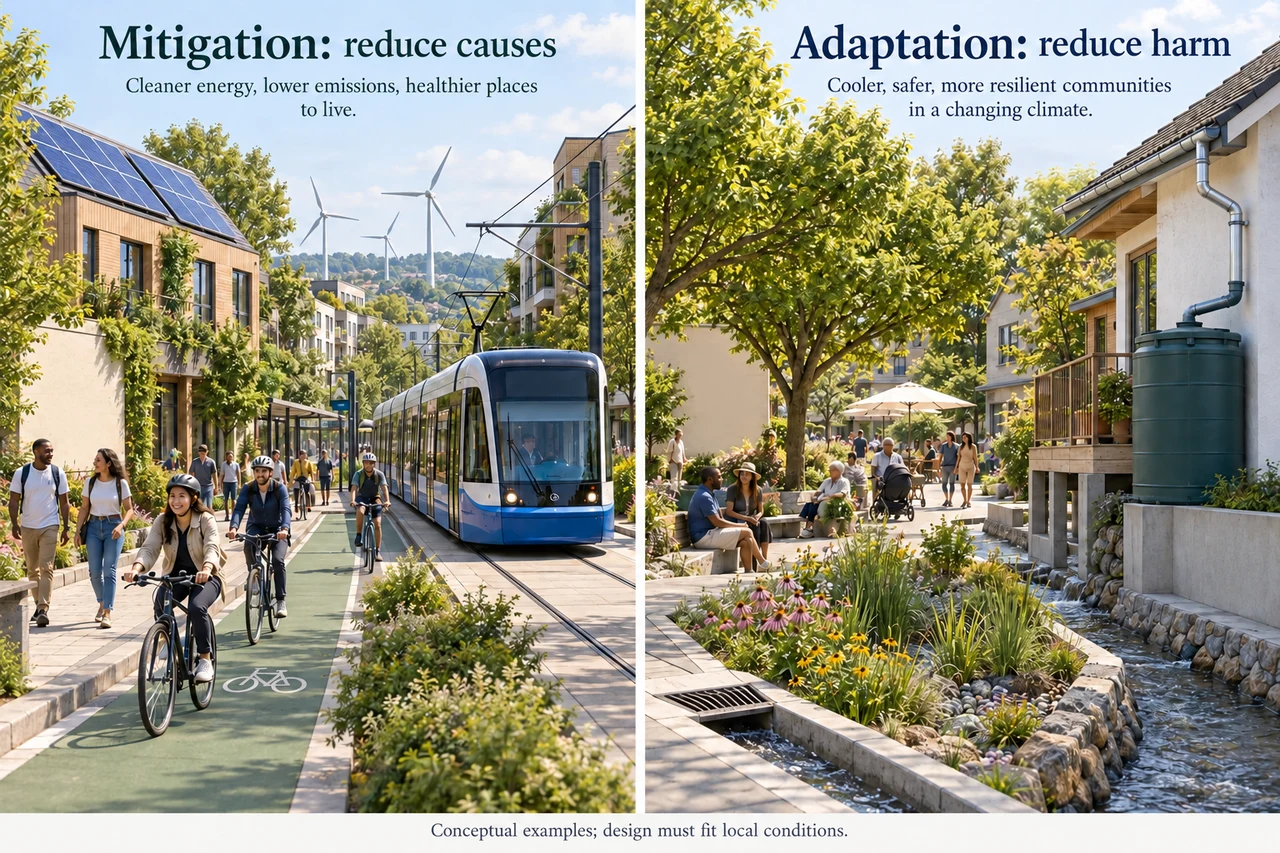
Image: illustration, not a documentary photograph. Original teaching model created for myAudience. · Original generated teaching illustration; no source textbook artwork reproduced.
Mitigation and adaptation: different jobs, shared choices
Mitigation tackles causes of climate change by reducing emissions or increasing durable carbon removal. Adaptation reduces harm from conditions already changing or expected to change. Cleaner electricity can support mitigation; shade and revised water management can support adaptation. Neither makes the other unnecessary. Cutting emissions limits future change, while communities still need to manage risks that cannot be removed immediately.
Compare a renewable-electricity project, carbon capture, tree planting and international cooperation by their actual outcomes. Ask how much emissions are avoided, whether removal lasts, how land and materials are used, and whether implementation is credible. Planting trees is not an unrestricted licence to keep emitting: species, land rights, water needs and permanence matter. Carbon capture requires energy, suitable infrastructure and secure storage; the label alone does not establish a net benefit.
Adaptation may involve changing crop choices, improving water efficiency or altering coastal planning. A seawall can reduce some flood risk but has costs, maintenance needs and possible effects on sediment or neighbouring coasts. Restoring shade or wetlands can serve several purposes, yet also requires a suitable site. Some adaptations reach limits as conditions change. Evaluate possible maladaptation: a response that helps one group now can worsen another risk or create dependence on a failing design.
The two neighbourhoods are conceptual examples rather than a ranking of technologies. An electric tram’s mitigation value depends partly on electricity, use and what journeys it replaces. Raised floors may reduce flood vulnerability while access roads remain exposed. A proposal should make its assumptions visible, compare feasible alternatives and define indicators for later review. Choosing an attractive image is the beginning of an explanation, not evidence that a policy has worked.
Worked example: A fictional project cuts annual emissions from 40 to 28 tonnes and reduces estimated flood-repair losses from£100,000 to£70,000. Calculate each relative reduction. Do the equal percentages make the outcomes interchangeable?
Emissions fall by 12 tonnes:12÷40×100=30%.
Estimated repair loss falls by£30,000:30,000÷100,000×100=30%.
One measure concerns a cause and the other an assumed impact; units, uncertainties and purposes differ.
Answer: Both reductions are 30%, but emissions and estimated repair losses are distinct outcomes.
Check your understanding: Can one action contribute to both mitigation and adaptation?
Answer: Yes, if evidence supports both effects.
Why: For example, appropriately managed vegetation may store carbon and provide shade; each claim needs its own assessment rather than automatic double counting.