Managing rainforest: test protection, use and restoration
By UK GCSE Geography · independent study · myAudience
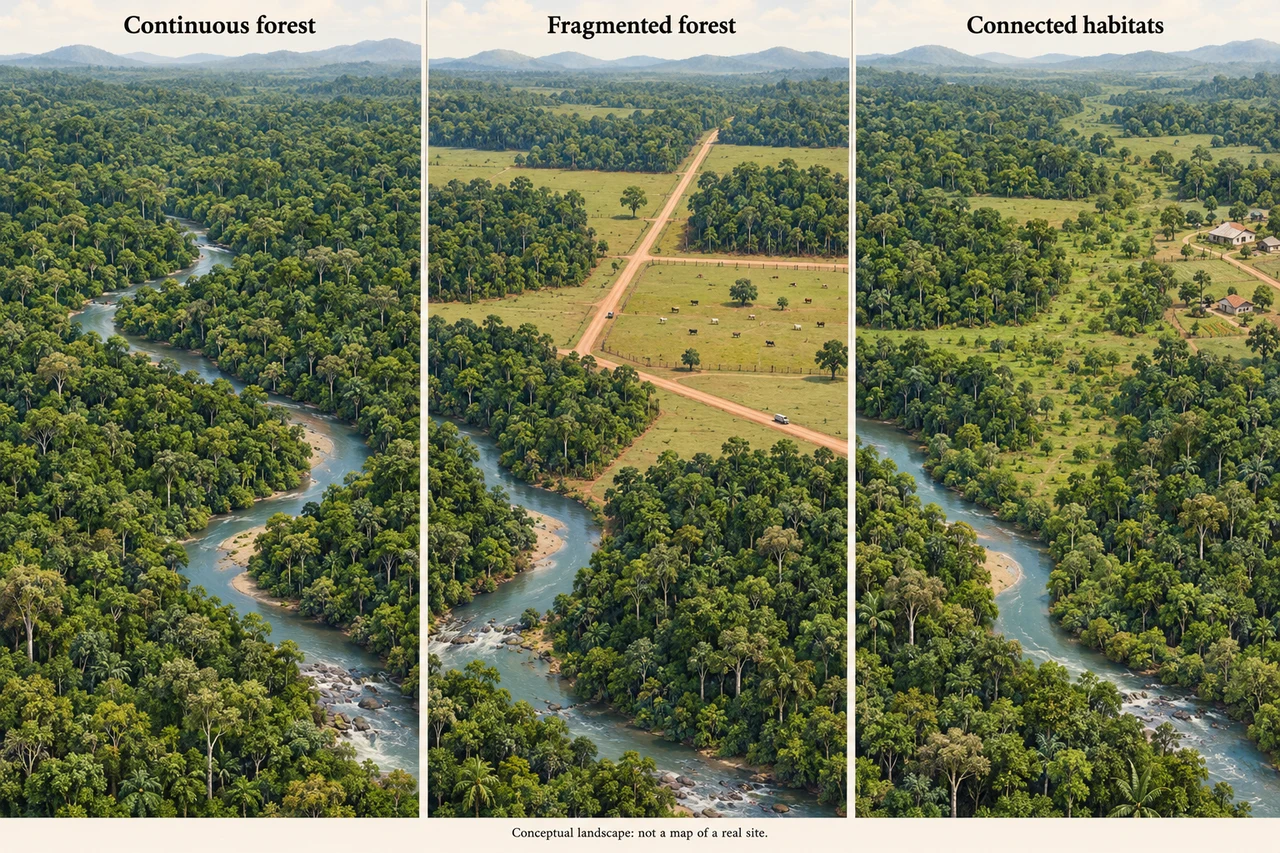
Image: illustration, not a documentary photograph. Original teaching model created for myAudience. · Original generated teaching illustration; no source textbook artwork reproduced.
Managing rainforest: test protection, use and restoration
Sustainable management aims to maintain environmental functions while supporting people’s needs over time. Protecting existing mature forest is different from planting new trees. Selective logging removes chosen trees rather than clearing every tree, but roads, machinery and repeated harvesting can still cause damage. A credible plan sets harvest limits, safeguards sensitive areas and checks regeneration; the label “selective” alone does not establish sustainability.
Replanting or assisted natural regeneration can help restore suitable degraded areas, but species, seed sources, soil, connectivity and land rights matter. Planting one fast-growing species may deliver timber while providing a different habitat from the original forest. Kew’s restoration guidance emphasises retaining existing forest, involving people and selecting suitable approaches. The younger corridor in the illustration is therefore not presented as an instant substitute for the mature forest beside it.
Conservation and education can support informed decisions, while carefully managed tourism can create income linked to keeping ecosystems intact. Tourism also needs limits, waste management and fair benefit-sharing. International agreements concerning timber and species can influence trade; debt-for-nature arrangements can support conservation finance in specific cases. None automatically guarantees effective implementation. Ask what obligations exist, who monitors them and whether local communities can influence the result.
A stronger proposal combines complementary measures and defines evidence for review: forest cover and condition, wildlife connectivity, secure rights, livelihoods and compliance. Compare the costs of enforcement and monitoring with realistic funding. If income falls or access is restricted, identify who bears that cost and how it is addressed. Sustainability is a continuing process of management and correction, not an attractive planting photograph or a single promise.
Worked example: A fictional project plants 10,000 seedlings and a later comparable survey finds 6,500 alive. Calculate survival and explain why it is not enough to call the rainforest restored.
Calculate 6,500 ÷ 10,000 × 100 = 65% survival.
Check the observation interval and whether the same planting cohort was surveyed.
Assess species, structure, habitat connections and local outcomes as well as surviving seedlings.
Answer: Recorded survival is 65%; it does not establish recovery of a mature rainforest ecosystem.
Check your understanding: Is selective logging always sustainable because some trees remain?
Answer: No.
Why: Impacts depend on harvest intensity, roads, regeneration, enforcement and the wider ecosystem. The method needs evidence and safeguards rather than a favourable label.