Explaining social life: structure, agency and evidence
By UK GCSE Sociology · independent study · myAudience
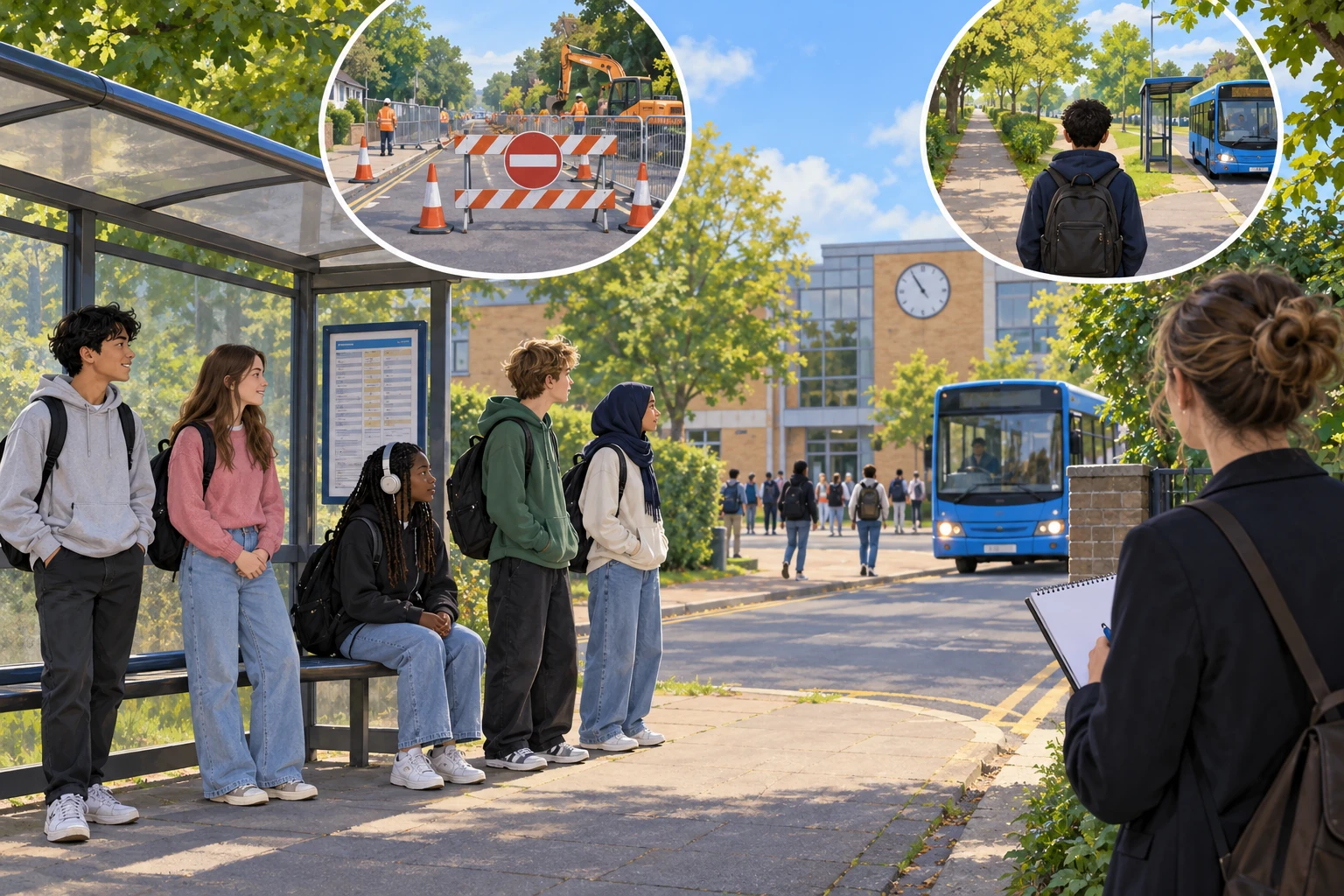
Original OpenAI imagegen conceptual teaching illustration, generated 4 October 2026; not observational evidence. · AI-generated original asset for this independent guide; no third-party artwork intentionally reproduced.
Explaining social life: structure, agency and evidence
A sociological explanation connects actions to relationships, institutions and shared meanings. Society is more than a collection of isolated choices: school timetables, employment, housing and family responsibilities shape what people can do. Structure means relatively enduring patterns of relationships and rules, not simply a building. Agency means people's capacity to act, interpret and make choices within those conditions. Neither concept alone explains every outcome. A learner may choose to leave home early, yet a cancelled bus can still make arrival difficult. The explanation should identify a mechanism joining conditions to actions rather than attach a moral label to a person.
Begin by separating a description, an explanation and a judgment. 'Some learners arrived after registration' describes an observation, provided we know how arrival was recorded. 'An unreliable bus route contributed to lateness' proposes a causal explanation requiring evidence. 'Every learner ought to be punctual' expresses a value judgment. Values can guide which problems researchers investigate, but wishing for an outcome does not show what caused it. A claim that an individual is lazy combines an interpretation with a judgment and can conceal conditions that were never measured. Sociological reasoning makes those assumptions visible so competing explanations can be compared.
A pattern is a useful starting point, not a verdict. Suppose a fictional school records more late arrivals among bus users than walkers. The comparison suggests an association. It does not establish that using a bus itself causes lateness: distance, roadworks, caring responsibilities or different starting times may also matter. Nor can a group pattern establish why one particular learner was late. Moving from an aggregate pattern to an individual explanation without additional evidence is an ecological inference error. To investigate the mechanism, compare relevant circumstances and collect accounts of actual journeys. Contradictory cases are valuable because they can reveal when a proposed explanation fails.
Build an explanation as a chain: a condition changes opportunities; people interpret the situation; actions follow; an outcome is recorded. For example, a road closure can lengthen a journey, a learner may judge that an earlier departure is impossible because of another responsibility, and the register may record arrival as late. Each link can be questioned. Did the closure precede the late arrivals? Was the register accurate? Did the learner have another route? An explanation becomes stronger when different kinds of evidence support the links and plausible alternatives are examined. A persuasive story on its own remains a story, however familiar it feels.
Sources have purposes and limitations. An attendance register is created to administer school attendance; it may record lateness consistently without recording travel conditions. An interview may explain how a learner experienced a journey but relies on memory and the setting in which the account was given. Neither is automatically superior. Ask who produced each source, for whom, when, using what definitions, and which people or experiences are absent. An official label does not remove measurement problems; a vivid personal account does not prove a national pattern. Later methods lessons distinguish validity, reliability and representativeness so these questions become more precise.
Use the illustration as a hypothetical invitation to ask questions. The road closure and route choice are possible conditions, not proven causes; the picture contains no measured lateness or population proportions. Do not infer class, ethnicity, beliefs or motivation from a person's appearance. The independent guide starts with UK institutions but will later compare specified global contexts. It teaches reasoning toward requirements; reading an explanation is not evidence of mastery. Today the aim is to turn a confident everyday claim into a testable account that respects both institutional conditions and individual variation.
Worked example: Original fictional case: a headteacher says, 'Learners who travel by bus are irresponsible because our register shows more lateness among them.' Write a reasoned response proposing what evidence would distinguish the headteacher's explanation from a transport explanation. Do not invent figures.
Identify the observation separately from its interpretation: the register records a group difference, while irresponsibility is an unmeasured attributed motive.
Propose a mechanism for each account. Choices about departure could affect arrival; cancellations and distance could constrain available journeys. Both could operate together.
Seek dated journey records and voluntary accounts alongside comparable arrival records. Compare learners with similar distances and commitments; check register rules and exceptions.
State a bounded judgment: the current observation motivates investigation but cannot justify blaming every bus user or establish a transport cause.
Answer: The register may show an association between bus use and recorded lateness, but it does not measure responsibility. A structural account would investigate whether delays occurred before late arrivals and whether usable alternatives existed. An agency account would examine decisions about departure, including reasons for them. Comparable journey and arrival evidence could help separate the accounts, while interviews could clarify constraints missing from the register. The explanations are not mutually exclusive. Until those links are investigated, the claim that all bus users are irresponsible exceeds the evidence and turns a group pattern into an unsupported judgment about individuals.
Check your understanding: Transfer task: a fictional library finds that visitors with longer journeys borrow fewer books. Give one structural mechanism, one possible agency mechanism, one alternative explanation and a justified statement about what the finding cannot establish. Indicative rubric: 8 points, two for each element; award a mechanism point for explaining how a condition could change an action, not merely naming it.
Answer: Reduced opening-hour overlap could limit borrowing for distant visitors. Some may choose digital material instead. Age mix or the purpose of the visit could explain the difference. The pattern cannot establish that a long journey causes low interest in reading or describe every distant visitor. Other coherent mechanisms earn credit if explicitly conditional.
Why: Full credit requires four distinct reasoning moves grounded in this setting. 'Structure affects people' is too general for two points; explain the opportunity constraint. 'They dislike books' is only a proposed motive, not an observed fact. The final limitation must address causal or individual inference. These guide points provide feedback on reasoning, not an official exam mark or predicted grade.