Disambiguate fui through its complement
By UK GCSE Spanish · independent study · myAudience
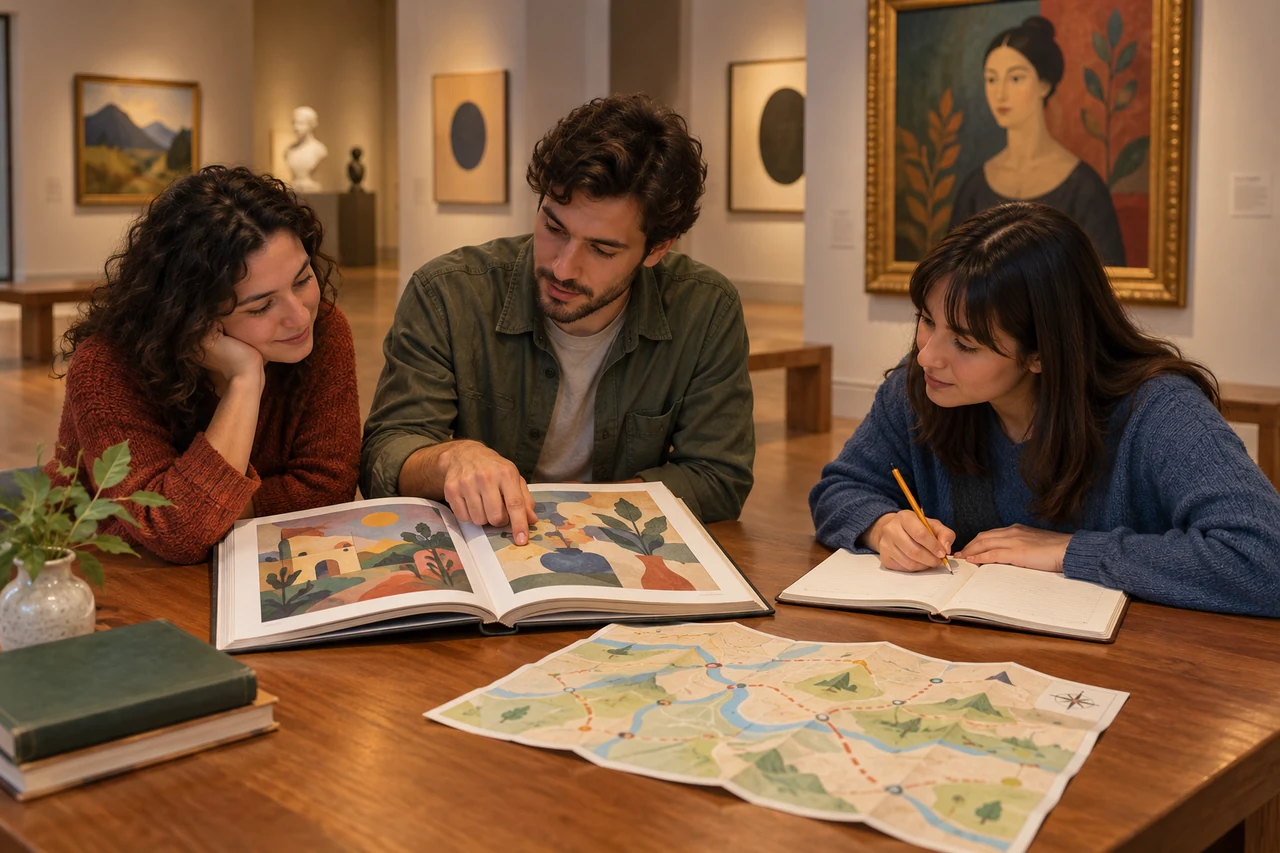
myAudience original newly generated teaching scene. Image: illustration, not a documentary photograph. · Operator-authored generated artwork; fictional context, no exam-board art or documentary photograph reproduced.
Disambiguate fui through its complement
The irregular preterite of ir and ser has the same written forms: fui, fuiste, fue, fuimos, fuisteis and fueron. This is not permission to translate every fui as went. The complement and context determine the sense. « Fui al museo » reports going to the museum; « Fui el guía de mi grupo » reports being the group’s guide. A guide role is part of the fictional visit, not a claim about the learner’s real occupation.
Read the original account: « El sábado fui al museo con mi amiga. La visita fue interesante. Fuimos a la plaza después. Allí di un libro a Ana ». In the first and third clauses, destinations support ir. In the second, interesante evaluates the visit using ser. Allí locates the gift at the previously mentioned square. The account changes its subject several times, so one English subject cannot be repeated indiscriminately.
Dar has another complete irregular paradigm: di, diste, dio, dimos, disteis and dieron. Di belongs to I gave, while dio belongs to a singular third-person giver. The forms fui, fue, di and dio have no written accent. Do not manufacture an accent merely because the action is past. specifies these paradigms in full; the source table is more dependable than guessing a regular ar ending for dar.
A useful reading test replaces the ambiguous verb with a rough semantic label before polishing the English: moved-to a destination versus was a described entity. This is a diagnostic, not a new Spanish construction. Check agreement as well: la visita fue, the visitors fueron. If a sentence has too little context, acknowledge ambiguity instead of asserting a destination that was never stated.
In the gallery illustration, the open book can prompt an invented gift or shared resource. The image does not prove that anybody went somewhere or gave the book away. Use visible objects as vocabulary support and the original clauses as evidence. Full six-person use across new complements, questions and longer narratives remains outstanding; no spontaneous speech has been assessed.
Worked example: Translate « Fuimos al museo. La visita fue tranquila. Dimos un libro a Ana » and explain the two meanings of the fui-family forms.
Al museo is a destination, so fuimos comes from ir: we went.
La visita is described by tranquila, so fue comes from ser: the visit was.
Dimos identifies a plural we as the giver; retain the named recipient.
Answer: We went to the museum. The visit was peaceful. We gave Ana a book.
Check your understanding: A learner translates « Ana fue la guía y después fue a la plaza » as “Ana went the guide and afterwards was the square.” Repair the account and justify both decisions.
Answer: Ana was the guide and afterwards went to the square. La guía identifies a role with ser; a la plaza marks a destination with ir.
Why: Identical irregular forms do not carry identical lexical meaning. The role complement and destination preposition supply the evidence, while the subject remains Ana in both clauses.