Use an irregular preterite stem without losing the person
By UK GCSE Spanish · independent study · myAudience
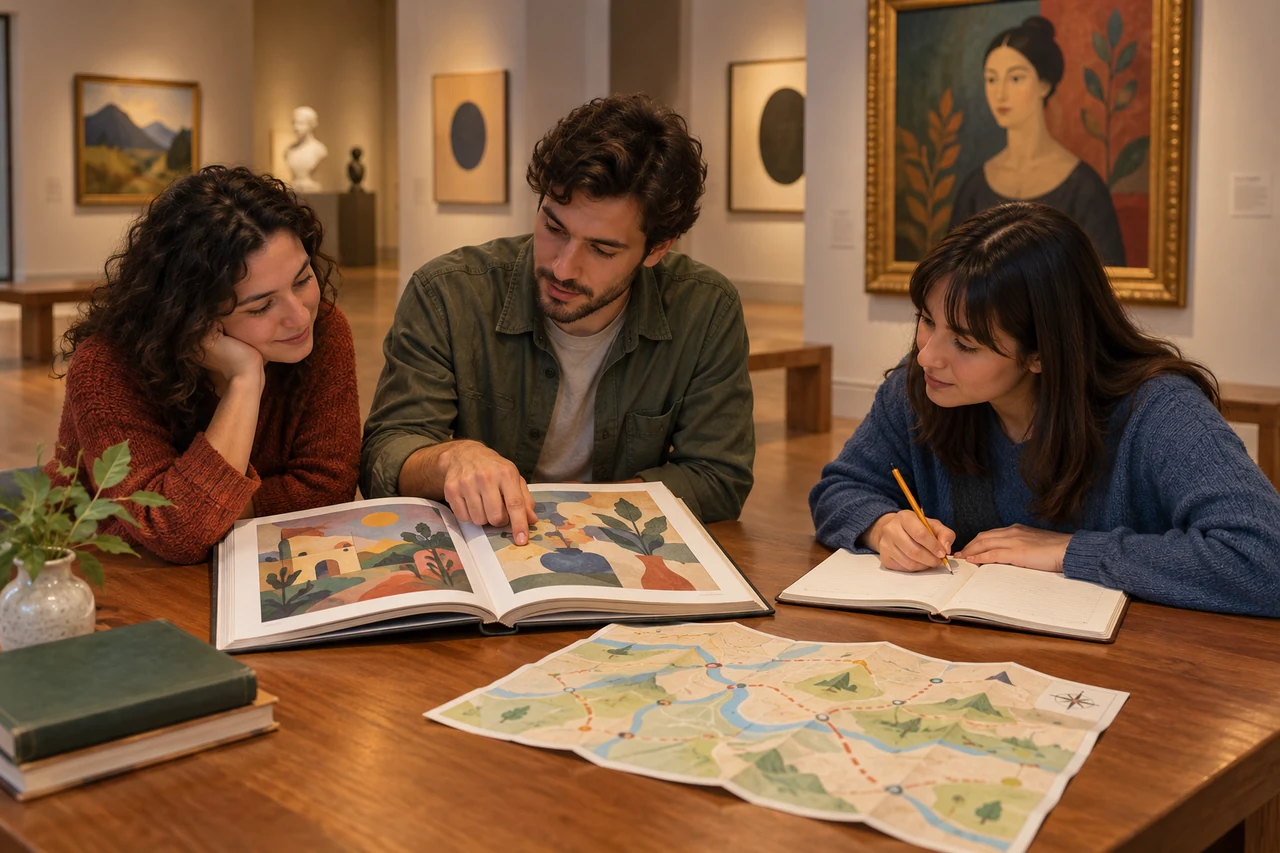
myAudience original newly generated teaching scene. Image: illustration, not a documentary photograph. · Operator-authored generated artwork; fictional context, no exam-board art or documentary photograph reproduced.
Use an irregular preterite stem without losing the person
An irregular past stem still needs a person ending. With the familiar tuv- and estuv- patterns, compare tuve/tuviste/tuvo/tuvimos/tuvisteis/tuvieron and estuve/estuviste/estuvo/estuvimos/estuvisteis/estuvieron. These forms use unaccented e, iste, o, imos, isteis and ieron, not the accented regular endings. A remembered first-person tuve is a starting point, not a form that can be attached to every subject.
Read an original account: « Ayer tuve tiempo para leer. Ana estuvo en el museo y tuvo un cuaderno nuevo. Después hice unas notas y ella hizo un dibujo ». The writer had time; Ana was at the museum and had a notebook. The final sentence distinguishes the writer’s notes from Ana’s drawing. Hice and hizo belong to hacer; third-person hizo has its own spelling and cannot be made by copying hice unchanged.
The prescribed first-person stems also include pude, vine, puse, quise, dije and traje. Their complete usage needs progressive practice. This lesson focuses on tener, estar and hacer so learners can explain a bounded pattern rather than memorize a misleading list of supposedly interchangeable past verbs. In hacer the relevant forms are hice, hiciste, hizo, hicimos, hicisteis and hicieron. A different lexical choice can change the event, not merely its spelling.
The expression tuve tiempo conveys having time in this completed episode. It does not establish that the writer always had free time. Likewise, estuvo en el museo locates Ana during the stated past account; it does not identify her as a museum employee. First recover the lexical meaning and complement, then select the person and episode. That two-stage check catches both wrong verbs and wrong endings.
The illustration shows a person writing beside an open book, which can support the invented note-making example. Notice the notebook without claiming the picture depicts Ana or yesterday. Extend the account to new singular/plural subjects and justify each change. The other prescribed irregular stems, prefixed extensions and demanding mixed-tense texts remain incomplete; this bounded lesson is not full irregular-preterite coverage.
Worked example: Change « Yo tuve tiempo y Ana hizo un dibujo » to “Ana had time and we made a drawing.”
Choose tuvo for third-person singular Ana rather than first-person tuve.
Choose hicimos for nosotros, retaining the hacer stem appropriate to that person.
Keep un dibujo as the made object; do not turn hacer into movement or possession.
Answer: Ana tuvo tiempo y nosotros hicimos un dibujo.
Check your understanding: Correct « Ana tuve un libro y yo hizo unas notas ». Explain both the ownership/action meanings and the person changes.
Answer: Ana tuvo un libro y yo hice unas notas. Ana is third-person singular with tuvo; yo is first-person singular with hice. Tener gives possession; hacer gives the note-making action.
Why: The two errors are not repaired by adding past-time adverbs. Agreement must match each actual subject, and the intended lexical meanings must survive the correction.