Distinguish a future commitment from a conditional possibility
By UK GCSE Spanish · independent study · myAudience
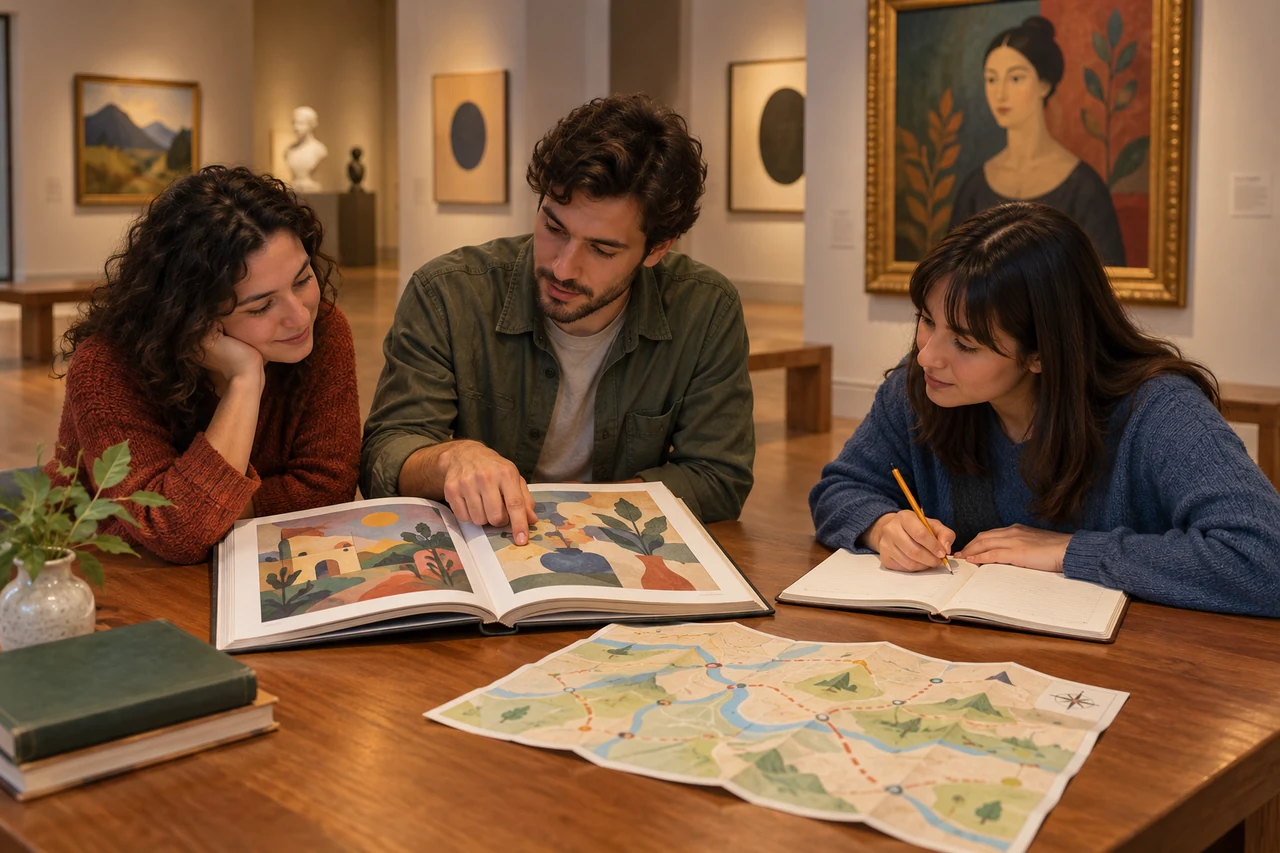
myAudience original newly generated teaching scene. Image: illustration, not a documentary photograph. · Operator-authored generated artwork; fictional context, no exam-board art or documentary photograph reproduced.
Distinguish a future commitment from a conditional possibility
An inflectional future and a conditional can describe the same action with different commitments. « Visitaré el museo mañana » presents a future visit. « Visitaría el museo, pero no tengo tiempo » presents a possible or desired visit limited by the stated obstacle. Neither sentence proves that the visit has happened. Do not erase the difference by translating both as I visited.
For the singular regular future, retain the whole infinitive and add é, ás or á: visitaré, visitarás, visitará. The same endings work with comer and escribir. The singular regular conditional adds ía, ías or ía to the infinitive: visitaría, visitarías, visitaría. The English auxiliary will or would is represented within these Spanish forms; it is not a reason to insert an extra word between stem and ending.
Read an original choice: « Mañana estudiaré en casa. Ana visitará el museo. Yo visitaría el museo también, pero tengo que terminar un trabajo ». The first two statements are future commitments; the third presents the speaker’s alternative with a reason it cannot simply replace the plan. Tengo que means have to, supplied here and developed in the next lesson. Preserve the distinct subjects as well as the difference between actual plan and hypothetical preference.
Foundation assesses these inflectional forms in the first, second and third singular persons. Plural future and conditional paradigms have separate Higher obligations. Irregular stems such as tendr-, har-, podr- and pondr- need their own source-checked practice; they cannot be generated by this regular rule. This lesson does not map those irregular requirements, and an attractive example is not evidence that the complete tense range has been taught.
The gallery illustration’s map and art book can prompt a planned or possible visit. Notice that a map is an aid, not a reservation or proof of availability. Draft a future sentence and a contrasting conditional sentence with an explicit reason, then inspect the infinitive, ending, subject and meaning. Avoid creating an unstudied si-clause pattern merely to make a sentence seem sophisticated.
Worked example: Write “Tomorrow I will read at home. Ana would visit the museum, but she does not have time.”
Retain leer and add the first-person future é, forming leeré.
Retain visitar and add third-person conditional ía, forming visitaría.
State Ana’s limiting reason with no tiene tiempo rather than reporting a completed visit.
Answer: Mañana leeré en casa. Ana visitaría el museo, pero no tiene tiempo.
Check your understanding: A learner writes « Yo visitaré, tú visitaré y Ana visitaría » and translates all three as “will visit.” Correct person agreement and explain the final meaning.
Answer: Yo visitaré, tú visitarás y Ana visitaría. The first two are future forms with different singular persons; the third is conditional, would visit, not the same future commitment.
Why: Both agreement and the future/conditional distinction carry meaning. Fixing only a pronoun or adding mañana would leave the original person or modality error unresolved.