Translate a connected account without flattening time
By UK GCSE Spanish · independent study · myAudience
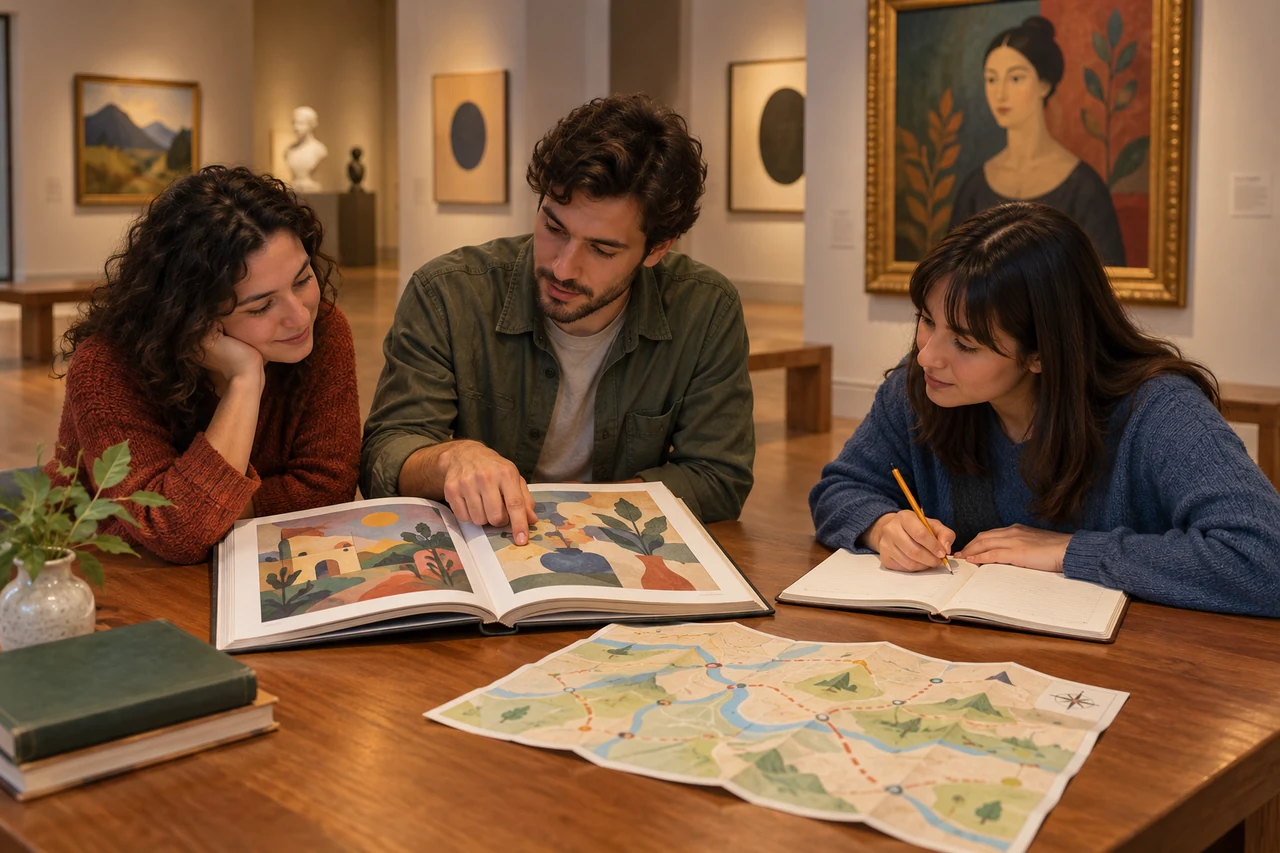
myAudience original newly generated teaching scene. Image: illustration, not a documentary photograph. · Operator-authored generated artwork; fictional context, no exam-board art or documentary photograph reproduced.
Translate a connected account without flattening time
Translation into English should convey a sufficient and natural account, not reproduce Spanish word order mechanically. Start by identifying the subjects, time expressions, negatives and links. Those small grammatical signals can change the whole story even when a learner recognizes most nouns. The original text below is teaching material, not an official examination item or a real visitor’s message.
Translate this original passage: « Antes iba a la biblioteca cada sábado porque me gustaba leer en un lugar tranquilo. Ayer fui al museo con Ana. Ella compró un libro, pero yo no compré nada. Después escribimos unas notas en la plaza. Mañana queremos leer juntos y hablar de las imágenes. Ana quiere traer su libro nuevo y compartir sus notas ». Gustaba is supplied as used to like; tranquilo means quiet or peaceful. The complete text gives more than fifty words, but length alone does not make it a complete Higher assessment.
The first sentence frames a routine and its reason. Ayer introduces the completed museum visit; the negative contrasts the purchases. Después orders the notes, and mañana introduces a later desire rather than a guaranteed completed event. Together these relations are more important than substituting a fancy English synonym for every noun. A faithful translator must not turn queremos into we will definitely.
Try a semantic ledger before the finished version: speaker—former library routine—reason quiet reading; speaker and Ana—museum yesterday; Ana—book purchase; speaker—no purchase; group—later notes; group—tomorrow’s wish; Ana—wish to bring a book and share notes. Then turn that ledger into connected natural English. Spanish library must not be confused with an English bookshop, and no compré nada retains the negative rather than cancelling two negative words.
The illustration shows a book, notes and an invented museum-like setting. Notice that those details support vocabulary, while the image cannot supply yesterday, tomorrow or a former habit. Use the original text for all timing. This worked passage is one mixed-time translation task; unseen genre variety, exact lexical/tier audit and independent marking across the full assessment demand remain outstanding.
Worked example: Translate the complete original passage, retaining the routine, negative purchase and future desire.
Translate iba…cada sábado as a repeated past visit, not a single trip.
Keep Ana’s purchase separate from the speaker’s no compré nada.
Use afterwards for después and want to for queremos; do not promise that tomorrow’s activity occurs.
Answer: I used to go to the library every Saturday because I liked reading in a quiet place. Yesterday I went to the museum with Ana. She bought a book, but I did not buy anything. Afterwards we wrote some notes in the square. Tomorrow we want to read together and talk about the pictures. Ana wants to bring her new book and share her notes.
Check your understanding: Transfer to « Ayer no fui a la biblioteca. Ana fue al museo, pero mañana quiere leer en casa ». Does this say Ana stayed home yesterday or that the speaker never visits libraries? Translate and justify.
Answer: Yesterday I did not go to the library. Ana went to the museum, but tomorrow she wants to read at home. It says neither that Ana stayed home yesterday nor that the speaker never visits libraries.
Why: The first negative is restricted to the speaker and yesterday. Ana’s completed trip and later desire have different times and subjects; a transfer answer must preserve both distinctions.