Read a celebration notice with cultural context
By UK GCSE French · independent study · myAudience
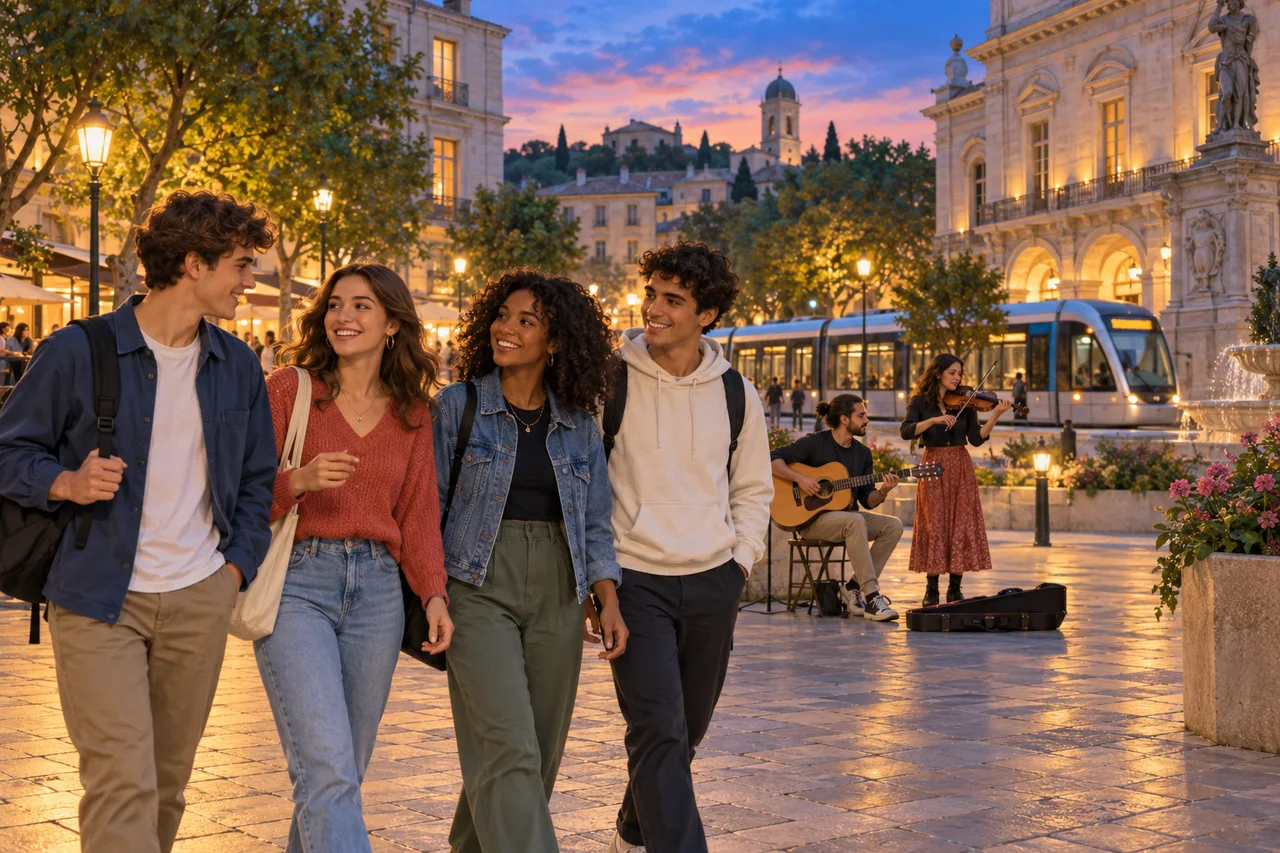
Original illustration generated with OpenAI imagegen for myAudience; fictional teaching scene. · Original generated artwork; no exam-board art or photograph reproduced.
Read a celebration notice with cultural context
The Fête de la musique is a real cultural context, not a claim that everybody celebrates in the same way. France’s Ministry of Culture describes the event as held on 21 June, with free live performances involving amateur and professional musicians. Its first edition was in 1982. Those facts provide background; the following learner notice is newly written, not an official event listing.
Read the invented notice: « Le 21 juin, il y a un concert sur la place. Les concerts sont gratuits. Camille joue de la guitare avec son ami. Nous allons écouter les musiciens à dix-huit heures. Tu veux venir ? » Gratuits means free of charge. The time belongs to this fictional visit plan, not to every concert in every town.
Separate shared cultural information from the notice’s local details. The date and event background have a primary source; Camille and the meeting time are invented practice content. Tu veux venir is an invitation, not a command. To answer a practical question, look for when, where, price and activity, then explain which sentence supplies each answer.
The illustration contains a guitarist and violinist in an invented public square. Notice the instruments, open space and people listening or walking past. It is neither documentary evidence of the Fête nor a specific French city. Write your own short invitation with an activity and meeting time, then ask a clear question. Do not publish a real event’s details without checking its current organiser listing.
Distinguish sourced background from an invented visitor message. France's Ministry of Culture describes the Fête de la musique as a free music celebration on 21 June, open to amateur and professional participation, and records its creation in 1982. Our original learner message is separate: « Le 21 juin, je veux écouter la musique avec mon amie. Nous pouvons aller au concert à dix-huit heures, mais Hugo doit rentrer à vingt heures. Hier, j’ai préparé les images pour une présentation sur la fête. » The time and named people are invented. They cannot be used as a real event timetable or a promise that every local concert has the same start time.
Transfer task: classify the date, proposed 18:00 visit and Hugo's 20:00 duty by their evidence. The celebration's date comes from the primary source; the visit and duty come only from the fictional message. A reasoned French reply could be « Vous pouvez écouter la musique, mais Hugo doit rentrer à vingt heures. » It preserves the group's opportunity and one person's limit without inventing travel time. The illustration suggests live performance in a public space, but does not prove a real Fête concert or identify its town. When researching an actual visit, verify the organiser's current programme separately. Reading this account does not assess listening, musical skill or the ability to take part spontaneously in French.
Worked example: In the original notice, when do the speakers plan to listen, and is there an admission charge?
Find à dix-huit heures with allons écouter.
Read gratuits as free of charge.
Keep the invented local plan separate from the general festival date.
Answer: They plan to listen at 18:00; the notice describes the concerts as free.
Check your understanding: A rewritten notice says the invented concerts cost money and all the town’s concerts start at 18:00. Identify two unsupported changes and restore the notice’s information.
Answer: The practice notice describes free concerts. Its speakers plan to listen at 18:00; it gives no universal starting time for every concert.
Why: Gratuits supplies the price detail, and allons écouter supplies the speakers’ plan. Neither the image nor a general festival description validates a universal local schedule.