Develop and justify a Higher two-point account
By UK GCSE Spanish · independent study · myAudience
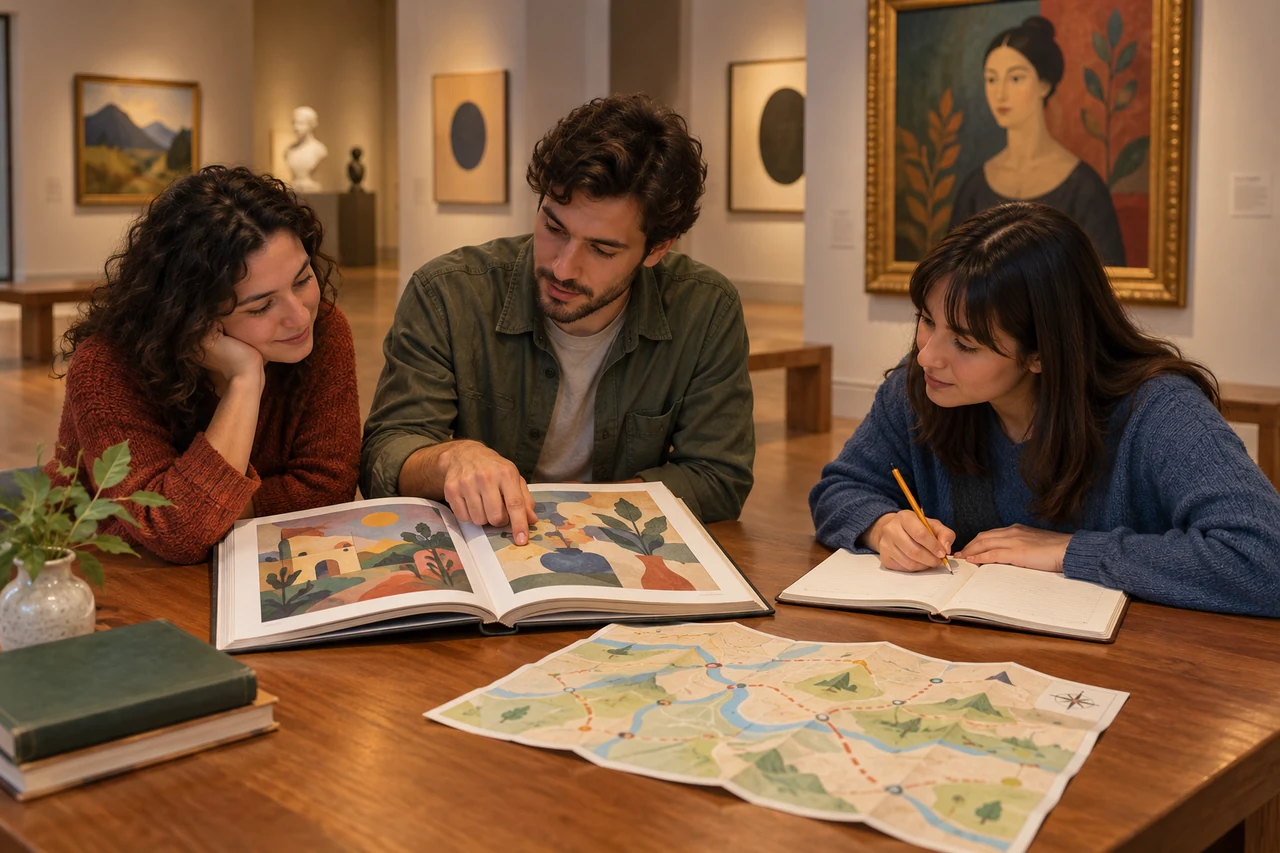
myAudience original newly generated teaching scene. Image: illustration, not a documentary photograph. · Operator-authored generated artwork; fictional context, no exam-board art or documentary photograph reproduced.
Develop and justify a Higher two-point account
A longer Higher response needs developed reasoning rather than a string of unrelated impressive forms. This original two-point task asks how your learning habits have changed, with a reasoned account of a recent visit, and what you intend to do next, explaining a preference and a limitation. Approximately 150 words provides room for development. The response must answer both points as a connected account, not reproduce a memorised ninety-word story with a few generic phrases attached.
Build an argument before choosing grammar. A former habit supplies background; a recent event provides concrete evidence; a contrast explains the present preference; a future plan tests how that preference works in practice. In the model, studying with Ana helps the narrator understand images, but individual thinking time remains valuable. That limited judgment is stronger than claiming that group study is always superior. The account can express a personal preference without presenting it as an educational experiment or ranking everybody's learning needs.
Complete Higher model: « Antes leía en casa porque era tranquilo, pero no hablaba mucho de mis libros. Ahora me gusta estudiar con Ana porque sus preguntas me ayudan a comprender las imágenes. Ayer fuimos al museo y miramos una imagen interesante. Ana escribió unas notas y yo escribí otra nota sobre la imagen. Después hablamos de nuestras ideas. No comprendí todo, pero aprendí mucho porque escuché otra opinión. Para mí, estudiar con Ana es útil, aunque también necesito tiempo para pensar solo. El próximo sábado vamos a leer en casa. Traeré mi libro y prepararé unas preguntas. Ana quiere traer sus notas. Me gustaría visitar el museo otra vez, pero primero quiero comprender mejor la imagen. Si tenemos tiempo, podemos hablar de las imágenes después de leer. Este plan es mejor para mí porque no cuesta dinero y permite trabajar sin problemas. No es el mejor plan para todos: cada persona tiene ideas diferentes. ». The first point links past routine and recent experience; the second explains a planned home session and why another museum visit will wait. Future traeré/prepararé and conditional me gustaría are singular forms already taught. The present condition « Si tenemos tiempo, podemos hablar » states a possible circumstance with present forms, not an invented conditional-plus-subjunctive counterfactual pattern.
Follow the support for the judgment. No comprendí todo limits what was understood; aprendí mucho porque escuché otra opinión gives the narrator's reason; también necesito tiempo para pensar solo qualifies the preference. These clauses do different jobs. Deleting the limitation would make the account more one-sided, while changing no comprendí todo to no comprendí nada would materially change the experience. Reasons and negatives must stay coveringwhat the writer actually chooses to claim.
The illustrated gallery has three fictional adults, a shared table and learning materials. It does not reveal anybody's comprehension, feelings or plans. Those come from the explicit invented account. The gallery's artwork can support discussion of images without reproducing a real examination prompt or asking for private personal details. The model's speaker remains fictional; the reader can choose a different valid viewpoint and does not have to report enjoyment or educational benefit as a fact about themself.
Complete countermodel: « Cuando era más joven, prefería leer solo en casa porque podía elegir mis libros. Ahora estudio a veces con Ana, pero todavía necesito un lugar tranquilo. Ayer fuimos al museo y miramos las imágenes. Ana compró un libro y yo escribí unas notas. Me gustó la imagen porque los colores eran interesantes, aunque no comprendí todas las ideas. Después hablamos en la plaza. Ana prefiere aprender con otras personas; yo prefiero leer primero y hablar después. El próximo sábado voy a estudiar en casa y prepararé unas preguntas para Ana. No volveré al museo ese día porque quiero terminar mi libro. Me gustaría compartir mis notas, pero no quiero hablar todo el tiempo. Si Ana tiene tiempo, podemos comparar nuestras ideas después de leer. Este plan me parece útil porque permite leer y hablar. Estudiar solo no es siempre mejor: la tarea y la persona también importan. Puedo cambiar mi plan. ». This writer values individual preparation and speaks afterward. The same visit does not lead to an identical preference. The closing sentences limit the claim according to person and task rather than asserting that solo study is always better. Compare both accounts for how examples, reasons, contrast and future choices support their distinct judgments. A different conclusion can be equally coherent when its evidence and language fit.
Transfer constraint: the narrator now has no money for another visit but can share notes at home. A defensible replacement plan is « El próximo sábado estudiaré en casa porque no tengo dinero para otra visita. Me gustaría hablar con Ana después de leer, pero primero prepararé unas preguntas ». This adjusts the practical reason and retains a conditional wish without promising a paid visit. A full revised account must also remove any contradictory promise elsewhere; replacing one paragraph is a method step, not a complete independent assessment response.
Before submission, locate both open-ended points and the clauses that develop each. Check whether examples justify the stated judgment, whether a limitation changes the conclusion, and whether agent/time/negative references survive every edit. More Higher grammar is not inherently better if it is untaught or changes meaning. This model pair deepens sustained written reasoning with prescribed prerequisites. Full lexical coverage, remaining Higher forms, genuine audio and spontaneous interaction, pronunciation, dictation and externally marked unseen tasks remain uncompleted.
Worked example: Original Higher practice: write approximately 150 words about (1) how your learning habits have changed, with a reasoned account of a recent museum visit, and (2) your next plan, explaining a preference and a limitation. Use taught forms to develop both points.
State former habit, completed example and present preference; connect reasons to the chosen experience.
Develop future commitments and a conditional wish without confusing them or introducing an unstudied counterfactual.
Qualify the conclusion for person/task and check both points across the entire response.
Answer: Antes leía en casa porque era tranquilo, pero no hablaba mucho de mis libros. Ahora me gusta estudiar con Ana porque sus preguntas me ayudan a comprender las imágenes. Ayer fuimos al museo y miramos una imagen interesante. Ana escribió unas notas y yo escribí otra nota sobre la imagen. Después hablamos de nuestras ideas. No comprendí todo, pero aprendí mucho porque escuché otra opinión. Para mí, estudiar con Ana es útil, aunque también necesito tiempo para pensar solo. El próximo sábado vamos a leer en casa. Traeré mi libro y prepararé unas preguntas. Ana quiere traer sus notas. Me gustaría visitar el museo otra vez, pero primero quiero comprender mejor la imagen. Si tenemos tiempo, podemos hablar de las imágenes después de leer. Este plan es mejor para mí porque no cuesta dinero y permite trabajar sin problemas. No es el mejor plan para todos: cada persona tiene ideas diferentes.
Check your understanding: Produce a complete contrasting approximately 150-word account in which individual reading remains important, you will not return to the museum next Saturday, and discussion follows preparation. Explain why disagreement with the first model does not make the language or reasoning automatically wrong.
Answer: Cuando era más joven, prefería leer solo en casa porque podía elegir mis libros. Ahora estudio a veces con Ana, pero todavía necesito un lugar tranquilo. Ayer fuimos al museo y miramos las imágenes. Ana compró un libro y yo escribí unas notas. Me gustó la imagen porque los colores eran interesantes, aunque no comprendí todas las ideas. Después hablamos en la plaza. Ana prefiere aprender con otras personas; yo prefiero leer primero y hablar después. El próximo sábado voy a estudiar en casa y prepararé unas preguntas para Ana. No volveré al museo ese día porque quiero terminar mi libro. Me gustaría compartir mis notas, pero no quiero hablar todo el tiempo. Si Ana tiene tiempo, podemos comparar nuestras ideas después de leer. Este plan me parece útil porque permite leer y hablar. Estudiar solo no es siempre mejor: la tarea y la persona también importan. Puedo cambiar mi plan. The alternative supports its preference with a chosen experience and a practical future plan. It retains a limitation, so it does not overclaim that individual study is always best. It must still meet the task and grammatical demands; a different justified conclusion is permissible, whereas unsupported universal claims are weak reasoning.
Why: A complete countermodel tests sustained development rather than a single diagnostic sentence. Original model quality is bounded evidence about these tasks, not proof of complete Higher achievement or psychological benefit.