Quality and customer service: make a reasoned operating decision
By UK GCSE Business · independent study · myAudience
Original myAudience educational illustration. Image: illustration, not a documentary photograph. · myAudience educational illustration; no affiliation with any awarding body.
Quality and customer service: make a reasoned operating decision
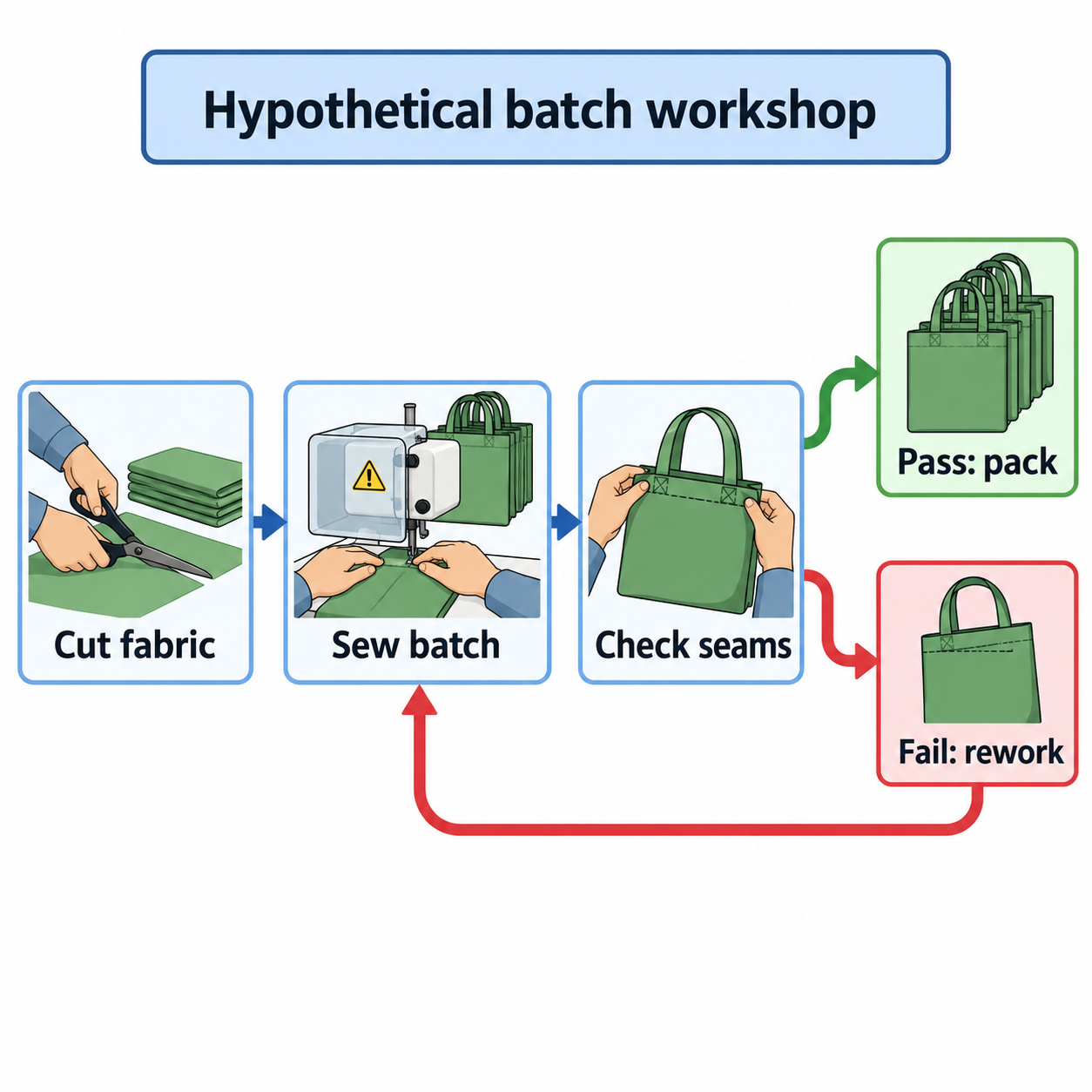
Quality means meeting appropriate customer requirements reliably in goods and services, not always adding expensive features. A safe repair completed when promised may be more valuable than elaborate packaging. Inspection finds defects, but preventing them at source can avoid wasted materials and disappointed customers. Total quality management (TQM) involves people across the business in maintaining and improving quality. The workshop image shows a quality-control gate and rework loop, not proof of TQM by itself. Measure complaints, returns and consistent service against relevant expectations; a tiny sample or silent customers can mislead.
Maintaining quality costs money for training, inspection and process improvement, yet can reduce rework and recalls and support reputation, repeat sales or a higher price. A recall is not simply bad publicity: protecting customers is a responsibility. Growth through outsourcing or franchising can make consistency harder unless specifications, training and monitoring work. Customer service involves product knowledge, a respectful sales experience and useful support after sale. Digital booking, websites and social media can improve access but can exclude some customers or mishandle complaints if the business offers no suitable alternative.
Decide across functions. Training consumes cash and time now; operations may improve reliability; marketing must make truthful promises; people need time to learn. Do not count a possible reputation gain as a certain cash receipt. From summer 2026, assessment notice moves away from six-mark responses restricted to one factor; follow the actual question rather than a “one factor only” template. For reasoned decisions here, use a contextual causal chain, compare another effect and justify the priority with a condition. Transfer criterion: combine numbers and quality evidence, respect safety and customer needs, and state what further evidence could reverse the judgement.
Worked example: Hypothetical workshop produces 500 bags per month; 8% need rework costing £3 each. £200 monthly training is forecast to reduce rework to 3%. Evaluate this investment; ignore other costs and do not treat forecast improvement as proven.
Current rework = 500 × 0.08 = 40 bags; cost £120.
Forecast rework = 500 × 0.03 = 15 bags; cost £45; saving £75.
Training costs £200, so the model’s monthly cost increases by £125 after the £75 saving. Rework savings alone do not pay for it.
Potential safety, consistency and retention benefits may justify training, but require evidence. Trial training, measure comparable defect rates and ask customers about service; ensure the £200 cash outflow is feasible.
Answer: Training is not justified by rework savings alone. It may still be appropriate for substantiated wider benefits or necessary safe competence; test rather than invent them.
Check your understanding: A hypothetical repair enterprise can save £150 monthly by removing its phone support. Most bookings are online, but some customers rely on phone access. Recommend a decision using finance, customer service and purpose.
Answer: Do not conclude from majority online usage alone. Measure support demand and lost bookings, examine an accessible lower-cost callback alternative and compare it with £150 savings. Retain suitable access if essential to the stated community purpose and financially feasible.
Why: A demanding answer explains the trade-off, uses this customer context and identifies evidence instead of monetising access with invented figures. Valid alternative recommendations must preserve safe quality and explain feasibility. This check is original teaching, not an official mark scheme or guarantee of a grade.