Check and changed task: When an action ends but a memory does not
By UK A Level Spanish · independent study · myAudience
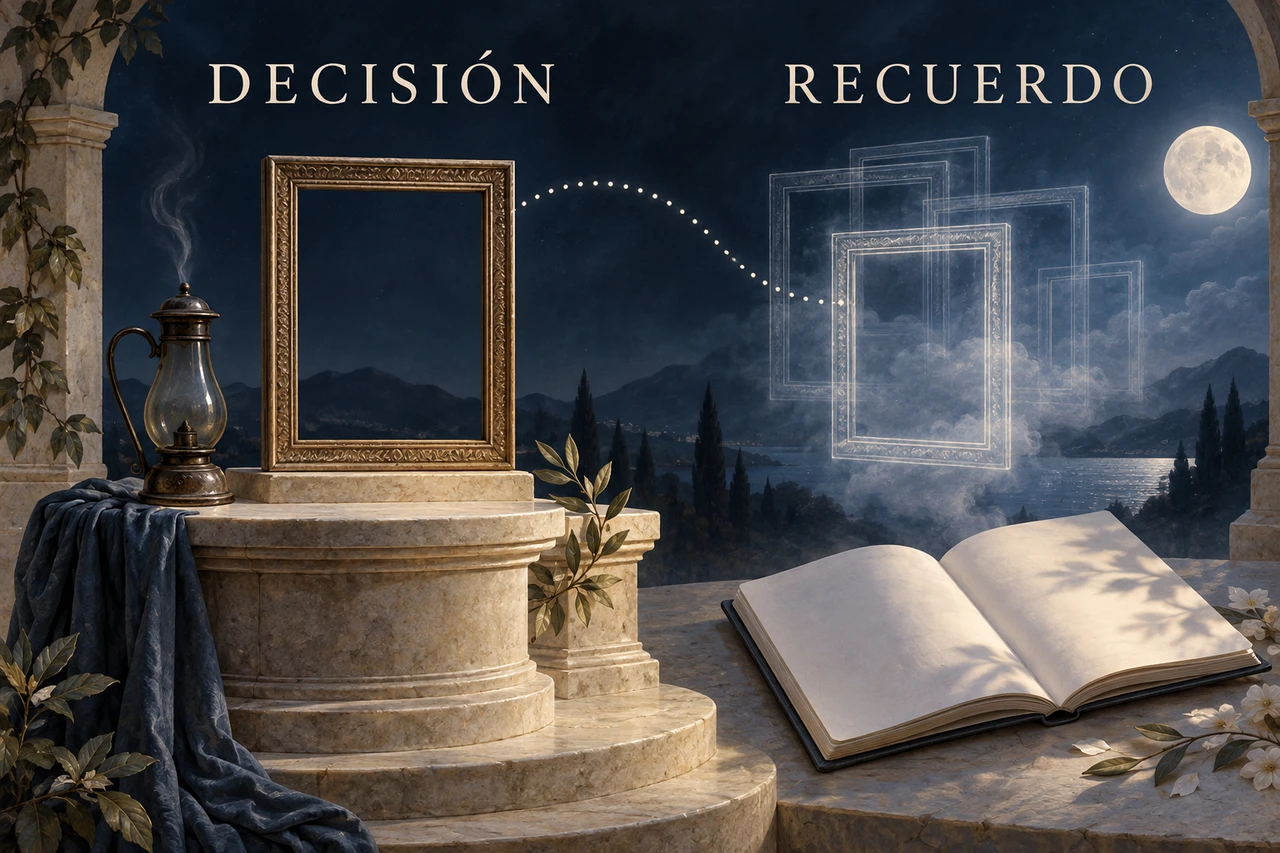
Image: illustration, not a documentary photograph. Empty and recurring frames visualise deliberate rejection and returning memory; the setting is invented. · Original operator-generated illustration; no institutional artwork or edition illustrations copied.
Check and changed task: When an action ends but a memory does not
Check: does the poem prove that the author experienced the event exactly as described? Answer: no. A lyric voice and figurative actions are not automatically biographical testimony; that conclusion would require independent evidence. Changed task: in an entirely invented variant, replace the returning present-tense vision with a statement that it never returned. What must change? Answer: the strongest evidence against complete forgetting disappears, so the earlier thesis of successful release gains support. The costly removal metaphor can still qualify that success. A changed ending does not make the initial pain vanish, and the invented wording must never be attributed to the institutional edition.
There is also a useful grammar counterexample. The poem uses an indicative past after aunque to concede an experienced cost. It would be wrong to teach that aunque automatically requires the subjunctive. Compare an original hypothetical classroom sentence, 'aunque no sienta dolor, conservaré el recuerdo': its stance is different because the concession is not presented in the same way as the poem's completed experience. This original example is not an alternative line by Bécquer. It demonstrates why meaning, time and assertion matter more than a one-word mood rule.
Worked example: in an entirely invented variant, replace the returning present-tense vision with a statement that it never returned. What must change?
the strongest evidence against complete forgetting disappears, so the earlier thesis of successful release gains support.
The costly removal metaphor can still qualify that success.
A changed ending does not make the initial pain vanish, and the invented wording must never be attributed to the institutional edition.
Answer: the strongest evidence against complete forgetting disappears, so the earlier thesis of successful release gains support. The costly removal metaphor can still qualify that success. A changed ending does not make the initial pain vanish, and the invented wording must never be attributed to the institutional edition.
Check your understanding: does the poem prove that the author experienced the event exactly as described?
Answer: no. A lyric voice and figurative actions are not automatically biographical testimony; that conclusion would require independent evidence.
Why: There is also a useful grammar counterexample. The poem uses an indicative past after aunque to concede an experienced cost. It would be wrong to teach that aunque automatically requires the subjunctive. Compare an original hypothetical classroom sentence, 'aunque no sienta dolor, conservaré el recuerdo': its stance is different because the concession is not presented in the same way as the poem's completed experience. This original example is not an alternative line by Bécquer. It demonstrates why meaning, time and assertion matter more than a one-word mood rule.