A pear galette with just enough rosemary
myAudience · AI-generated food illustration · Original AI-generated illustration; no third-party photograph
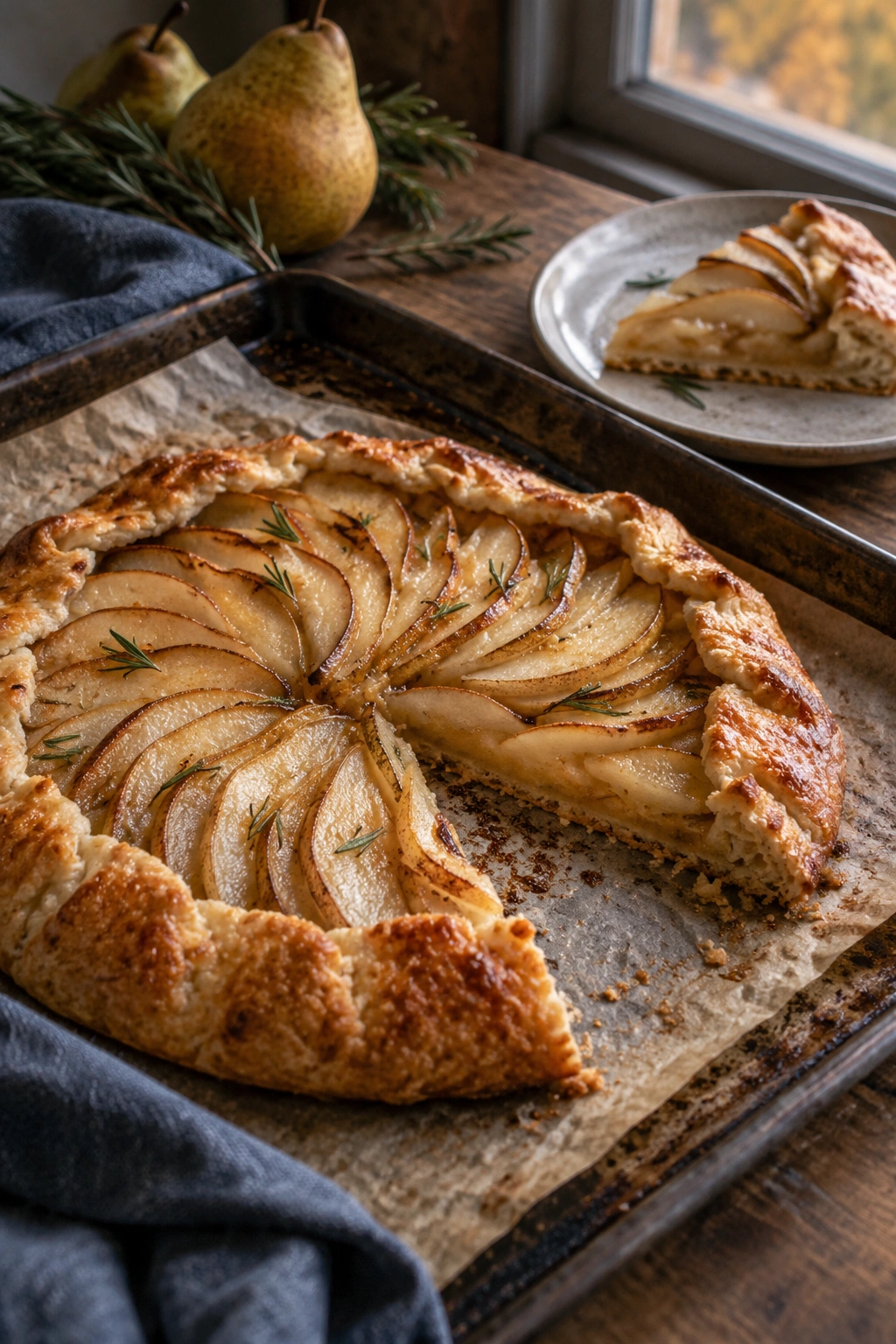
Rosemary should arrive as a faint resinous note here, not a mouthful of needles. Chop it very finely and use less than you think. Firm pears hold their shape while the pastry turns golden, leaving an open centre that looks generous without a high heap of fruit.
For 6 slices, use 180g plain flour, plus a little for rolling; 100g cold unsalted butter, cubed; 20g caster sugar; ⅛ teaspoon fine salt; and 45–60ml ice-cold water. For the filling, use 450g firm ripe pears, cored and thinly sliced; 35g light brown sugar; 10g cornflour; 1 tablespoon lemon juice; ¼ teaspoon very finely chopped rosemary; and 1 tablespoon milk to brush the pastry. This contains wheat and milk.
Rub the butter into the flour, caster sugar and salt until some pea-size pieces remain. Add 45ml water and bring together without kneading, adding more only if dry flour will not join. Flatten to a disc, wrap and chill for 45 minutes. Heat the oven to 200°C conventional/180°C fan. Roll the dough on lightly floured baking paper into a roughly 30cm circle.
Toss the pears with the brown sugar, cornflour, lemon and rosemary immediately before filling. Arrange in the centre, leaving a 5cm border. Fold the border inward, pleating where needed, and brush the exposed pastry with milk. Slide the paper and galette onto a baking sheet. Chill for 15 minutes if the pastry has softened, then bake for 40–50 minutes until the crust is golden and the pear juices bubble.
Let it rest on the tray for 20 minutes before cutting. Allow about 2 hours including chilling and cooling; ovens and pear ripeness affect the finish. Cold butter and gentle handling help the pastry keep its texture. Once cool, refrigerate covered within 2 hours and use within 48 hours. Serve with yogurt or cream added at the table.